Summary
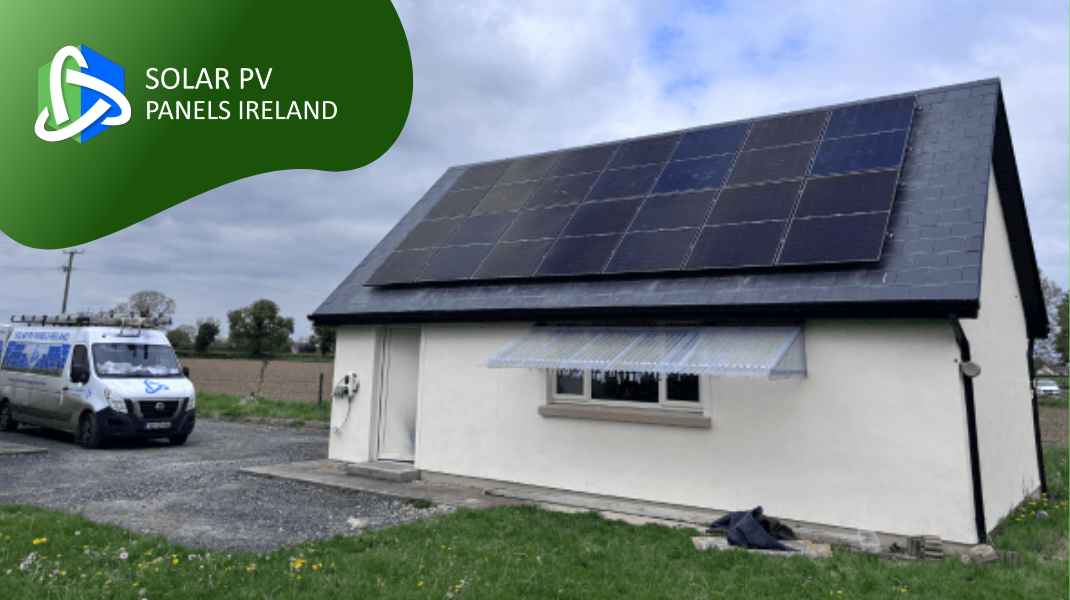
- General Exemption: Since October 2022, most Irish homeowners no longer need planning permission for rooftop solar panels, regardless of the system size.
- Domestic Limits Removed: The old restrictions, which limited panels to 12m² or 50% of the roof area, have been completely abolished for residential properties.
- Safeguarding Zones: If you are within a “Solar Safeguarding Zone” (near airports or helipads), rooftop installations are limited to 300m² before permission is required.
- Special Cases: Planning permission is still necessary for protected structures, homes in architectural conservation areas, or large-scale ground-mounted systems.
As solar panels become more affordable and popular, many homeowners, businesses, and farmers across Ireland ask: Do I need planning permission to install solar panels? The answer has changed recently, thanks to updates in Irish law. In most cases, you do not need planning permission, but there are exceptions. In this article, we’ll explain what’s allowed, what’s not, and how to check if your specific project needs planning approval.
What changed in October 2022
In October 2022, the Irish government introduced updated regulations on solar planning exemptions. These changes significantly reduced the restrictions on installing rooftop solar panels.
Key updates include:
- Houses: no longer limited in the area of rooftop solar panels; previous limits like “12 m² or 50% of roof” have been removed.
- All rooftop solar systems: are largely exempt from planning permission under the new rules.
- The introduction of Solar Safeguarding Zones (SSZs) where special rules can apply, particularly around airports, helipads, aerodromes etc.
These changes aim to encourage solar adoption, reduce red tape, and help Ireland meet its renewable energy and climate goals.
What you can do without planning permission
Under current rules, many installations qualify for exemption from planning permission. Here are the main cases:
| Situation | What is exempt / allowed without planning permission |
| Rooftop solar on houses/domestic properties | You can install unlimited rooftop solar panels on domestic properties without planning permission. The old limits (- e.g. 12 m² or 50% of roof area) are removed. |
| Businesses, industrial premises, farms etc. (roofs) | Rooftop solar installations are also typically exempt. However, in certain zones (see SSZs) there may be area restrictions. |
| Freestanding/ground-mounted solar panels | For houses, small ground-mounted (freestanding) solar panels are exempt if they meet size, height, and open-space conditions. For other types of buildings, somewhat larger ground-mounted systems may also be exempt depending on location. |
Solar Safeguarding Zones (SSZs)
Even with the more relaxed rules, Solar Safeguarding Zones remain an important exception. These are areas surrounding – for example – airports, helipads, aerodromes, where glint and glare from large solar installations could interfere with aviation safety.
What you should know:
- If your roof is in an SSZ, rooftop solar panels are still exempt in many cases, but there is a limit of 300 m² for rooftop solar on any building in an SSZ without planning permission.
- For buildings outside SSZs, roofing installations are generally unrestricted in area under the exemption.
You can check whether your property is in an SSZ using mapping tools like MyPlan.ie or by contacting your Local Planning Authority.
Special cases where planning permission is required
There are situations where planning permission (or other consents) will still be needed. Some key scenarios include:
- Protected structures or conservation areas
If your home or building is a protected structure, or located in an Architectural Conservation Area (ACA), then installing solar panels may need planning permission or special heritage/architectural permission because of visual impact, or statutory protections. - Large / atypical scale installations
For very large rooftop arrays or ground-mounted systems, particularly in SSZs or on large non-domestic buildings, the exemption may not apply if size or scale exceeds certain thresholds. - Freestanding solar panels that are large or in visible locations
If free-standing solar panels exceed height or area limits, particularly if they are visible from roads, public spaces, or affect the character of the area, planning permission may be required. - Wind/solar hybrids or special installations near airports
The SSZ rules were designed for aviation safety, so anything that might produce glare/glint that could impact aircraft may be scrutinised. If you anticipate your installation might do so, you’ll want to check with the relevant planning authority.
How to check whether you need planning permission
Before you proceed with installation, here are steps you should take:
- Check if your property is a protected structure / in a conservation / heritage area
Contact your Local Planning Authority, or check the Register of Protected Structures and whether your local area has designated Architectural Conservation Areas. - Check whether you’re in a Solar Safeguarding Zone (SSZ)
Use tools like MyPlan.ie or local authority maps to see if your building lies in an SSZ around an airport, aerodrome, or helipad. If yes, find the SSZ-map and see whether the 300 m² rooftop limit or other restrictions apply. - Determine what type of installation: rooftop vs ground-mounted / freestanding
Rooftop installations are more often exempt than ground-mounted ones. If considering ground-mounted, check height, area, visibility, and whether you’re reducing private open space below required minimum. - Check roof installation positioning rules (if any still apply)
While many of the older spacing rules (from edge of roof, ridge etc.) have been eased or removed in many cases, some local authorities may still have guidelines or conditions around how panels are mounted (for example, distance from roof edges, margins for ridge etc.). - Speak to a professional / installer
Installers often know local rules, or have done similar work. They can advise whether your particular installation will need planning permission, and may assist with submitting any necessary applications. If in doubt, better to check upfront.
Benefits of the new exemption rules
The updated solar planning exemptions offer several advantages:
- Reduced cost and time: No need to apply for planning permission saves fees, paperwork, and waiting time.
- Greater flexibility: You can cover more of your roof with panels; roofs may be fully used for solar without worrying about exceeding previous limits.
- Encourages adoption: Fewer bureaucratic barriers make solar more accessible, helping homeowners, businesses, and farmers to switch to renewable energy more readily.
Things still to consider even if you don’t need planning permission
Even where planning permission is not required, other rules matter:
- Building Regulations: Solar installations must still comply with all relevant building regulations (structural loads, safety, electrical connections).
- Grid connection / ESB Networks: If you plan to connect back to the grid (exporting excess electricity), you’ll need to ensure compliance with the grid operator’s rules.
- Grants / SEAI conditions: If applying for grants, ensure that your installation meets the SEAI’s eligibility criteria (certified installers, approved equipment, etc.).
- Visual / aesthetic concerns: Even where not legally required, local rules or planning-authority preferences may affect your design if your home is very visible, in an architectural area, or neighbours are sensitive.
FAQs
Q: Can I install solar panels covering my entire roof now?
A: Yes, for most residential properties, you can fully cover your roof with solar panels without planning permission, under the 2022 exemption rules.
Q: What about solar panels on commercial or farm buildings?
A: Rooftop panels on non-residential buildings are also generally exempt. However, in Solar Safeguarding Zones, or for very large arrays, there may be area limits or special conditions. Ground-mounted panels tend to have stricter conditions.
Q: Are the rules different for freestanding (ground-mounted) solar panels?
A: Yes. For houses, small freestanding solar panels are exempt, but only if they stay under certain height, size, and do not reduce private open space below standard minimums. Large freestanding systems or very visible ones may need permission.
Q: If I live near an airport or aerodrome, do I need planning permission?
A: Possibly. If your property is in a Solar Safeguarding Zone, rooftop solar panels are still exempt up to 300 m² per building. If your project is larger than that, or you are doing a ground-mounted approach, planning permission may be required.
Q: My house is in a conservation area or is a protected structure. What now?
A: You will likely need planning permission or specific heritage consents. The visual impact, architectural character, and statutory protection pave the way for stricter controls. Consult your Local Planning Authority.
Steps to go ahead (if you’re ready)
If after reading this you believe your solar panel installation is exempt (or may be), here’s a checklist to follow:
- Confirm whether your property is a protected structure / in a conservation area / in SSZ.
- Get your roof surveyed for suitability (orientation, shading, structural strength).
- Choose a reputable, SEAI-registered or certified solar installer.
- Gather documentation: panel specs, structural design, electrical safety plans.
- If you’re applying for grants (SEAI etc.), ensure all grant requirements are satisfied.
- Arrange grid-connection if needed.
- Install, get any inspections or approvals required by building regulations or utility connections.
Summary
- No, in most cases in Ireland today, you do not need planning permission to install solar panels on your roof, whether for domestic homes, commercial buildings, or farms.
- The October 2022 exemptions lifted many of the old limits (e.g. size/area) and simplified the rules significantly.
- Exceptions still apply: protected structures, conservation areas, SSZs, very large installations, visible ground-mounted systems, etc.
- It’s always safest to double-check with your Local Planning Authority, especially if doubts remain.
If you’re considering solar panels, SolarPVPanelsIreland.ie can help you assess whether you’ll need permission, what kind of system fits your needs, and manage all the regulatory or technical steps. Contact us for a free assessment tailored to your property.