
Summary
- Maximum Energy Efficiency: Ground-mounted systems allow for perfect positioning (30°-45° South) and better airflow. This prevents overheating and often results in higher energy yields.
- Ideal for Challenging Properties: This is the perfect solution for homes with small, shaded or structurally unsuitable roofs.
- Easier Maintenance and Scaling: Being at ground level makes cleaning and inspections safer and simpler. The lack of roof space constraints also makes it much easier to expand the size of the system, even in the future.
- Planning and Grant Friendly: Residential systems up to 25 square meters, usually don’t require planning permission and are eligible for SEAI grants of up to €2,100.
In a time of energy uncertainty and rising costs, Irish homeowners, farmers, and businesses are increasingly seeking some real energy independence. Rooftop solar panels have long been the go-to solution, but a powerful and often more efficient alternative is gaining traction: Ground Mounted Solar Panels.
For properties with unsuitable roof space, complex shading issues, or very large energy demands, a ground-mounted system can unlock the potential of PV technology. It offers flexibility and maximum energy yield. This makes it a great investment in the long run.
This full guide and outline will walk you through every aspect of ground mounted solar. From understanding the technology and regulatory requirements in Ireland to calculating costs, grants and your return on investment.
What Exactly Are Ground Mounted Solar Panels?
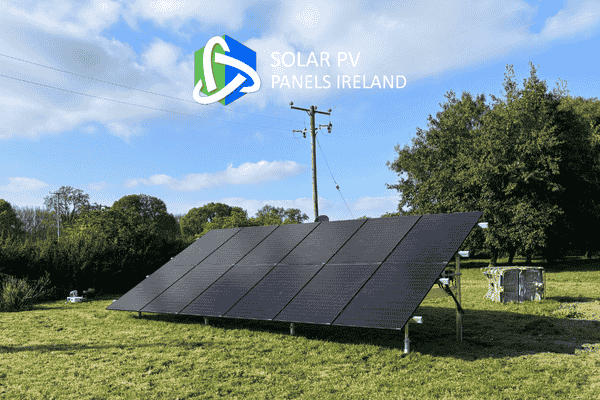
Ground mounted solar panels, or Ground Mount PV Systems, are systems where the solar panels are installed straight onto the land. They are secured by a dedicated racking structure, rather than being fixed to a building’s roof.
While this might make you think of vast solar farms, ground-mount systems are highly scalable and are used just as effectively for residential properties, agricultural settings, and commercial premises across Ireland.
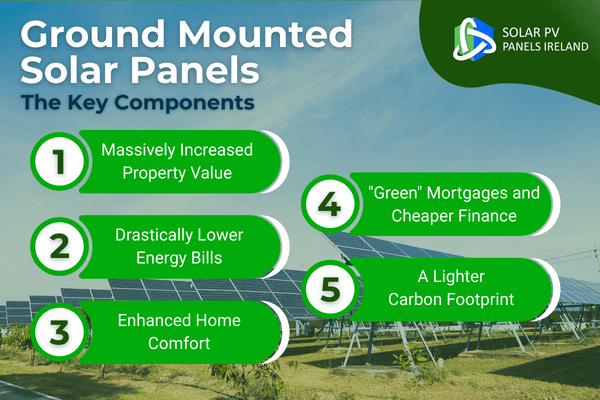
The Key Components
A ground-mount installation differs from a rooftop system primarily in its structural support and foundation:
Solar Panels (PV Modules): These are the panels themselves. Ground arrays are perfectly suited for bifacial solar panels. They generate electricity from both the front side (direct sunlight) and the rear side (reflected light from the ground). This boosts efficiency by an additional 10–30%.
Racking and Framing: This is the robust metal structure (usually aluminium or galvanised steel) that holds the panels in place. It’s designed to withstand high winds and the challenges of the Irish climate.
Foundations: The racking must be securely anchored to the ground. Common methods include:
- Piles (Ground Screws or Rammed Posts): Ideal for farms and fields. They require little concrete and are quicker to install.
- Concrete Footings: Used where soil conditions are less stable or where maximum stability is required.
Inverter: Converts the Direct Current (DC) electricity generated by the panels into Alternating Current (AC) usable by your home or business.
Trenching and Wiring: Because the system is located away from the building, durable DC wiring must be routed underground via trenches. This ensures safety and protects the electrical connection from the environment.
Harnessing Maximum Power: Tilt and Tracking Systems
The greatest advantage of a ground-mounted solar system is the freedom it provides for the best positioning. In Ireland, solar panels achieve maximum year-round efficiency when they are:
- Orientation: Facing directly South.
- Tilt Angle: Set between 30° and 45° from the horizontal.
With a roof, you are limited by the existing structure. With a ground mount, your installer can precisely set the angle and direction to capture the most sunlight throughout the year.
Ground Mounted Solar Panels vs. Roof Mounted
Deciding between ground-mounted and roof-mounted PV panels is a big step in your solar journey. For many Irish properties, a ground array often ends up being superior in performance, flexibility, and longevity. Although it can come with a higher initial price tag.
| Feature | Ground Mounted Solar Panels | Roof Mounted Solar Panels |
| Efficiency & Output | High. Optimised tilt/orientation (30°-45° South), better cooling, compatible with bifacial panels. | Limited by roof pitch/direction. Can suffer from heat degradation. |
| Maintenance | Excellent accessibility. Easy and safe to inspect, clean, and repair at ground level. | Requires ladders, safety gear, or scaffolding; maintenance is less frequent and more complex. |
| Flexibility & Scaling | Unlimited. Array size dictated only by available unshaded land and budget. | Limited by roof size, shape, and structural load capacity. |
| Installation Risk | Zero risk of roof leaks or structural damage to the building. | Involves roof penetration and adds weight/stress to the existing structure. |
| Shading | Pro: Can be sited to completely avoid surrounding shading from chimneys or vents. Con: Requires clearing land of trees/bushes and can be susceptible to low-lying shade. | Susceptible to shade from chimneys, vents, and nearby trees/buildings. |
| Cost | Higher. Requires extra racking, groundwork, and trenching for wiring. | Lower. Uses the existing roof structure as support. |
| Irish Planning | Free-standing systems face specific, tighter limitations on square metres without a permit (25m² for domestic). | Rooftop systems have significantly more relaxed planning exemptions. |
The Efficiency Edge
The superior performance of a ground-mounted system in the Irish climate is often the deciding factor for high-consumption users.
Optimal Angle: By setting the panels to the ideal 30°-45° angle, the system maximises energy harvesting throughout the year. This is really crucial during low-sun months.
Thermal Regulation: Solar cells become less efficient as they heat up. Ground-mounted systems benefit from natural airflow above and below the panels. This keeps them much cooler than panels glued flat to a warm roof. This small difference can translate into a 2-3% increase in efficiency and output over the system’s lifetime.
Bifacial Technology: Ground arrays allow for the use of cutting-edge bifacial panels. Installed high enough off the ground, these panels absorb light reflected off the grass, gravel, or lighter soil beneath the array. This significantly boosts your energy output.
The Irish Regulatory Landscape: Planning and Grants
For residential and commercial solar installations in Ireland, understanding the rules set out by local authorities and the incentives available through the Sustainable Energy Authority of Ireland (SEAI) is really important.
Planning Permission for Ground Mounted Systems
The rules regarding solar PV planning permissions in Ireland have thankfully been relaxed in recent years. But there are specific limitations concerning ground-mounted arrays.
For free-standing (ground-mounted or wall-mounted) solar PV systems:
- Residential Homes: You can install up to 25 square metres of ground-mounted panels without requiring planning permission. For context, a typical 10-panel system (around 4–5 kW) needed to power an average Irish home requires approximately 20–25 square metres. Therefore, if you need a system larger than 5–6 kW, you will likely exceed the 25m² threshold and require permission.
- Agricultural, Industrial, and Commercial Premises: These sites benefit from a higher exemption limit of 75 square metres of ground-mounted solar PV without planning permission. This is often ideal for powering farm sheds, small industrial units, or workshops.
Critical Note on Site Location: If your property is located within an Architectural Conservation Area (ACA) or a solar safeguarding zone near an airport, stricter limits will apply. You must always consult your local authority or an accredited installer before proceeding.
SEAI Grants and Financial Incentives
The Irish government, through the SEAI, offers significant incentives to make ground-mounted solar power more accessible.
- SEAI Solar PV Grant: Homeowners installing ground-mounted PV systems are typically eligible for the SEAI’s grant scheme. While the exact structure varies, grants can cover systems up to 4kWp/5kWp and generally provide up to €2,100 or sometimes more, depending on the number of panels installed. It is important to confirm the current grant structure with your installer, as rates can fluctuate.
- Microgeneration and the CEG: The Clean Export Guarantee (CEG) scheme allows Irish consumers to sell any excess electricity generated by their system back to the national grid. This provides a crucial revenue stream. You can monetise any power you don’t use and speed up your system’s payback time. Energy companies in Ireland currently offer competitive rates (e.g., 20c per kWh) for exported solar energy.
Investment and Payback: Ground Mounted Solar in Ireland
The initial price for a ground-mounted solar PV system is generally higher than for an equivalent rooftop system. However, this premium is very quickly offset by the system’s superior efficiency and the resulting energy savings.
Key Factors Influencing Cost
The final price of your ground-mount system will depend on several variables:
- System Size (kWp): The largest factor. A typical residential system might be 4kWp to 6kWp. A commercial or farm system could be 10kWp or much larger.
- Racking Type: Fixed-tilt systems are the most economical. Pole mounts or tracking systems really increase the hardware and installation costs.
- Distance to Property: The further the distance between the solar array and the main distribution board in the house. The more expensive the trenching and wiring will be.
- Ground Conditions: Rocky or difficult terrain may require more specialised groundwork or heavier machinery for installing the foundations.
- Panel Choice: Using premium, high-efficiency, or bifacial panels will increase the component cost. But it will also boost long-term yield.
Typical Cost Ranges
While exact figures require a site-specific quote, a standard, fully installed residential ground-mounted PV system in Ireland typically ranges from €8,000 to €18,000 (pre-grant). This will depend heavily on the scale and complexity. Systems for agricultural or commercial use, being larger and often requiring three-phase inverters, will cost significantly more.
Return on Investment (ROI)
Due to the generous SEAI grants and the revenue generated from the Clean Export Guarantee (CEG), the financial incentive for solar in Ireland is extremely strong. The average ground-mounted solar system pays for itself through reduced energy bills and CEG payments within 5 to 7 years. Given that modern, high-quality solar panels come with performance warranties of 25 years and a design life of 30+ years, this represents decades of free, clean electricity generation. This makes ground-mounted solar a top-tier investment.
Installation, Space, and Siting Requirements
Successful installation begins with meticulous planning to ensure your site meets the requirements for maximum sun exposure and regulatory compliance.
How Much Space is Needed?
Space is the primary constraint for ground-mounted solar. The amount of land required depends on the panel size, spacing, and the final tilt angle (which dictates shadowing).
As a general rule:
- A standard 1 kWp system requires approximately 20-25 square metres of unshaded land.
- A typical Irish household needing a 5 kWp system should budget for an area of around 100–125 square metres (approx. 10m x 12.5m) to ensure panels are properly spaced and avoid self-shading.
Your designated area must be free of significant shading sources. These could be large trees or tall buildings. A professional site assessment will map the sun’s path throughout the seasons to confirm the optimal, shade-free location.
The Installation Process
Once the site assessment is complete, the installation follows a clear procedure:
- Permitting: Secure any necessary planning permission (if exceeding 25m²).
- Groundwork: The area is prepared, and the chosen foundation (piles or concrete) is set to support the racking.
- Racking Assembly: The metal frames are bolted into the foundations and fixed to the optimal angle (30°-45°).
- Panel Mounting: The PV modules are securely attached to the racking.
- Trenching and Wiring: Trenches are dug, and the DC power cables are routed safely underground from the array to the inverter, typically located near your meter or battery storage system.
- Inverter and Grid Connection: The inverter is installed, and the AC electricity is connected to your property’s electrical system and, finally, to the national grid (ESB Networks).
- Commissioning and Testing: The system is powered up, tested, and a comprehensive handover is conducted by your installer.
Maintenance, Reliability, and Longevity
The robust nature and easy access of a ground-mounted PV system mean it is often simpler and safer to maintain than a rooftop array.
Easier Maintenance = Higher Yield
- Cleaning: The panels should be cleaned regularly to remove built-up dirt, pollen, and debris. This can reduce efficiency. Because the panels are at ground level, this task is simple and doesn’t require specialised equipment.
- Inspection: Regular visual inspections are straightforward, allowing you to easily spot and clear any shading issues (e.g., weeds or tall grass) or potential damage early on.
Ground-mounted racks are highly durable. They often are constructed using industrial-grade materials built for decades of exposure. With minimal maintenance and high-quality Irish installation standards, your ground-mounted solar array will generate clean energy for 25 to 30 years and beyond.
Your Path to Energy Independence
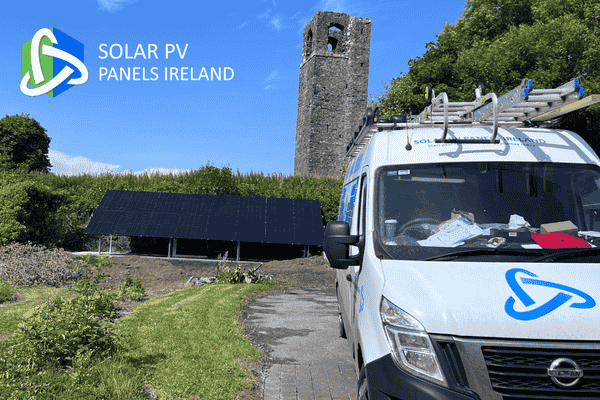
Ground mounted solar panels represent the best solution for maximising energy output on Irish properties. While the initial investment is higher than rooftop equivalents, the system’s superior efficiency, flexibility in placement, ease of maintenance, and compatibility with advanced technologies, provide a really good case for choosing the ground-mount option.
Coupled with generous SEAI grants and the revenue potential of the Clean Export Guarantee (CEG), a ground-mounted solar array is more than an energy solution. It’s a powerful financial decision designed to secure your long-term energy independence in Ireland.
Ready to harness the sun’s full potential? Start saving thousands on your energy bills. Contact Solar PV Panels Ireland today.