Summary
- The Photovoltaic Effect – Solar panels in Ireland use silicon cells. These guys then capture photons from the sunlight outside. This knocks some of the electrons loose. And it creates a flow of Direct Current electricity. Also known as DC.
- The Role the Inverter Plays – Your home runs on AC power. A smart inverter is whats used to convert the DC energy into AC power. This is changing the energy from your roof into power you can actually use for your appliances and whatnot.
- A Complete Energy Loop – Any energy that you don’t end up using can be immediately stored in a home solar battery. This can be used for nighttime use. Or you can even sell it back to the national grid and get energy credits.
- Advanced Tech for Ireland – The leading brands are Jinko, Aiko, and TW. They make really high-performance panels. They are specifically designed for the most energy yield. And this will be the case even in cool Irish conditions.
Hello and a warm welcome to the future of energy! For loads of Irish people owning homes, solar panels have really changed from being some distant, futuristic idea. They really now are a tangible, money-saving reality that are here to stay. Its very common now to see a shimmering, bright solar array on your neighbour’s roof. But have you ever actually wondered what’s even happening up there in those panels? How can those silent, sleek panels turn light into the electricity that powers all your appliances and gadgets?
The answer can be found in one very fascinating scientific principle. Along with a bit of clever engineering and an important system. One thats made to work just as good and just as reliable on an overcast and cloudy Irish day. This blog article will break down exactly how solar panels work. We’ll start from the microscopic level with a solar cell. And we’ll go all the way to the complete system powering everything in your Irish home. We’ll also have a look at leading brands like Jinko, Aiko, and TW. We’ll talk about why they’re at the forefront of this new green revolution.
The Photovoltaic Effect
A process called the photovoltaic effect is very much at the heart of every solar panel in Ireland. But lets be clear, you shouldn’t let that technical term intimidate you at all. It’s actually pretty straightforward.
The word “photovoltaic” is a combination of two Greek words. They are “photo” and “voltaic.” One means light and one relates to electricity. It basically means “light-electricity.” This effect was first discovered back in 1839 by the French physicist Edmond Becquerel. Although, it took over another century before a solar cell was actually practically developed.
A solar panel is made up of loads of small units. They’re called photovoltaic cells. They are usually arranged in a grid-like pattern for the most part. Most PV cells are made from a semiconductor material. The most commonly one is silicon. Silicon is the second most abundant element on Earth.
To really understand and get how a solar cell works, you need to have a think about a its structure. It’s like a sandwich with two easily distinct layers of silicon. One layer is treated, or sometimes called “doped,” with a substance (like phosphorus). This gives it extra electrons and creates a negative charge. This is the N-type layer. The other layer is treated with a substance (like boron). This gives it fewer electrons. It creates holes and a positive charge. This is the P-type layer.
When these two layers are placed together, they create an electric field at what we call their junction. It’s a bit like a hill for electrons. The electrons naturally want to just move from the negative side to the positive side. A photon is a tiny particle of sunlight. When a photon hits the solar cell, it bumps an electron loose from its atom. This electron is now free! And its now full of energy! It is pushed down the hill by the electric field and its forced to flow all the way towards the negatively charged side.
This flow of energised electrons is called an electrical current. To be precise, its a Direct Current (DC). There are metal conductive plates on each side of the cell. They capture these electrons and transfer them to wires. Its here that they can be channelled out of the panel. And just like that, sunlight is somehow converted into electricity. Crazy!
From a Single Cell to a Complete Solar System
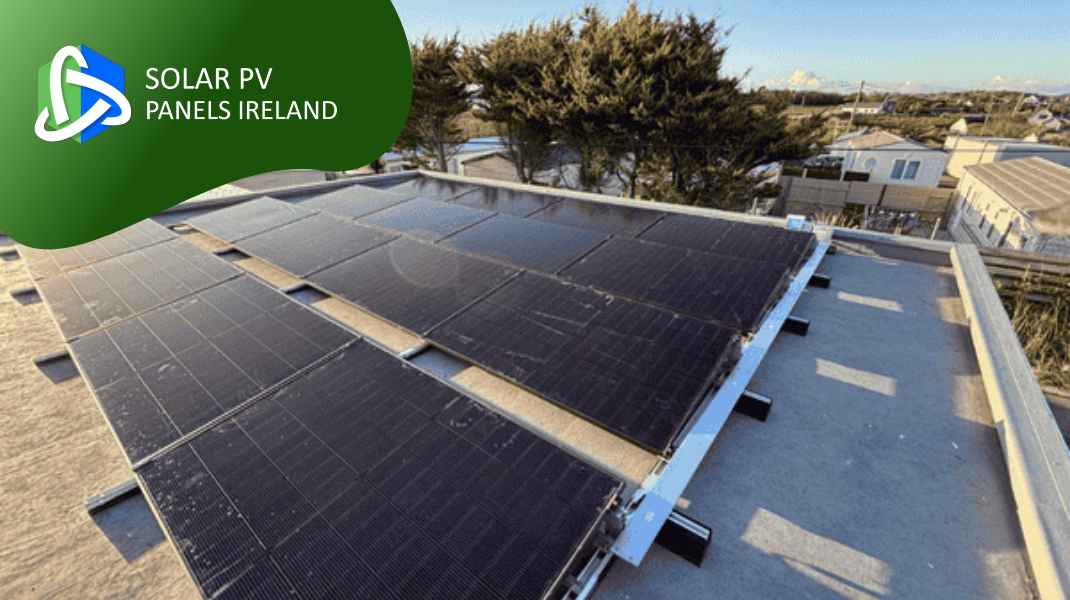
A single solar cell can generate a small amount of electricity. But it’s not exactly enough to power a home. Loads of cells are connected together in a solar panel. Multiple panels are joined up together to form a solar array. This is the only way to achieve a usable amount of power.
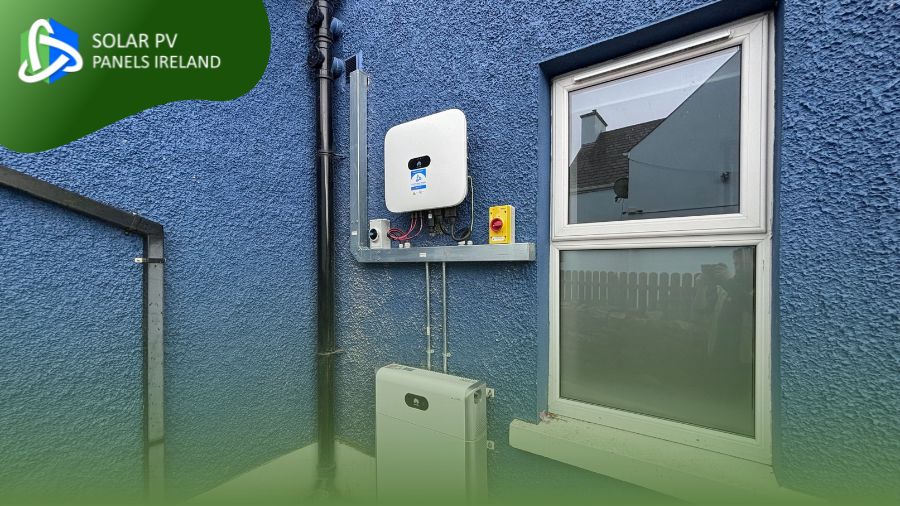
But the journey solar power goes on from your roof, to your appliances isn’t over just yet. The electricity thats generated by the panels is DC electricity. Most of the appliances in your home run on Alternating Current. So does the national grid itself. This is where a crucial piece of equipment comes in… The inverter!
An solar inverter is a smart device that takes the DC electricity from your Irish solar panels and changes it completely into AC electricity that you can actually use. You could have one central inverter for your entire system. You could also have smaller “microinverters” attached onto each seperate solar panel. The AC electricity is directed then to your home’s electrical panel. From here it can be used to power the lights, power your television or even power all of your kitchen appliances that use the most electricity.
Here is a simplified step-by-step breakdown of the whole solar panel system:
- The sunlight hits off the panels – Photons from the sun strike the PV cells. This cause the photovoltaic effect.
- DC electricity is generated – The PV cells produce a big flow of electrons. This creates DC electricity.
- The inverter changes this to power – The DC electricity goes all the way from the panels to the inverter. Here it is swapped to Alternating Current (AC).
- The electricity is used or it gets exported – The AC electricity can be used to literally power your home directly. You might be generating more electricity than you need. In this case, the excess can be sent back to the national grid. This is through a process called net metering. It earns you credits on your energy bill. Another thing you can do is you can store the excess power in a home battery and use it then at night.
Solar Panels Do Work in Ireland
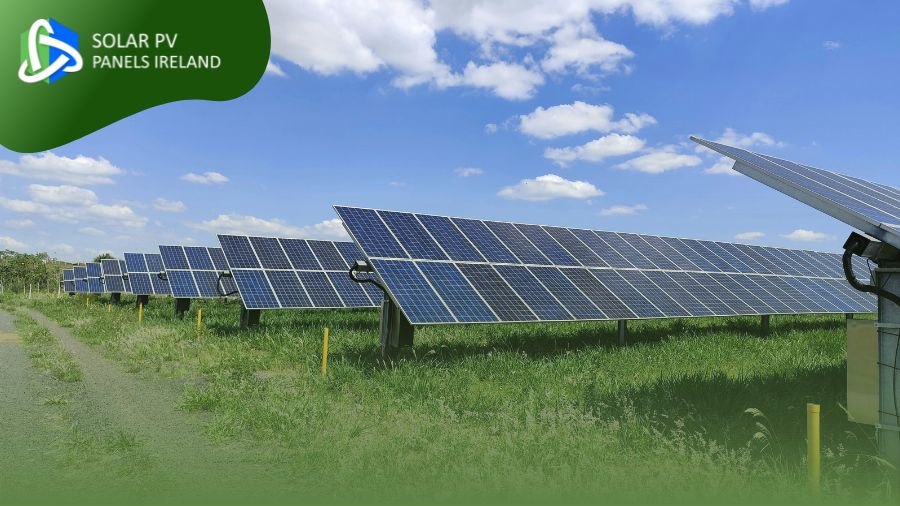
Do solar panels only work well in hot, sunny countries? This is one really common misconception. This isn’t the case at all at all! Look, solar panels do work their best in direct and unobstructed sunlight. But solar panels tare honestly incredibly effective on overcast, dull days. Solar panels generate electricity based on daylight. It’s not necessarily heat that does it.
The photons from the sun still penetrate and get through the cover of clouds. This allows the panels to still make a pretty significant amount of power. Actually, a lot of solar panels can produce a fairly high percentage of their rated capacity on a cloudy and dull day.
Ireland gets somewhere between 1,100 and 1,600 hours of sunshine every year. And solar panels are much more efficient in cool temperatures. So suddenly when you think about it, our climate is actually very suitable for them.
The Irish government has also seen the really big potential of solar power. They are always introducing incentives like the €1,800 SEAI grant. There is also a 0% VAT rate on domestic/home installations. These big factors make a solar panel system a really solid and sound investment. They usually have a payback period often as short as 5-7 years. The potential lifetime savings could be up to and over €20,000.
The Anatomy of a High-Quality Solar Panel
Solar panels are not all created equal. The efficiency, durability and performance of any solar panel depend on two main things. The quality of its components and its manufacturing process. We work with some of the best brands in the industry here at Solar PV Panels Ireland. This is to make sure our customers get set up with a system that will perform super reliably for decades to come.
Monocrystalline vs. Polycrystalline
There is two main types of solar panels for residential use that we should talk about:
- Monocrystalline panels are made from one single, pure silicon crystal. These panels can be spotted very easily. This is because of their dark black colour and their rounded edges. They usually tend to be more efficient and they tend to perform better in low-light conditions. This is because of their purity. The best brands like Jinko and TW will often use this technology in their best, high-performance panels.
- Polycrystalline panels are made from fragments of multiple different silicon crystals. These are melted together. These panels have a blueish hue and they have a more fragmented a look. They are usually much more affordable to produce than than their monocrystalline counterparts. They’re a very popular choice for many Irish people with homes.
The Brands We Trust: Jinko, AIko, and TW
We are super proud to be offering solar panels from industry-leading manufacturers. They have a proven track record of serious quality and performance.
Jinko Solar – They are a global leader in the solar industry. Jinko is renowned all over the world for its high-efficiency solar modules and their extremely innovative technology. Their panels are built to last! They give great power output which makes them a top choice for Irish homeowners. Especially if you’re seeking max performance. Jinko’s commitment to research and development makes sure they are always right at the cutting edge of the solar industry.
Aiko Solar – Aiko is another name that is no stranger to real cutting-edge solar solutions! They are known for their very high-power panels. They are also known for their low-degradation. Their panels are designed and made to get the most energy yield over their 25 year long lifespan. AIko’s tech is built for reliability. They make sure your system performs to the best of its abilities year after year.
TW Solar – A global heavyweight you could call them. They are well known in the solar panel manufacturing industry. TW is a solar brand that joins outstanding quality with a pretty competitive price point. Their panels are best known all over for their robust design. They also show excellent power output. They give us a fantastic balance of performance and value for Irish homes.
The Longevity of Your Solar System
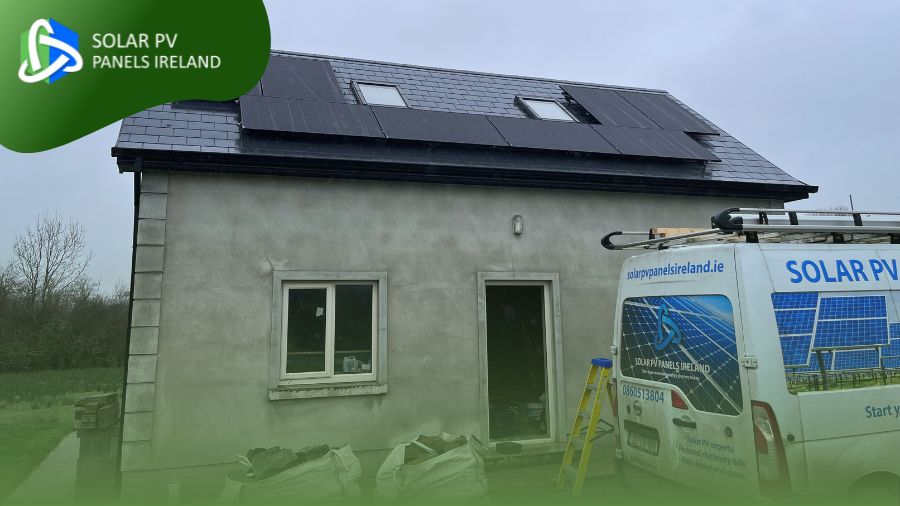
Solar panels are what you would call a long-term investment. A typical modern solar panel comes with a warranty of somewhere around 25 years or maybe more. This means the manufacturer guarantees you that the panel will still be able to produce at least 80% of its output at the start, after 25 years of using it. Not bad at all!
The physical lifespan of the panels is even longer. It can often exceed 30 years. The panels will keep on generating electricity even after the warranty period. Just at a slightly smaller rate, but they’ll still work. With a small bit of solar panel maintenance your solar set up will give you renewable energy for decades. You just have to sometimes do a little cleaning to remove dirt and debris.
To wrap all this up, the science behind solar panels is just a brilliant joining of physics and engineering and the smart people that invented them. These panels provide a really sustainable and cost-effective way to power your home in Ireland. You just need to find a way to harness the simple photovoltaic effect. And don’t forget the generous government incentives in Ireland. And we have a climate that’s surprisingly suited to the technology. There really has never been a better time to jump onto the solar train.
Get in touch with our team today to find out how a solar PV system could benefit your home. We’ll design you a custom solution using the best panels on the market!