Summary
- What They Are: Plug-in solar panels are small, DIY kits that connect directly to standard household wall outlets via a microinverter, bypassing traditional home wiring.
- How They Work: They capture sunlight, convert it to AC power on-board, and feed it backward through your socket to power the nearest active home appliances.
- The Big Drawbacks: In Ireland, plug-in systems carry significant safety risks like circuit overloading, lack battery storage options, and do not qualify for SEAI grants.
- The Smarter Choice: Professionally fitted rooftop solar PV systems deliver exponentially higher power, integrate safely with the grid, and offer legal compliance and long-term financial returns.
With energy bills fluctuating and a nationwide push toward green energy, many Irish homeowners are looking for ways to cut down their electricity costs. While researching your options, you may have come across a relatively new concept: plug-in solar panels. Often marketed as a quick, DIY solution to renewable energy, these systems promise a hassle-free setup without the need for complex installations.
But how do plug-in solar panels work, and are they really a viable long-term solution for Irish properties? At Solar PV Panels Ireland, we believe in giving you the complete facts about renewable technology. While plug-in options sound attractive on paper, they come with substantial safety, efficiency, and regulatory limitations in Ireland. Let’s explore the mechanics of plug-in solar technology and see how it holds up against a professionally fitted, standard rooftop solar PV system.
What Is a Plug-In Solar Panel?
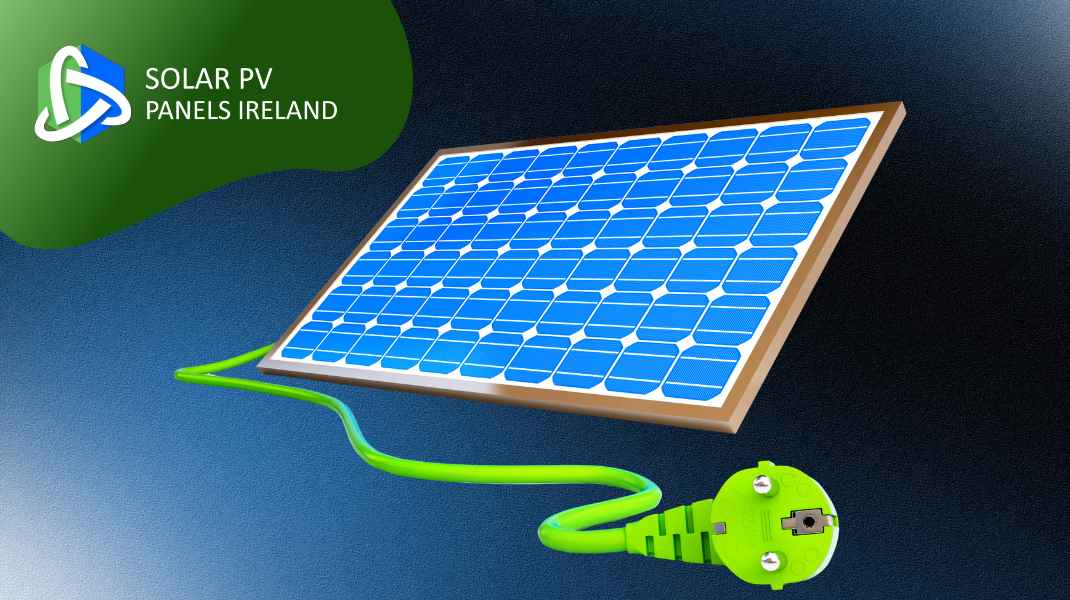
A plug-in solar panel, sometimes referred to as a “plug-and-play” or balcony solar system, is a portable, small-scale photovoltaic kit. Unlike a typical rooftop array that integrates deeply into your property’s electrical infrastructure, a plug-in system is designed to bypass traditional wiring. These setups usually consist of just one or two solar modules, mounting brackets for a balcony rail or flat ground space, and a specialised power cord that connects directly to a standard three-pin household wall outlet. They are highly localised systems meant for modest, immediate energy generation rather than powering an entire household.
The Mechanics: How Do Plug-In Solar Panels Work?
The fundamental science behind a plug-in system is identical to standard solar technology, but the path the electricity travels is completely different. Here is the step-by-step breakdown of how these kits operate:
1. Capturing Sunlight
The process starts when daylight contacts the solar cells on the panel. The photovoltaic cells absorb the solar energy and convert it into Direct Current (DC) electricity.
2. Microinverter Conversion
Standard household appliances operate on Alternating Current (AC) electricity, which means the raw DC power from the panel cannot be used immediately. Attached directly to the back of a plug-in solar panel is a component called a microinverter. The microinverter instantly converts the generated DC power into usable AC electricity.
3. Feeding Power Through the Wall Outlet
Instead of routing power down to a main consumer unit (fuse board), a plug-in system utilises a standard power cord. When you plug this cord into an outdoor or indoor wall socket, the outlet effectively runs in reverse. Rather than drawing power from your home to run an appliance, the socket accepts the electricity generated by the microinverter and pushes it back into your home’s internal wiring ring circuit.
4. Localised Appliance Consumption
Once the green electricity enters your home’s circuit, it naturally flows to the nearest active electrical loads, such as a running refrigerator, a television, or a router. This reduces the amount of electricity your home needs to draw from the national grid, theoretically lowering your bills during peak daylight hours.
Plug-In Solar Panels vs. Traditional Solar PV Systems
To understand why traditional solar installations remain the gold standard, it is important to analyse how plug-in options contrast with professional roof-mounted systems.
| Feature | Plug-In Solar Panels | Traditional Solar PV Systems |
| Installation | DIY setup via standard plug socket | Installed by a Safe Electric registered professional |
| Power Output | Extremely limited (typically 300W to 800W) | High capacity (4kW to 10kW+ customised to your home) |
| Battery Integration | Rare or heavily restricted | Seamlessly integrated for 24/7 power use |
| SEAI Grant Eligibility | Not eligible for government funding | Eligible for substantial SEAI grants |
| Grid Interaction | Cannot safely export surplus power | Automatically sells extra power back via clean export premium |
| Safety Compliance | Significant regulatory grey areas in Ireland | Fully compliant with ESB Networks and wiring rules |
Why Proper Solar PV Panels Are Superior for Irish Homes
While the idea of plugging a solar panel into a kitchen or patio socket sounds incredibly simple, the practical reality of using these systems in Ireland highlights severe shortcomings. A comprehensive, professionally designed solar PV installation from a dedicated provider offers vastly superior advantages.
Safe Electrical Distribution vs. Overloading Risks
Our Irish domestic ring circuits are designed to send power outward from the main fuse box, protected by dedicated circuit breakers. When you inject a separate source of electricity through a standard wall outlet, you bypass this central safety layout. If your home grid experiences an unexpected spike, an unmonitored plug-in system can cause localised wiring to overheat, creating a significant fire hazard.
A traditional solar PV system avoids this completely. Professional installations connect directly to your main distribution board via dedicated safety switches, protecting your household appliances and wiring from any potential faults.
Regulatory and Compliance Reality in Ireland
In Ireland, the electrical system is highly regulated to ensure public safety. Safe Electric Ireland and ESB Networks maintain strict guidelines regarding grid-connected microgeneration. Pushing power backward through a standard domestic socket without a dedicated circuit is not compliant with Irish wiring rules. Every grid-tied system must be signed off by a certified electrician and formally registered with ESB Networks. Choosing a fully managed service guarantees your system is 100% compliant, legal, and safely integrated from day one.
Maximising Energy with Battery Storage and Smart Export
Plug-in kits generate minimal power and lack the capability to efficiently store excess energy. If you are not at home to use the electricity right when the sun is shining, that free energy is lost or pushed out to the grid for free.
A robust home solar installation includes options for advanced battery storage. This allows you to save the green energy generated during the afternoon and use it to power your home during the evening. Furthermore, with a proper installation, any surplus energy you do not use can be fed back into the grid, earning you tax-free income through the Clean Export Guarantee (CEG) tariff.
Long-Term Value and SEAI Grants
Plug-in solar kits do not qualify for Sustainable Energy Authority of Ireland (SEAI) grants. You must pay the full cost upfront for a system that will only provide a tiny fraction of your household needs. Conversely, a permanent residential solar array qualifies for substantial SEAI funding, significantly reducing your initial investment while radically improving your home’s Building Energy Rating (BER) and overall property resale value.
Take the Reliable Route with Solar PV Panels Ireland
The allure of a cheap, plug-and-play solar kit is understandable, but it ultimately amounts to a short-term, inefficient fix that carries genuine electrical and legal risks for Irish property owners. If you want to truly eliminate your reliance on high utility bills and make a meaningful impact on your carbon footprint, a professional rooftop solar PV installation is the only reliable choice. At Solar PV Panels Ireland, we provide comprehensive, end-to-end solar solutions customised to the unique shape, orientation, and energy demands of your home. Our team handles every aspect of the process:
Site Assessment: We analyse your roof structure and household power consumption to design an optimal solar array.
Grant Paperwork: We help you navigate the SEAI application process so you can secure maximum financial incentives.
Expert Installation: Our fully certified, Safe Electric registered technicians install top-tier, weather-resistant solar panels and smart inverters.
Grid Connection: We handle all required notifications to ESB Networks, ensuring your system is fully legal, safe, and configured to earn you money for exported power.
Do not compromise on the safety and financial potential of your home’s energy transition. Invest in a real, high-performance solar solution built to withstand the Irish climate. Contact Solar PV Panels Ireland today to request your personalised quote, and let our expert team help you switch to clean, reliable, and legally compliant solar energy.