
Summary
- PV Stands for Photovoltaic: The term combines the Greek word for light (“photo”) with “voltaic” (electricity), referring to technology that converts daylight directly into usable household electricity.
- Electricity vs. Hot Water: Unlike solar thermal panels, which only use the sun’s heat to warm your water cylinder, solar PV panels generate versatile electricity to run home appliances and charge electric vehicles.
- Engineered for the Irish Climate: Solar PV runs on daylight rather than direct, hot sunshine. The cool, temperate climate of Ireland actually keeps the silicon cells at an optimal operating temperature for year-round efficiency.
- Strong Financial Incentives: Homeowners can significantly lower upfront costs by combining SEAI cash-back grants with the government’s 0% VAT rate, while earning ongoing utility credits via the Clean Export Guarantee.
Wading through the sea of renewable energy jargon can feel a bit overwhelming when you are just trying to figure out how to lower your monthly electricity bills. If you have spent even five minutes looking into how to upgrade your Irish home with clean energy, you have undoubtedly run across a specific two-letter acronym over and over again. It is on every product brochure, every government grant application, and every installer’s website.
That acronym is PV.
But what does it actually mean, and why should the average homeowner care? Understanding this simple term is your first real step toward taking control of your energy independence.
The Meaning Behind the Acronym
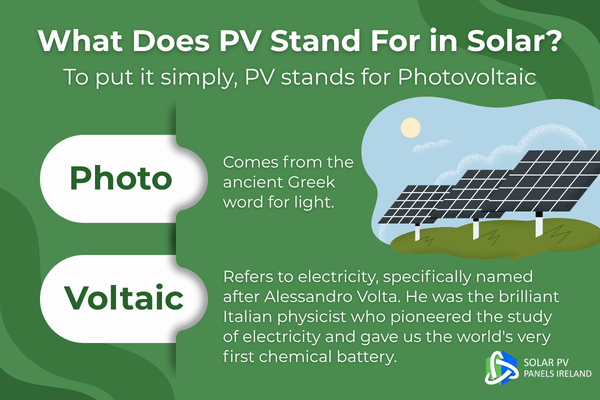
To put it simply, PV stands for Photovoltaic.
It sounds like a mouthful of complex scientific jargon, but it makes perfect sense when you break the word down into its original roots:
- “Photo” comes from the ancient Greek word for light.
- “Voltaic” refers to electricity, specifically named after Alessandro Volta. He was the brilliant Italian physicist who pioneered the study of electricity and gave us the world’s very first chemical battery.
When you fuse those two concepts together, the literal meaning of photovoltaic is light-electricity.
In practical, everyday terms, it refers to a technology that captures daylight and converts it directly into usable electrical current. No moving parts, no noise, and absolutely zero emissions. When people talk about installing a “solar PV system” on a roof in Ireland, they are talking about a specific type of setup engineered to power things like your washing machine, your TV, and your electric vehicle. It is a completely different beast from older types of solar technology, which is a crucial distinction to keep in mind before making any investment.
How the Photovoltaic Process Actually Works
The actual science happening up on your roof is incredibly elegant.
A standard solar panel is not just one giant block of glass; it is made up of dozens of much smaller units called photovoltaic cells. These cells are layered with a semiconductor material, usually silicon, which is incredibly abundant and brilliant at conducting electricity when light hits it.
Here is what happens on a typical afternoon:
- Daylight strikes the surface of the silicon cell.
- The energy from that light knocks electrons completely loose from their atoms.
- Because of the clever internal physics of the cell, these loose electrons are forced to flow in one specific direction.
- This unified flow of electrons forms a direct current (DC) of electricity.
Because a single silicon cell only creates a tiny trickle of power, manufacturers wire dozens of them together to build a robust, weather-proof panel. When you link a group of these panels together across your roof, you get a solar array.
This array generates enough combined raw power to handle heavy-duty household appliances. The best part? It happens completely instantaneously, the exact millisecond daylight touches the roof.
Solar PV vs. Solar Thermal: Don’t Confuse the Two
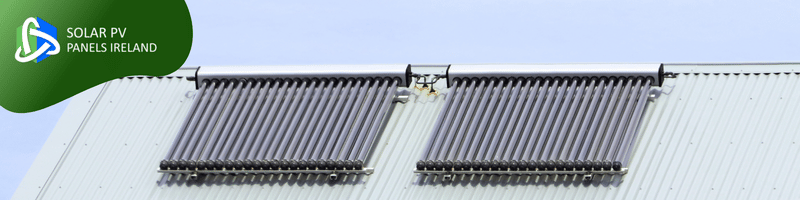
A very common trap for Irish homeowners is confusing solar PV with solar thermal systems. Both involve putting panels on your roof, and both rely entirely on daylight, but they do completely different jobs.
Think of it this way:
Solar PV creates electricity. The power flows straight down into your home’s main fuse board. From there, it runs your lights, appliances, and heat pumps. If you have a smart immersion diverter, you can even send excess power to heat your water cylinder, or divert it straight into a home battery.
Solar Thermal creates hot water. These panels do not generate a single watt of electricity. Instead, they act like a dark radiator on your roof, using the sun’s heat to warm up a liquid passing through them. This hot fluid then travels down a pipe to warm up the water in your hot water tank.
While solar thermal is fantastic at what it does, it won’t keep your lights on during a power cut, and it won’t charge your car. Because electricity is far more versatile, modern domestic projects in Ireland have shifted heavily toward solar PV.
The Key Components of a Real-World System
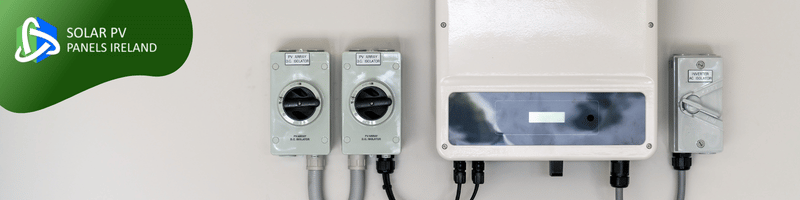
Your panels cannot power your home entirely on their own. The electricity those silicon cells generate is direct current (DC), but our household sockets and the Irish national grid run on alternating current (AC).
To bridge this massive gap, every home system requires an inverter.
You can think of the inverter as the actual brain of the entire installation. It sits in your attic or utility room, constantly converting raw DC power into safe, usable AC electricity. Modern inverters are incredibly smart; they monitor your production levels and usually link directly to a phone app so you can watch your energy generation in real-time.
Another major player in modern setups is battery storage. Panels naturally produce the bulk of their power during the middle of the day when the sun is highest, but that is often exactly when Irish families are out of the house at work or school. Instead of letting that pristine daytime energy slip away, a battery stores it safely. When everyone comes home in the evening, the system switches over to the battery, allowing you to run your evening showers and cook dinner using the power you harvested at noon.
But Do They Really Work in the Unpredictable Irish Climate?

It is the number one question every installer hears: “Sure, it works in Spain, but what about the grey skies of Ireland?”
It is a completely fair doubt, but here is the good news: photovoltaic panels do not need hot, direct sunshine to work. They run on daylight, not heat.
Even on those classic overcast, misty Irish afternoons, light still penetrates the cloud cover and reaches your roof. While your system will obviously hit its absolute peak performance on a brilliant, cloudless July afternoon, it keeps right on producing a surprising amount of electricity during standard grey weather.
Interestingly, excessive heat actually makes silicon panels less efficient. The cool, temperate climate we have across Ireland keeps the panels at an ideal operating temperature, ensuring they run efficiently year-round. While places like Wexford and Waterford get a bit more total sunlight annually, homes from Donegal to Cork can easily harvest plenty of daylight to run a household.
Saving Money and Lowering Your Footprint
Investing in a photovoltaic setup offers massive financial upside. By producing your own power right on your roof, you immediately cut down on the amount of expensive electricity you have to buy from the grid. This gives you an instant buffer against wild spikes in global energy prices.
Additionally, you can now benefit from the Clean Export Guarantee (CEG).
If your panels are churning out more power than your house can use or store on a bright summer afternoon, the excess gets automatically fed back into the national grid. Thanks to this policy, Irish energy providers are legally required to pay you for that clean energy. You will see it show up as a direct credit on your electricity bill.
On the environmental side, the impact is massive. Most of Ireland’s grid electricity still relies on burning fossil fuels, which pumps greenhouse gases into our atmosphere. By switching to solar, you prevent tons of carbon dioxide from being released over the thirty-year lifespan of your system.
Irish Grants and Incentives Explained
To make the transition easier, the Irish government offers great financial incentives through the Sustainable Energy Authority of Ireland (SEAI). These supports drastically lower the initial barrier to entry for local homeowners.
The SEAI solar grant acts as a direct cash-back rebate based on the overall size of the array you choose to install. This funding is available for any home built and occupied before 2021, making it a brilliant option for upgrading existing properties.
Furthermore, the government recently took a massive step by completely removing VAT on the supply and installation of residential solar panels. This 0% VAT rate slashes thousands of euros off the upfront cost right from day one, significantly speeding up the time it takes for the system to completely pay for itself.
Finding the Perfect Setup for Your Roof
No two homes in Ireland use energy the exact same way, which means a cookie-cutter approach just doesn’t work. To get the best possible return on your investment, a system needs to be carefully tailored to your lifestyle and your property.
While a perfectly south-facing roof is the gold standard for catching the midday sun, east-west splits are becoming incredibly popular too. An east-west layout catches the early morning sun and the late evening light, matching up perfectly with when most families are actually home.
The absolute size of your system, measured in kilowatts peak (kWp), should be calculated using your actual historic electricity bills. A professional team will look at your current usage, whether you plan to buy an electric vehicle down the road, or if you are thinking about swapping to a heat pump.
If you want to see how photovoltaic technology can work for your specific property, head over to Solar PV Panels Ireland to explore our targeted installation options and set up a proper, personalised assessment for your home.
Taking the Next Step
Switching over to solar is a fantastic way to future-proof your home. Demystifying the term “PV” is just the start; the real reward comes when you watch your energy bills drop month after month.
With modern panels built to survive tough Irish winters and state-of-the-art battery systems keeping the lights on at night, taking control of your energy future has never been more achievable. Take a look at your roof, check out the current SEAI options, and see how easy it is to start making your own clean power.
To dive deeper into the technical details of renewable energy targets or to check your eligibility for local funding, take a look at the official guidelines on the Sustainable Energy Authority of Ireland portal or browse the latest community updates through the European Commission Energy Portal.