Summary
- What it is: External Wall Insulation (EWI) involves bolting high-density insulation boards to the outside of your house and sealing them with weather-resistant render. Effectively wrapping your home in a protective winter coat.
- The Big Benefits: It slashes heating bills by 30% to 40%, stops internal heat loss through masonry, and permanently eradicates structural drafts, cold spots, and toxic black mould.
- Zero Internal Mess: Unlike dry-lining, all work happens outside. You lose absolutely zero indoor living space and don’t have to pack up your furniture or move out during installation.
- The BER Turbocharger: While EWI traps the heat inside, pairing it with solar panels from Solar PV Panels Ireland generates free, clean electricity to run your home, drastically accelerating your jump to an A or B3 Building Energy Rating.
If you live in Ireland, you already know about the weather. It’s an unpredictable mix of driving Atlantic rain, biting winds, and that damp, bone-chilling winter cold that seems to seep right through the walls. If your house was built before the mid-2000s, there is an incredibly high chance that a massive chunk of the money you spend on heating is escaping directly through your exterior plaster. It is literally vanishing into thin air.
When researching ways to fix a drafty, freezing home and slash those terrifying winter energy bills, you will constantly see the term External Wall Insulation (EWI) pop up. But what does it actually mean? How does it handle the unique Irish climate, what does it cost, and is it genuinely worth the price tag?
Let’s dive into the nuts and bolts of external insulation. Let’s see how it stacks up against other methods, look at the latest SEAI grants, and explore why pairing it with smart tech like solar panels from Solar PV Panels Ireland is the ultimate recipe for a warm home and an impressive Building Energy Rating (BER).
The Basics: What Actually is External Wall Insulation?
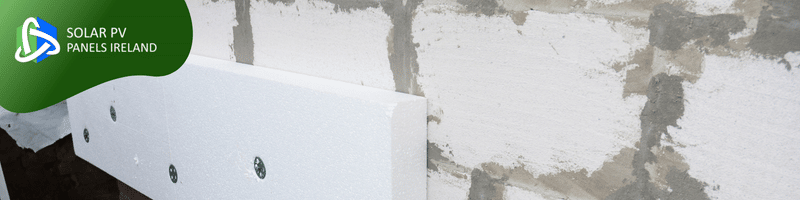
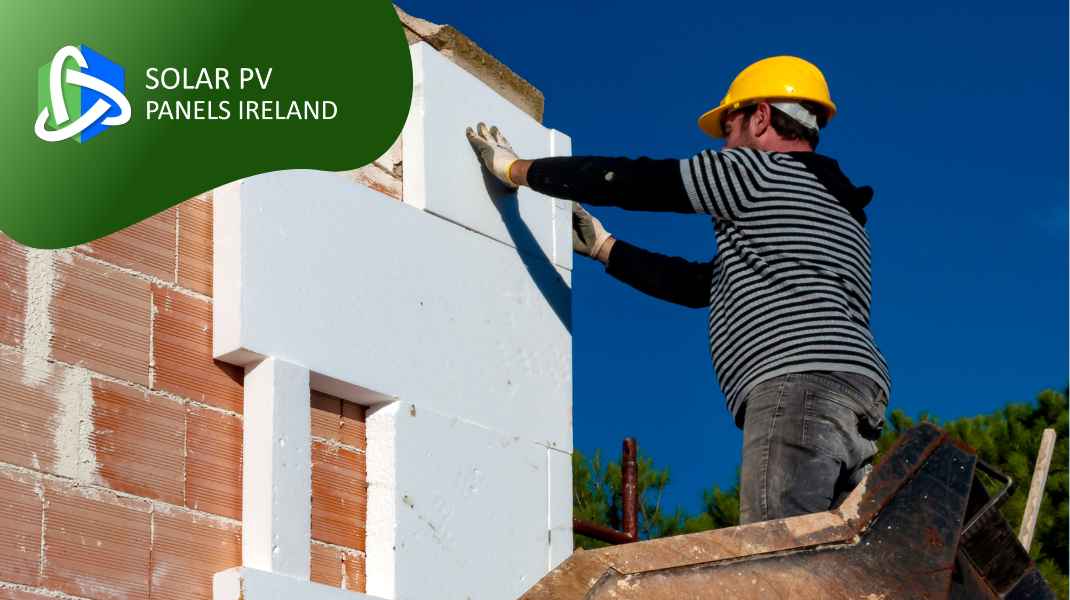
At its core, external wall insulation, often called “wrapping” a house, is exactly what it sounds like. Instead of putting insulation inside your rooms, specialist contractors fix high-grade insulation boards directly to the outside of your property. This new layer is then sealed up and covered with a highly durable, weather-resistant render.
Think of it as upgrading your home from a leaky fleece jacket to a premium, windproof winter coat.
Instead of trying to trap heat inside a room while the heavy block walls stay freezing cold, EWI keeps the actual structure of your house warm. Your masonry walls begin to act as a thermal mass. They absorb heat from your radiators, store it, and slowly radiate it back into your living spaces long after the central heating clicks off.
What Goes Into an EWI System?
A proper external setup is a multi-layered engineering system built to withstand decades of Irish weather while letting the property breathe. A standard installation involves:
- Heavy-Duty Fixings & Adhesive: To lock the insulation boards permanently to your existing exterior block or plaster.
- The Insulation Core: Usually made from Expanded Polystyrene (EPS) or Mineral Wool, specifically chosen for their low U-values (which just means they are exceptional at stopping heat movement).
- Reinforcing Mesh & Base Coat: A flexible, cement-like layer embedded with fiberglass mesh. This gives the walls massive impact resistance against footballs or accidental bumps etc.
- The Topcoat Render: The final, breathable silicone or acrylic plaster. This defines the new look of your home and keeps the driving rain out.
Why Uninsulated Irish Homes Struggle So Much
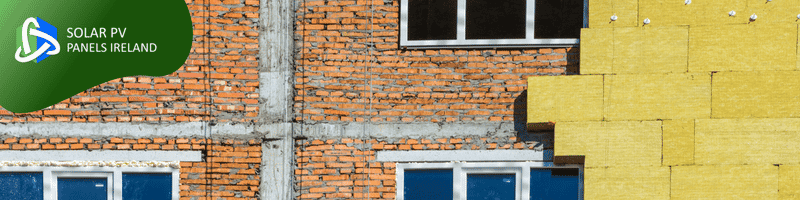
Ireland’s older housing stock has a specific, structural problem. Millions of homes built during the 1970s, 80s, and 90s were constructed using hollow concrete blocks or solid brick/stone walls with zero internal insulation.
Data from the Sustainable Energy Authority of Ireland (SEAI) shows that up to 35% of all heat loss in an uninsulated property happens right through the walls.
In our damp climate, cold walls create an even nastier issue: thermal bridging. This happens when freezing external temperatures travel through the walls and meet the warm, humid air inside your home, usually in corners, near floors, or around windows. The result? Instant condensation, which quickly turns into ugly, unhealthy black mould. Because EWI wraps the entire building from the outside, it completely eliminates these cold bridges, keeping your internal walls dry, warm, and mould-free.
EWI vs. Internal vs. Cavity Insulation: The Real Differences

If you are looking to upgrade, you have three main paths. Choosing the right one depends entirely on how your house was built and what your budget looks like.
| Insulation Type | How It Works | Best For | The Main Catch |
| Cavity Wall Pumping | Injecting polystyrene beads into the empty space between double brick/block walls. | Houses built with a clear, open cavity. | If your home is built with solid stone or hollow concrete blocks, you don’t have a cavity to fill. |
| Internal Dry-Lining | Fixing insulated plasterboards to the inside face of your external walls. | Historic homes or properties where you cannot alter the outside look. | It eats into your room sizes, requires ripping out skirting boards/radiators, and creates massive internal dust and disruption. |
| External Insulation (EWI) | Wrapping the entire outer skin of the building in insulation and fresh render. | Solid wall or hollow block homes looking for maximum efficiency. | Higher upfront cost, and it changes the external appearance of the building. |
The Genuine Benefits of Wrapping Your House
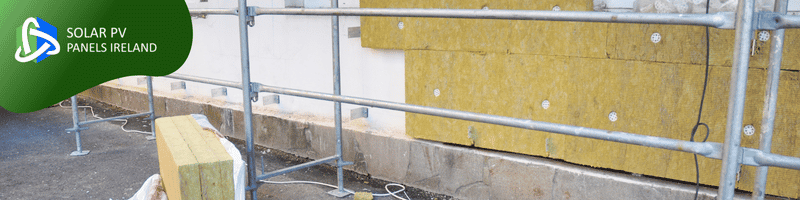
Investing in external insulation is a major project, but the day-to-day transformation of your living space is immense.
1. Massive Energy Bill Reductions
Because EWI dramatically slows down how fast heat escapes, your home stays warmer for hours longer. Your boiler or heat pump doesn’t have to constantly cycle on and off to maintain a comfortable temperature, dropping your heating bills by up to 30% to 40%.
2. Goodbye to Damp and Black Mould
By moving the “dew point” (the exact zone where cold air meets warm air and creates moisture) completely outside the structural masonry, your indoor walls remain permanently dry. This eradicates the root cause of black mould, making the air inside your home significantly healthier for your family to breathe.
3. A Complete Aesthetic Facelift
If your home’s exterior plaster is cracked, stained, or simply looking dated, EWI acts like an immediate cosmetic renovation. With a massive palette of modern, coloured renders available, your house instantly gains curb appeal and a much higher resale value.
4. Zero Loss of Living Space
Unlike internal dry-lining, which can easily shrink a standard living room by several inches on every exterior wall, EWI doesn’t steal a single millimetre of your indoor square footage. Even better, because all the work happens outside, you don’t have to pack up your furniture or move out while the installers are at work.
What Does External Insulation Cost in Ireland?
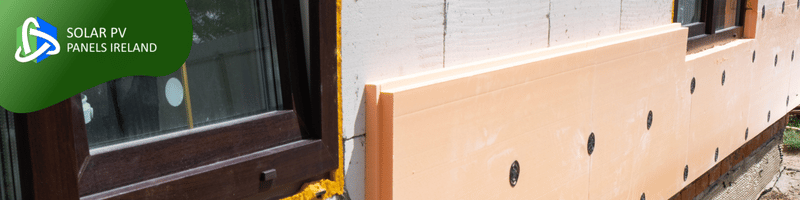
Let’s talk numbers. The price of an EWI project depends heavily on the size of your home, the number of storeys, and architectural details like bay windows or extensions.
As a general benchmark for gross costs across Ireland, expect the following ranges before grants are applied:
- Mid-Terrace House: €8,000 – €12,000
- Semi-Detached House: €15,000 – €22,000
- Detached House: €20,000 – €30,000+
While those initial figures can cause a bit of sticker shock, the net cost drops drastically once you factor in the current SEAI cash incentives.
Maximising the SEAI Grants
To help Ireland hit its carbon reduction goals, the government offers significant financial support for EWI through the SEAI. These are fixed-amount grants, meaning you get a direct chunk of cash back to offset the invoice:
- Apartment (Mid-floor or built-upon): €3,000
- Mid-Terrace House: €3,500
- Semi-Detached / End-of-Terrace: €6,000
- Detached House: €8,000
Quick tip: To get these grants, your property must have been built and occupied before 2011, and you must use an SEAI-registered contractor who installs fully approved systems.
Supercharging Your Home: The EWI + Solar PV Combination
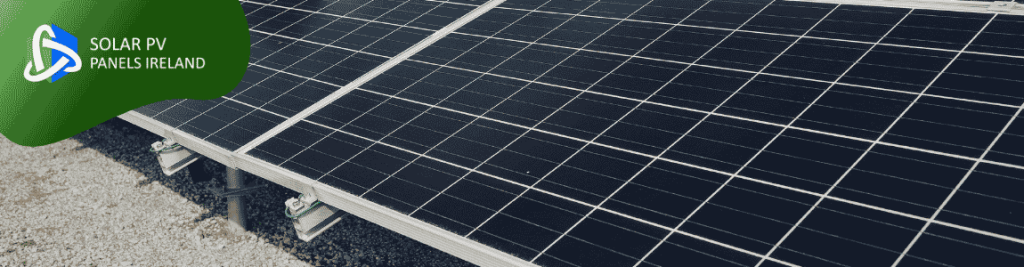
Insulating your walls is incredibly effective at stopping heat from escaping. But if you want to truly future-proof your home and gain true energy independence, you need to think about how you generate energy, too.
Taking a holistic approach to your property’s energy needs turns a standard renovation into something incredibly powerful. While external insulation seals up the building envelope, installing a premium Solar PV System directly addresses your electricity bills.
Why Solar and Insulation Belong Together
Once your home is wrapped in insulation, your overall space heating demand plummets. If you have moved to an electric heating setup, like a modern air-to-water heat pump, or if you simply use everyday household appliances, electricity becomes your biggest ongoing running cost.
By placing solar panels on your roof, you harness free, clean electricity from the sun to run your heat pump, power your washing machine, and even charge your electric vehicle. Thanks to the Clean Export Guarantee (CEG), any excess solar energy you don’t use can be fed back into the national grid for a tax-free credit on your bill.
Boosting Your Building Energy Rating (BER)
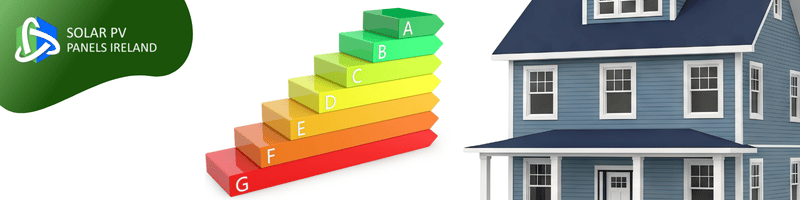
In Ireland, a property’s BER is no longer just a piece of paper, it dictates real financial value. Ranging from an efficient ‘A1’ down to a leaky ‘G’, a valid BER certificate is legally required if you want to sell or rent your home. Crucially, Irish banks now offer significantly lower interest rates, known as Green Mortgages, to anyone buying or upgrading to a home with a BER rating of B3 or higher.
Both external insulation and solar PV systems are absolute game-changers for your BER calculation.
The EWI Impact
Upgrading solid or hollow-block walls with EWI completely transforms your home’s fabric loss score. This upgrade alone can frequently lift a drafty E or F-rated property straight up into the C or D bracket.
The Solar PV Multiplier
The official BER software (DEAP) heavily rewards homes that produce their own renewable electricity on-site. When you pair a highly insulated building envelope with an active solar array, your primary energy demand drops through the floor.
By combining External Wall Insulation (retaining the heat) with Solar PV Panels (producing free power), reaching a coveted A-rating or a solid B3 becomes an achievable reality, even for homes built forty or fifty years ago.
Why Partner With Solar PV Panels Ireland?

At Solar PV Panels Ireland, we know that a home is an interconnected system. Stopping heat loss with insulation is half the battle; powering that home with clean, self-generated solar energy is what truly breaks the cycle of relying on expensive utility companies and volatile fossil fuel prices.
Our expert team designs and installs high-performance solar PV systems tailored specifically to your roof layout and household energy habits. We work alongside your broader retrofit goals, showing you exactly how to maximise your renewable generation to unlock the highest possible BER improvements and the absolute lowest monthly running costs.
Take a look at our Solar PV Services to discover how we can help you build a warmer, greener, and far cheaper home to run.
Important Things to Watch Out For Before You Start
If you are planning to move forward with an external insulation project, keep these practical points in mind:
- Check Your Roof Overhang: EWI adds significant thickness to your outside walls. Your roof eaves need to extend far enough out to cover the new insulation layer. If they don’t, your contractor will need to extend the roofline or install specialised flashing.
- Moving Fixtures: Everything attached to the outside of your house, gas meters, rainwater downpipes, outdoor lights, and internet cables, will need to be carefully disconnected, extended, and refitted onto the new exterior surface.
- Planning Rules: For the vast majority of Irish homes, EWI is considered an exempted development. However, if your home is a listed building or sits within an Architectural Conservation Area (ACA), you must check in with your local planning office first.
- Windows and Sills: Because the walls become thicker, your existing window sills will usually need to be extended using engineered over-sills to ensure rainwater drains away properly without running down your new render.
Is External Wall Insulation Genuinely Worth It?
Without question, yes. For older Irish properties built with solid or hollow concrete blocks, external wall insulation is widely considered the single most effective retrofitting step you can take. It targets the root causes of uncomfortable living conditions: structural dampness, drafts, rapid heat loss, and tired-looking exterior plaster.
While the initial investment is higher than alternative options, the lack of internal disruption, the preservation of your valuable indoor space, the fresh new look of your property, and the immediate drop in energy costs deliver an undeniable return on investment.
By combining the structural protection of a high-quality external wrap with the clean energy generation of a tailored solar array from Solar PV Panels Ireland, you aren’t just getting your home ready for the next winter, you are completely future-proofing your property for decades to come.
Ready to find out how much you could save by upgrading your home’s energy setup? Head over to Solar PV Panels Ireland today to book a free solar assessment and start your journey toward a warmer, cheaper, and more sustainable home.