
Summary
- Impressive Lifespan: Modern high-quality solar panels are built to perform efficiently for 40 to 50 years. This far outlasts their standard 25-year performance warranties.
- Slow Degradation: Technology has advanced so that panels now lose only about 0.5% to 0.7% of their efficiency per year. This means they still operate at roughly 82% capacity after 25 years.
- Minimal Maintenance for Longevity: Simple steps like cleaning your panels every six months and ensuring no trees shade the array can help maximise your system’s lifespan and energy output.
- Eco-Friendly Retirement: When panels eventually reach the end of their life, they are 95% recyclable, including the glass, metal frames, and silicon. This makes them a truly sustainable long-term investment.
If you have been keeping an eye on the ever-growing number of solar arrays appearing on rooftops across Ireland, you have likely wondered about the logistics of fitting them onto your own home. One of the most common questions we hear at Solar PV Panels Ireland is simply: “What size are solar panels?” It is a practical question because, while we all want to save on our electricity bills, our roofs only have so much real estate. Understanding the physical dimensions and weight of these panels is the first step in figuring out if your home is a good candidate for renewable energy and how many panels you can actually fit.
Standard Dimensions for Residential Solar Panels
When we talk about the size of a solar panel, we are usually looking at three specific measurements: the length, the width, and the thickness of the frame. In the Irish market, there has been a significant move toward a “standard” size for residential installations, but there is still some variation depending on the brand and the power output. Typically, a modern residential solar panel measures approximately 1.7 metres in length and about 1.1 metres in width. To give you a mental image, that is roughly the size of a standard internal door, though slightly wider. The thickness of the panel, which includes the protective glass and the aluminium frame, usually sits between 30mm and 40mm.
While those dimensions cover most homes, the industry is constantly evolving. A few years ago, it was common to see panels that were slightly narrower, often around the 1-metre mark. As technology improves and manufacturers aim for higher wattage, panels have grown slightly. You might now encounter “large-format” panels that reach up to 2 metres in length. These are often used in commercial settings where roof space is vast, but they are increasingly appearing on larger domestic roofs in Ireland as well. The key thing to remember is that a larger panel doesn’t always mean a better system; it simply means you need fewer of them to reach your desired energy target, provided your roof can handle the layout.
Weight and Structural Considerations for Irish Roofs
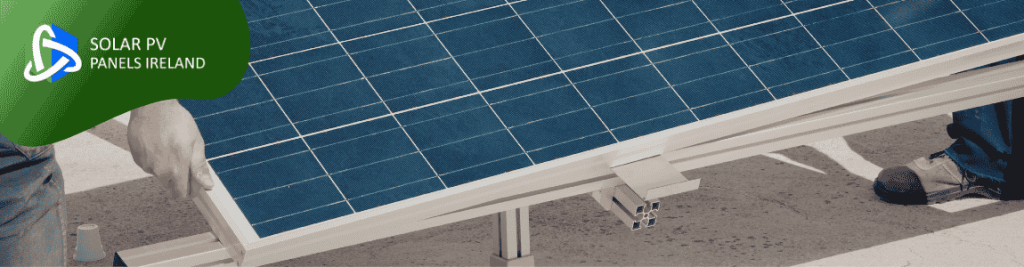
The weight of the panels is another factor that often catches homeowners by surprise. A single solar panel typically weighs between 18kg and 22kg. While that might not sound like much on its own, a standard 4kW system, which is very popular for a three-bedroom semi-detached house in Ireland, usually consists of about 10 panels. When you add in the weight of the mounting rails, the roof hooks, and the cabling, you are looking at a total additional load of over 200kg on your roof structure.
This is why we always conduct a thorough site survey before any work begins. Most Irish roofs, whether they are slate or tile, are more than capable of supporting this weight, but ensuring the structural integrity is sound is a non-negotiable part of our process. At Solar PV Panels Ireland, we take pride in being a locally-owned business that treats every installation with a personal touch. We aren’t a faceless corporation; when you call us, you’re talking to experts who understand the unique challenges of the Irish climate and Irish architecture.
Planning Your Roof Layout and Setback Requirements
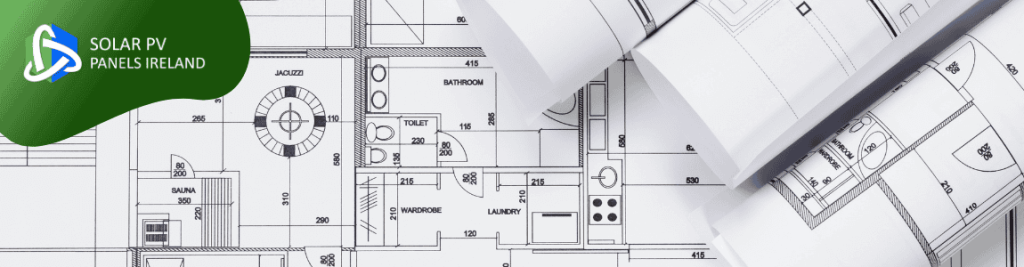
When planning your layout, it is important to remember that you can’t simply cover every square inch of your roof from edge to edge. Irish regulations and safety standards, such as those set out by the SEAI, require specific “setback” distances. Usually, this means leaving a gap of about 500mm from the edges of the roof and the ridge. You also have to work around obstacles like chimneys, skylights, and vent pipes. These “dead ones” can significantly reduce the usable area of your roof.
For example, if you have a roof that is 40 square metres in total, you might find that only 25 or 30 square metres are actually suitable for mounting panels. This is where the efficiency of the panel becomes vital; higher-efficiency panels allow you to get more power out of a smaller footprint. We specialise in designing custom systems that maximise every square inch of your available roof space. Whether you have a small terraced house with limited space or a sprawling farmhouse, our team handles everything from the initial design and SEAI grant application right through to the final BER assessment.
Residential vs. Commercial Panel Sizes
There is also a notable difference between residential and commercial solar panels. If you are looking at panels for a business or a large farm shed, you will often find that the panels are much larger and heavier. Commercial panels frequently exceed 2.2 metres in length and can weigh upwards of 25kg or 30kg. These are designed for maximum output on large, flat surfaces and are generally too cumbersome and heavy for a standard domestic roof.
For most homeowners, the standard 1.7m x 1.1m panel remains the “sweet spot” because it is easier for installers to handle safely on a pitched roof and offers the most flexibility when designing a layout around chimneys and windows. We only use high-quality, glass-fronted panels with a 25-year power rating warranty, ensuring your investment is protected for decades to come regardless of the scale of the project.
Orientation and Aesthetics
Orientation and the “shape” of your roof also dictate how these dimensions work in practice. In Ireland, south-facing roofs are the gold standard because they capture the most sunlight throughout the day. However, east-west split systems are becoming very popular. In these setups, we place some panels on the east side to catch the morning sun and others on the west for the evening.
Because of the fixed dimensions of the panels, we sometimes have to get creative with the orientation, installing some in “portrait” (vertical) and others in “landscape” (horizontal) to make the puzzle pieces fit. A professional design will ensure that the array looks symmetrical and aesthetically pleasing while still hitting your energy goals.
Matching System Size to Your Energy Needs
Ultimately, the goal of choosing the right size and number of panels is to match your household’s energy consumption. The average Irish home uses about 4,200 kWh of electricity per year. To cover a significant portion of that, you are generally looking at a system of 8 to 12 panels. If you have an electric vehicle or a heat pump, you might want to go larger, perhaps 14 to 16 panels, provided your roof space allows for it.