Summary
- Understanding the Ratings: Solar efficiency measures how much sunlight is converted into electricity; modern panels in Ireland typically range between 19% and 24% efficiency.
- Space Optimisation: High-efficiency panels are crucial for Irish homes with limited roof space, as they generate more power per square meter than standard alternatives.
- The Irish Advantage: Our temperate climate actually prevents panels from overheating, allowing high-quality systems to perform exceptionally well in cooler, overcast conditions.
- Long-Term Value: Investing in premium efficiency through Solar PV Panels Ireland ensures a better return on investment and a quicker payback period via SEAI grants.
As Ireland transitions toward a greener future, more homeowners from Longford to Dublin and beyond are looking upward at their rooftops and wondering about the potential of the sun. While the Irish weather is famously unpredictable, the technology behind photovoltaic systems has advanced to a point where capturing daylight is more viable than ever. However, one term dominates the conversation more than any other: efficiency. Understanding what solar panel efficiency truly means and why it matters specifically in the context of the Irish climate is essential for anyone considering moving to renewable energy.
Defining Solar Panel Efficiency
At its most fundamental level, solar panel efficiency is a measurement of a solar cell’s ability to convert sunlight into usable electricity. If a solar panel has an efficiency rating of 20%, it means that it is capable of converting 20% of the solar energy hitting its surface into electrical power. The remaining percentage is primarily lost as heat or reflected light. In the early days of residential solar, efficiency ratings often hovered in the low teens. Today, thanks to massive leaps in material science, most high-quality domestic panels sit between 20% and 24%.
It is a common misconception that a panel with 20% efficiency is wasting the rest of its potential. In reality, the laws of physics dictate a theoretical ceiling on how much energy a single junction of silicon can capture. Sunlight consists of various wavelengths, and current technology targets specific parts of that spectrum. Homeowners shouldn’t look for a 100% efficient panel, but rather the most optimised panel for their specific roof space and budget.
The Science of Photovoltaic Conversion

To grasp why some panels perform better than others, we have to look at the molecular level. Most modern solar panels are made from silicon, a semiconductor. When photons from sunlight strike the silicon cells, they knock electrons loose, creating a flow of electricity. The efficiency of this process is dictated by the purity of the silicon and the architecture of the cell. For example, monocrystalline panels are sliced from a single, pure crystal of silicon. This allows electrons more room to move, resulting in higher efficiency and a sleeker, black appearance.
In contrast, polycrystalline panels are made from multiple silicon fragments melted together. While these are often more affordable, the internal boundaries between the crystals act as hurdles for the electrons, slightly lowering the overall efficiency. There are also emerging technologies like PERC (Passivated Emitter and Rear Cell) which add reflective layers to the back of the cell. This gives the light a second chance to be absorbed, significantly boosting the output of the panel without increasing its physical size.
Why Efficiency Matters for the Irish Landscape

In Ireland, efficiency takes on a specific importance due to our geographic location and light levels. We do not experience the consistent, high-intensity direct sunlight found in southern Europe. Instead, Irish solar arrays rely heavily on diffuse light. This is the light that filters through our frequent cloud cover. High-efficiency panels are generally better at capturing this low-intensity light, ensuring that your system continues to generate power even on a grey afternoon in Galway. Learn more here.
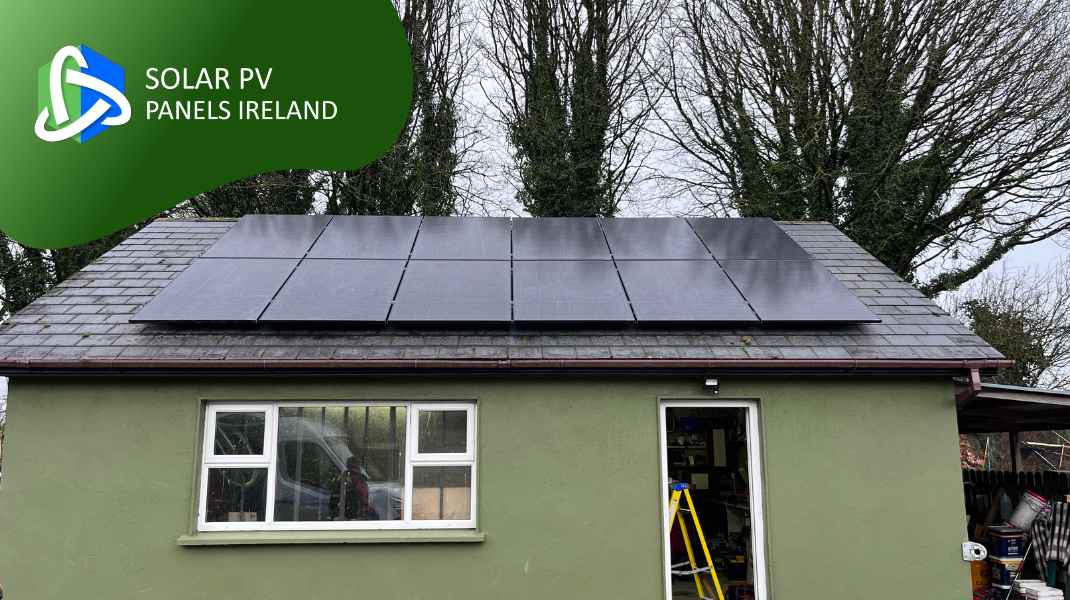
Furthermore, Irish homes often have limited roof space or complex roof shapes with chimneys and dormers. When space is at a premium, efficiency becomes your best friend. A more efficient panel produces more Watts per square meter. This means that a homeowner with a small roof can achieve the same power output with twelve high-efficiency panels as they would with sixteen standard panels. This not only saves space but can also reduce the cost of mounting hardware and labor during the installation process.
Environmental Factors Affecting Performance in Ireland

It might seem counterintuitive, but solar panels actually perform better in cooler temperatures. While they need light to generate electricity, excessive heat can actually decrease their efficiency. This gives Ireland a distinct advantage. Our temperate climate prevents panels from overheating, which can happen in desert climates where efficiency drops as temperatures soar. A solar panel in Laois on a crisp, clear 10-degree Celsius day may actually outperform the same panel in a 40-degree heatwave elsewhere.
However, we must also consider the angle of the sun. Because Ireland is situated further north, the sun sits lower in the sky for much of the year. To maximise efficiency, the tilt and orientation of the panels are crucial. Ideally, panels in Ireland should face south at an angle of roughly 35 degrees. If your roof faces east or west, you can still generate a significant amount of energy, but you may need slightly more efficient panels to compensate for the fact that they aren’t receiving peak solar intensity.
Professional Installation and System Synergy

The efficiency of the panel itself is only one part of the equation. A high-efficiency panel connected to a poor-quality inverter or thin wiring will result in a sub-optimal system. The inverter is the brain of the system, converting the DC electricity from your roof into the AC electricity used in your home. If the inverter is inefficient, you are essentially leaking the hard-earned energy your panels have collected.
This is where the expertise of a dedicated provider becomes invaluable. At Solar PV Panels Ireland, we focus on the holistic efficiency of the entire installation. By contacting us, homeowners can get professional guidance on how to match high-efficiency panels with the right battery storage and inverter technology. Our team understands the specific nuances of the Irish grid and local weather patterns, ensuring that every component of your system is tuned for maximum yield.
The Economic Argument for High Efficiency

Many people ask if the higher price tag of premium, high-efficiency panels is worth it. To answer this, one must look at the Levelised Cost of Energy. While the upfront cost is higher, a more efficient system generates more kilowatt-hours over its lifespan. In Ireland, where electricity prices have seen significant volatility, every extra watt generated is a watt you don’t have to buy from the grid.
Additionally, the Irish government, through the SEAI, provides grants to help offset the cost of solar installations. These grants make the transition to high-efficiency systems much more accessible. When you factor in the grant, the VAT savings, and the Clean Export Guarantee, the payback period for a high-efficiency system is often shorter than that of a cheaper, less efficient one. You are essentially pre-purchasing 25 years of electricity at a fixed, low rate.
Maintenance and Future Trends
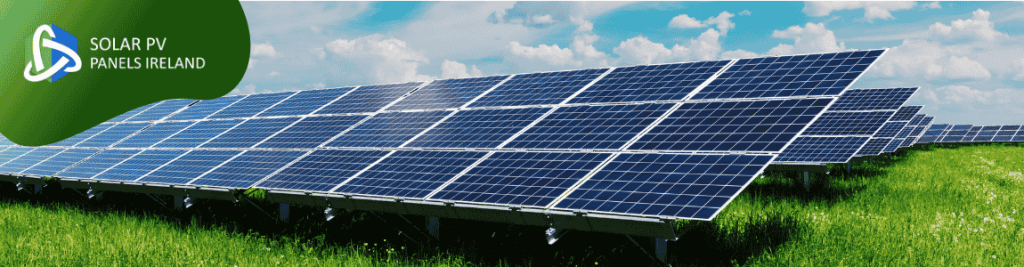
While solar PV systems are remarkably low-maintenance, they are not “set and forget” if you want to maintain peak efficiency. In Ireland, the main enemy of efficiency is often biological or environmental buildup. Dust, bird droppings, or moss can shade small portions of the cells. Because many panels are wired in strings, shading on just a small part of one panel can sometimes impact the performance of the entire row.
The world of solar efficiency is moving fast, with new bifacial panels capturing light on both sides. However, the current generation of silicon PV technology is at a goldilocks zone of efficiency and price. For the average Irish household, the technology available today through Solar PV Panels Ireland is more than capable of meeting the energy demands of a modern home, from powering heat pumps to charging electric vehicles. Understanding the efficiency of your system is the first step toward true energy independence. Get a quote with Solar PV Panels Ireland Today.