The €1,800 Limit: That is the maximum you’ll get back this year. It’s capped at a 4kWp system.
The 2021 Rule: If your house was built and lived in after January 1, 2021, you won’t qualify. The government reckons newer homes are already efficient enough.
Paperwork First: If the panels go on the roof before the SEAI says “yes,” you won’t see a penny.
Independent Verification: You must have a BER assessment straight after the installation. We work directly with the experts at Greenwise Energy to make sure this is handled quickly and correctly.
Let’s be honest, the main reason any of us in Ireland look into solar panels is to slow down those slowly increasing electricity bills. But the upfront cost can be a bit of a shock to the system at first.
That’s where the SEAI grant comes in. In 2026, it’s still the biggest helping hand for homeowners, but the rules are very specific. If you’re looking to shave up to €1,800 off your installation with Solar PV Panels Ireland, this article will tell you everything you need to know.
What is the actual cash value?
The SEAI unfortunately doesn’t just hand over a flat cheque. They pay you based on the “Kilowatt Peak” (kWp) or basically the size of your solar panel system.
System Size
SEAI Grant Value
Typical Home Type
2kWp
€1,400
Small terraced / 2-bed
3kWp
€1,600
Standard semi-detached
4kWp or more
€1,800 (Capped)
3-4 Bed family home
At Solar PV Panels Ireland, we usually recommend aiming for the 4kWp mark. It hits the maximum grant and generally covers the daytime needs of a busy Irish household.
The Secret to a Smooth Application
One of the biggest headaches people face is the final sign-off. You can’t get your grant money until a qualified assessor proves your home’s energy rating has actually improved.
This is why we don’t just fit your panels and forget. We partner with Greenwise Energy, who are independent, SEAI-registered BER assessors. Once our team at Solar PV Panels Ireland finishes the installation, the Greenwise team steps in to handle the technical survey.
It means you aren’t left hunting for an assessor on your own; we ensure the person checking the work knows exactly what they’re looking at, which speeds up your payment from the SEAI.
Since your panels will likely produce more power than you use on a sunny Tuesday afternoon, you can sell that excess energy back to the grid. Some providers are paying up to 25c per unit now. Between the grant and these export payments, most of our customers see their system pay for itself in about 5 to 6 years.
Common Mistakes We See Homeowners Make
After years of doing this, we’ve seen where people trip up:
Wrong MPRN: This is the 11-digit number on your bill. If the address on your bill doesn’t match your Eircode exactly, the SEAI system might kick the application back.
Ignoring the Fuse Board: Some older houses need a small electrical upgrade before they can take solar. We check this during our initial survey so there are no surprises.
Thinking the Grant covers Batteries: It doesn’t. The grant is purely for the PV panels. However, we often find that with the current 0% VAT rate, adding a battery still makes massive financial sense for people who work 9-to-5.
If you only do 3 things today…
Check your house age: If it was built in 2022 or later, the grant isn’t an option, but the 0% VAT still is!
Find your MPRN: It’s usually at the top right of your electricity bill.
Book a Survey: We’ll come out, look at your roof and give you a proper quote. No guesswork. Click here to get in touch.
An Example of How It Works
The O’Sullivans have a 4.2kWp system installed by Solar PV Panels Ireland.
Total Quote: €8,900
SEAI Grant: -€1,800
Net Investment: €7,100
Post-Install Check: Greenwise Energy complete the BER, moving the house from a D1 to a B2.
The Result: Their monthly bill drops by €95 and they’re on track to have the system fully paid off by 2031.
FAQs from Irish Homeowners
Does the grant come off the price I pay you?
Usually, you pay the installer and the SEAI pays you back. However, we try to make the paperwork as light as possible by handling the portal uploads for you.
What if I sell the house?
The panels (and that new BER cert from Greenwise) stay with the house. It’s a massive selling point and usually adds more to the house value than the cost of the system itself.
Do I need a smart meter?
To get the grant? No. To get paid for selling electricity back to the grid? Yes. ESB Networks are rolling these out for free, so it’s worth getting on the list. Read more about smart meters.
Glossary for Beginners
PV (Photovoltaic): The tech that turns light into electricity.
Inverter: The box we put in your attic or garage that makes the solar power “usable” for your appliances.
BER (Building Energy Rating): The grade your house gets for efficiency. This is where Greenwise Energy comes in.
Self-Consumption: Using your own solar power instead of buying it from the grid. This is the goal!
Why Choose Solar PV Panels Ireland?
We are local installers who live and work in the same weather you do. We know which panels handle the Irish rain and which inverters are built to last. By combining our technical expertise with the independent verification of Greenwise Energy, we provide a fully comprehensive service that takes the stress out of the SEAI grant.
Daylight, Not Just Sunlight: Modern solar PV panels don’t need direct sun to work. They are highly efficient at capturing “diffuse light” that comes through clouds.
The Irish Advantage: Ireland’s mild temperatures actually help panels perform better. Extreme heat can reduce efficiency and our frequent rain acts as a natural, free cleaning service.
Consistent Energy Production: Even on grey, overcast days, a typical system still generates 10% to 50% of its maximum capacity. This significantly offsets your reliance on the grid.
Proven Performance: With over 60,000 Irish homes already powered by solar, the technology is a field-tested success in our climate. It has proven to generate clean energy year-round regardless of the forecast.
It’s one of the most common questions we hear at Solar Pv Panels Ireland: “Do solar panels actually work in Ireland, with all the cloud and rain?” The short answer is a resounding yes. While it’s a perfectly logical question to ask, the reality of solar technology in our climate might surprise you. Solar panels are not reliant solely on bright, direct sunlight to generate electricity. In fact, they are highly effective at capturing another type of light that is abundant in Ireland: diffuse light.
This article will delve into the science behind why solar panels are a smart and viable investment for Irish homes, regardless of the weather forecast. We’ll explore how they work on overcast days, the surprising benefits of our mild climate, and provide real-world evidence that proves solar power is a powerful solution for a sustainable future in Ireland.
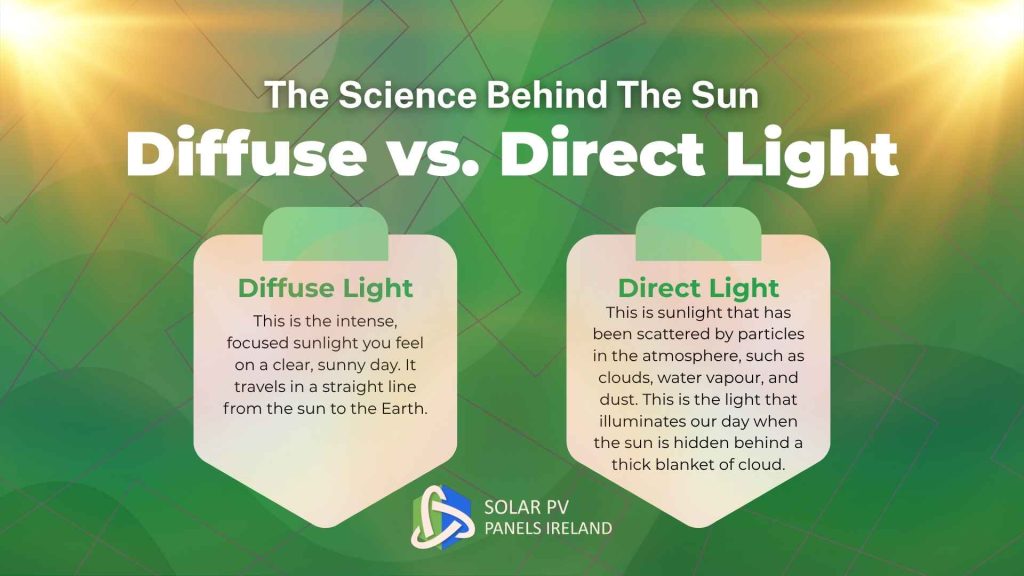
The Science Behind the Sun: Diffuse vs. Direct Light
To understand how solar panels thrive in our climate, we first need to break down the science of how they convert light into energy. Solar panels, also known as photovoltaic (PV) panels, are made up of solar cells that contain semiconductor materials, typically silicon. When sunlight hits these cells, it excites the electrons, causing them to flow and generate a direct current (DC) of electricity.
There are two primary types of sunlight that reach the Earth’s surface:
Direct Light:This is the intense, focused sunlight you feel on a clear, sunny day. It travels in a straight line from the sun to the Earth.
Diffuse Light:This is sunlight that has been scattered by particles in the atmosphere, such as clouds, water vapour, and dust. This is the light that illuminates our day when the sun is hidden behind a thick blanket of cloud.
Here’s the crucial part: modern solar panels are designed to absorb both. While they are most efficient under direct sunlight, they are still very effective at absorbing and converting diffuse light into usable energy. Think of it like a cloudy day at the beach – you can still get a sunburn because ultraviolet (UV) light is getting through the clouds. Similarly, the energy-carrying photons in sunlight are still reaching your solar panels, ready to be converted. This ability to absorb scattered light is the key reason why solar panels are so well-suited for a country known for its frequent overcast conditions.
Ireland’s Climate: A Hidden Advantage for Solar Panels
When people think of the ideal climate for solar power, they often picture a hot, sunny desert. However, this is another common misconception. While sunshine is a key ingredient, excessive heat can actually be detrimental to the performance and longevity of solar panels.
Solar panels are most efficient at converting sunlight to electricity when they are cool. As their temperature rises, their efficiency slightly decreases. The relatively mild, temperate climate of Ireland, with average temperatures rarely soaring above 20°C, is a significant advantage. It allows the solar panels to operate at or near their optimal efficiency throughout the year, preventing the power losses associated with extreme heat.
Furthermore, our frequent rainfall is a secret superpower for solar panel maintenance. Rain acts as a natural cleaning agent, washing away dust, dirt, pollen, and other debris that can accumulate on the surface of the panels. A clean panel can absorb more sunlight and, therefore, generate more electricity. This reduces the need for manual cleaning and helps ensure your system is performing at its peak.
The Reality of Performance: How Much Energy is Generated on Cloudy Days?
So, how much energy can you really expect to generate when the clouds roll in? It’s true that a very thick, dark cloud cover will reduce output compared to a perfectly clear day. However, it’s a significant drop, not a complete loss. On a typical overcast day in Ireland, your solar panels can still generate anywhere from 10% to 50% of the power they would produce on a sunny day.
This is where the financial and environmental benefits really add up. Even on a gloomy day, your solar panels are still working to offset your electricity consumption and reduce your reliance on the grid. Over the course of a year, the consistent, albeit lower, output on cloudy days contributes a substantial amount to your total energy generation.
With the addition of a solar battery storage system, this becomes even more impactful. The energy generated on a cloudy day can be stored in the battery and used later in the evening or on a day with less sunlight. This combination of a solar PV system and a battery allows you to maximise self-consumption and achieve greater energy independence.
Real-World Proof: Solar Power in Action Across Ireland
You don’t have to take our word for it; the proof is in the numbers and the rapidly growing adoption of solar technology across the country. According to recent data, over 60,000 homes in Ireland have now installed solar panels. This widespread use is a testament to their effectiveness and a clear sign that homeowners are seeing tangible benefits, from reduced electricity bills to a smaller carbon footprint.
Government incentives and grants have also made solar panel installation more accessible than ever before, encouraging more Irish families to make the switch. These grants reflect the government’s commitment to renewable energy and acknowledge the vital role solar power will play in Ireland’s journey towards a more sustainable future. The success of solar power in Ireland is not a futuristic dream; it is a present-day reality, with countless homes generating their own clean, green energy every single day.
Embracing the Future of Solar in Ireland
The next time you see a cloud in the sky, you can be confident that your solar panels are hard at work, silently generating clean electricity. The idea that solar panels are ineffective in a country like Ireland is a misconception that has been decisively debunked by science and real-world results. With our mild temperatures and frequent rainfall, Ireland is actually a surprisingly great place to harness the power of the sun.
Ready to take control of your energy bills and embrace a more sustainable lifestyle? Contact Solar Pv Panels Ireland today to learn how a tailored solar PV system can work for your home, no matter what the weather.
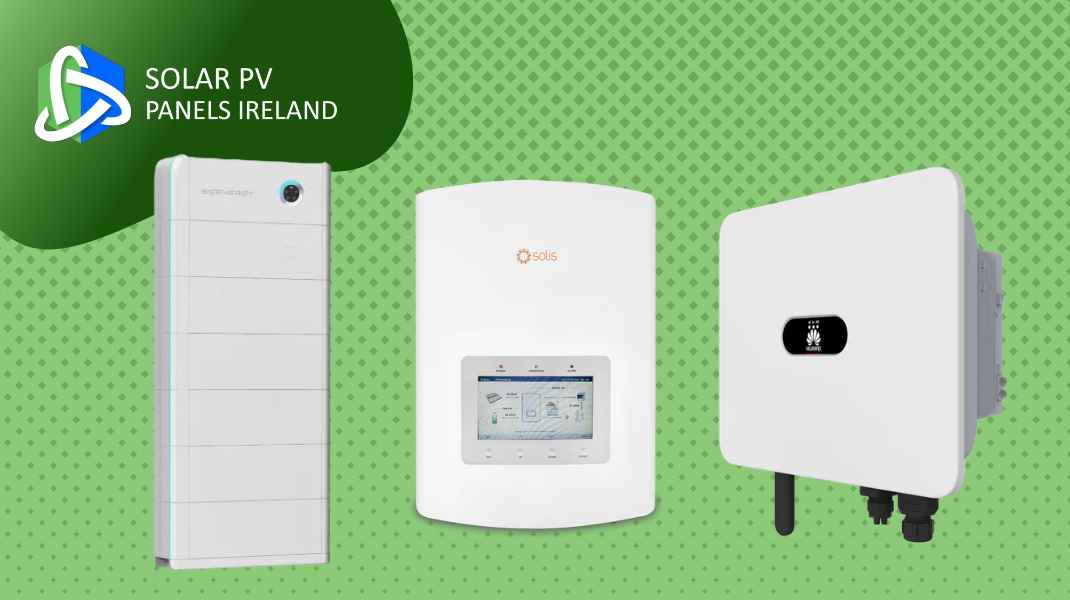
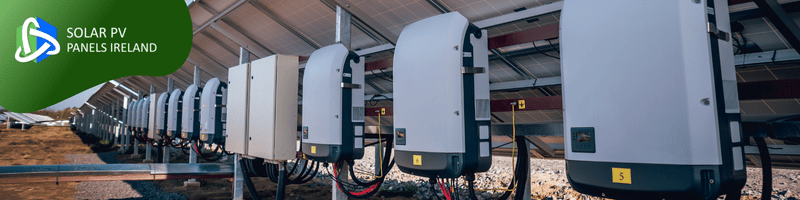
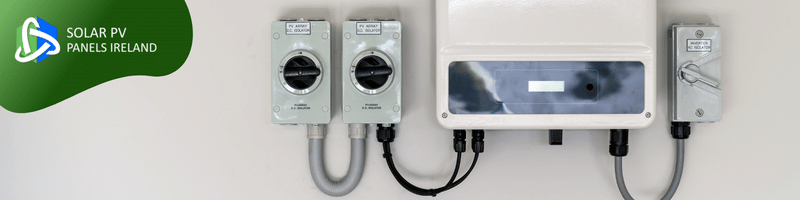
The Brain of the Solar System – Solar panels in Ireland capture energy. The inverter is basically the main part when it comes to converting AC to DC. Direct Current (DC) is taken from the sun and its turned into an Alternating Current (AC). This is then used by your home appliances. And also by the national grid.
Smart Performance Monitoring – The more modern inverters do more than just convert the power. They now started using Maximum Power Point Tracking (MPPT). They use this to optimise energy yield, usually in changing weather. They also provide real-time data via smartphone apps.
Three Main Types – Homeowners can choose from String Inverters with a very good price, Microinverters that are shading-resilient or Hybrid Inverters.
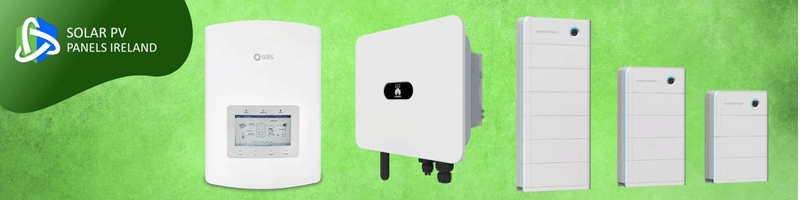
Made for the Irish Climate – We have high-quality brands like Sigenergy, Huawei, and Solis. They tend to offer weather-rated durability and some very advanced features. This makes sure that they keep up reliable performance even in Ireland’s overcast conditions.
Solar energy is a really powerful way for Irish homeowners to reduce their electricity bills. It’s getting very popular. They can decrease their carbon footprint and get what people are calling energy independence! Sleek, black solar panels on a rooftop is the most visible and obvious sign of a solar PV system. But there’s a very vital and often-unseen part to it that makes it all work smoothly together. And thats the solar inverter! You can think of the inverter as the big intelligent brain of your solar PV set up. If you didn’t have one, all the energy generated by your panels would be totally and utterly useless to your home.
This ultimate guide will take you on a deep dive into the world of solar inverters. We’ll explain what they are, how they work, the different types available, and why choosing the right one for your home is just as important as selecting the right panels. Whether you’re a homeowner just starting to research solar or a seasoned professional looking to refresh your knowledge, this guide will provide you with all the essential information you need to make an informed decision.
What is a Solar Inverter and Why Do I Need One?
At its core, a solar inverter is a power converter. Solar panels generate electricity in the form of Direct Current (DC). This is the same type of power used in batteries. However, the electrical appliances in your home, from your kettle to your television and the national electrical grid run on Alternating Current (AC). The primary function of the solar inverter is to convert the DC power from your panels into usable AC power for your home.
This conversion process is critical. Without an inverter, the DC power from your panels cannot be used to run your lights or charge your laptop. But the inverter does far more than just convert power. It is a sophisticated device that also acts as a performance monitor, a safety feature, and a smart energy manager. Most modern inverters come with internet connectivity and a user-friendly smartphone app, allowing you to monitor your system’s performance in real time, check on your energy production, and detect any potential faults.
The Different Types of Solar Inverters
Not all inverters are created equal. The type you choose will depend on a number of factors, including your roof’s layout, potential shading issues, your budget, and whether you plan to add a battery storage system. There are three main types of inverters to consider:
1. String Inverters
What they are: String inverters are the most common and traditional type of solar inverter. They are the go-to choice for the majority of residential and commercial solar installations in Ireland. In a string inverter system, solar panels are connected together in a “series,” like beads on a string, and all the power from that series of panels flows to a single central inverter. A solar PV system can have one or more strings, each connected to its own input on the inverter.
Pros:
Cost-Effective: String inverters are generally the most affordable option.
Simple to Install: The installation process is straightforward and well-understood by most solar installers.
High Efficiency: Modern string inverters boast very high efficiency ratings, converting a significant percentage of the DC power into usable AC power.
Cons:
Performance Varies with Shading: This is the biggest drawback. If a single panel in a string is shaded, dirty, or underperforming for any reason, it can reduce the output of all the other panels in that same string. This is known as the “Christmas light effect.”
System-Wide Single Point of Failure: If the string inverter fails, your entire solar PV system will stop producing electricity.
2. Microinverters
What they are: Microinverters represent a different approach to solar energy conversion. Instead of a single central inverter, a small microinverter is installed directly underneath each individual solar panel. Each microinverter converts the DC power from its specific panel into AC power right there on the roof. The converted AC power is then sent down to the home’s electrical panel.
Pros:
Excellent for Shading: This is their biggest advantage. Since each panel operates independently, a shaded or underperforming panel will not affect the output of the other panels in the system. This makes them ideal for complex roof layouts or homes with chronic shading issues.
Panel-Level Monitoring: Microinverter systems allow you to monitor the performance of each individual panel, making it easy to spot and diagnose issues.
Increased Redundancy: If one microinverter fails, only that single panel will stop producing power. The rest of your system will continue to operate normally.
Longer Lifespan: Microinverters are designed to be more durable and often come with a longer warranty than string inverters, typically lasting 20-25 years.
Cons:
Higher Upfront Cost: Microinverter systems are significantly more expensive to purchase and install than string inverter systems due to the need for one inverter per panel.
More Complex Installation: The installation process is more labour-intensive, as each panel requires its own inverter.
3. Hybrid Inverters
What they are: Also known as battery-ready or multi-mode inverters, hybrid inverters are a modern and increasingly popular choice. They function as a regular solar inverter, converting DC to AC, but they have the added capability of managing a battery storage system. This allows you to store excess solar energy generated during the day for use at night or on cloudy days.
Pros:
Battery Integration: This is the key feature. A hybrid inverter makes it easy to add a battery to your system, either at the time of installation or in the future.
Energy Independence: By storing your own solar energy, you can reduce your reliance on the electrical grid and protect yourself from rising energy costs.
Power Outage Protection: Some hybrid inverters can provide backup power to essential circuits in your home during a grid power outage.
Cons:
More Expensive: Hybrid inverters are more costly than standard string inverters.
Complex Wiring: The installation can be more complex due to the battery integration.
Key Features to Look for in a Solar Inverter
Choosing the right inverter goes beyond just the type. Here are some critical features and specifications to consider when selecting an inverter for your home:
Efficiency Rating: This measures how effectively the inverter converts DC power to AC power. A higher efficiency rating means less energy is lost during the conversion process. Modern inverters typically have efficiency ratings well over 95%.
Warranty: Most inverters come with a standard warranty of 5-10 years. Look for brands that offer the option to extend the warranty for a fee.
Maximum Power Point Tracking (MPPT): This is a crucial function of the inverter. The MPPT allows the inverter to constantly monitor the solar panels’ output to find the optimal voltage and current at which they produce the most power. This ensures maximum energy yield throughout the day, regardless of changing weather conditions.
Internet Connectivity and Monitoring: Most quality inverters today offer Wi-Fi or Ethernet connectivity. This allows you to connect the inverter to your home network and use a mobile app to monitor real-time energy production, consumption, and performance. This data is invaluable for tracking your savings and ensuring your system is working optimally.
Noise Level: While most modern inverters are very quiet, some older or larger models can produce a noticeable humming sound. If the inverter will be installed indoors, it’s worth checking its decibel rating.
Built-in Safety Features: Look for features like arc fault detection and ground fault protection. These safety mechanisms can prevent electrical fires and other hazards.
How a Solar Inverter Works in Three Simple Steps
The process of converting sunlight into usable electricity in your home is a marvel of modern engineering, and the solar inverter is at the heart of it. Here’s a simplified breakdown of how it works:
Step 1: The Panels Capture Sunlight
Solar panels on your roof are made of photovoltaic cells that absorb sunlight. When sunlight hits these cells, it excites the electrons, causing them to flow and create Direct Current (DC) electricity.
Step 2: The Inverter Converts the Power
The DC electricity flows from the solar panels to the inverter via cables. Inside the inverter, a series of complex electronic processes take place. The inverter’s main job is to transform the DC power into Alternating Current (AC) power. It does this by rapidly switching the direction of the DC power’s flow, creating the sinusoidal waveform that is characteristic of AC electricity.
Step 3: The Power Goes to Your Home
The newly converted AC power is now ready to be used. It flows from the inverter to your home’s electrical panel, where it can be used by any appliance or device. Any excess energy that you don’t use is either stored in a connected battery or exported back to the national grid, earning you a credit under the Clean Export Guarantee (CEG) tariff in Ireland.
The Best Solar Inverters for the Irish Market
Choosing the right inverter for your Irish home requires considering the specific needs of the Irish climate, which can be prone to cloudy and overcast days. You need an inverter that is efficient and reliable. At Solar PV Panels Ireland, we understand the local market and offer a range of high-quality inverters that are known for their performance and durability. We proudly sell and install models from leading manufacturers, including:
SIGENERGY: As a forward-thinking company, SIGENERGY integrates advanced AI learning technology into its inverters for optimal performance. Their products are also warrantied for outdoor installations, thanks to an IP66 rating, which ensures unparalleled battery safety features.
HUAWEI: A leader in both residential and commercial solar inverters, HUAWEI is often the go-to choice for larger installations due to their excellent price point and cutting-edge features. Their inverters are a solid option for any type of project.
SOLIS: Solis inverters are a no-fuss, cost-efficient solution. They are highly reliable and come with an easy-to-follow cloud application. Their battery management system is also compatible with many major brands of low-voltage batteries, making them a versatile choice.
While each of these brands has its own strengths, the best inverter for you will depend on your specific needs, budget, and the characteristics of your property. Our team at Solar PV Panels Ireland can provide you with a tailored recommendation based on your energy consumption and roof layout.
Inverter Lifespan and Warranty
A solar inverter is an electronic device with a finite lifespan. Typically, a string inverter will last between 10 to 15 years. Microinverters are designed to last longer, often with a lifespan of 20 to 25 years, which is similar to that of solar panels.
The inverter’s warranty is an important factor to consider. Most manufacturers provide a standard warranty of 5 to 10 years, but many offer the option to purchase an extended warranty that can last up to 20 years. Given that your inverter is a central and hardworking component of your system, a longer warranty provides peace of mind and protection for your investment.
The Future of Solar Inverters
The solar inverter industry is constantly evolving. The trend is moving towards smarter, more integrated devices. In the near future, we can expect to see inverters with even greater efficiency, advanced AI-powered performance optimisation, and seamless integration with smart home systems and electric vehicles. The growing popularity of battery storage in Ireland means that hybrid inverters will likely become the standard for most new solar installations, giving homeowners even greater control over their energy usage.
A solar inverter is so much more than a simple box on your wall. It is the sophisticated, hard-working component that makes your entire solar PV system possible. From converting DC to AC power to optimising your system’s performance and enabling battery storage, the inverter is a critical part of a modern, efficient solar energy system. Choosing the right one is a key step in ensuring your system provides maximum savings and performance for years to come.
At Solar PV Panels Ireland, we are dedicated to helping homeowners navigate the complexities of solar technology. We provide and install only the highest quality inverters to ensure that you get the best possible return on your investment in renewable energy.
N-Type Tech: The industry has shifted to N-type cells. These perform better in Ireland’s low light and tend to last longer.
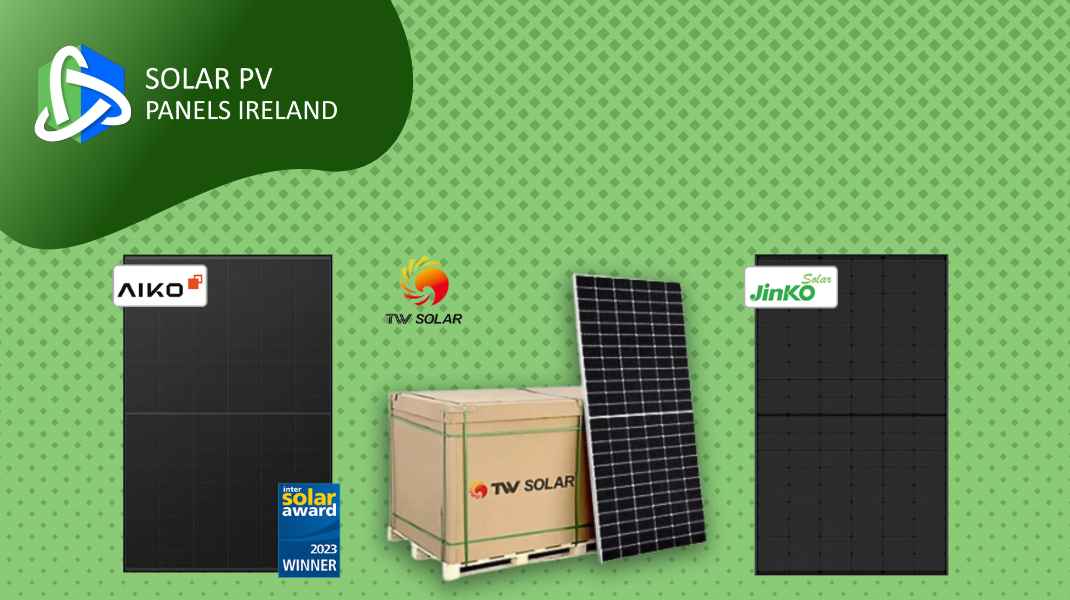
AIKO Solar: The premium choice for efficiency (24%+). They have a sleek look and ideal for limited roof space.
Jinko Solar: The reliable all-rounder. They use Tiger Neo technology for high power and proven durability.
TW Solar: The best value option. They offer high-efficiency N-type tech at a more affordable price point.
Lets Take An In-Depth Look at Jinko, TW Solar, and AIKO
Welcome to the definitive guide on the best solar panels available for Irish homes and businesses in 2026. There is a growing focus on sustainability and a pressing need to reduce energy bills. More and more people across Ireland are turning to solar power. But with a market full of options, choosing the right solar panels can be a tough task. The choice you make today will impact your energy savings and system performance for the next two to three decades. It’s crucial you get it right!
At Solar PV Panels Ireland, we are committed to providing you with the most reliable and efficient solar panels. This article will cut through the noise and provide a detailed comparison of three leading brands. These guys are setting the standard for performance in 2026: Jinko Solar, TW Solar, and AIKO Solar. We’ll look at their technology, real-world performance, and why they are the best fit for Ireland’s climate.
The New Standard: Why N-Type is the Future of Solar in Ireland
For a long time, P-type monocrystalline PERC (Passivated Emitter and Rear Cell) panels dominated the market. They were reliable but they are now being taken over by the next generation of solar tech: N-type cells. You should keep this in mind if you’re considering solar in 2026. Keep Reading!
N-type cells use a different doping process (phosphorus vs. boron). It makes them more resistant to a phenomenon called Light-Induced Degradation (LID). They degrade much less over time. Where a typical P-type panel might degrade by 2% in the first year and 0.55% annually after that, the very best N-type panels offer a first-year degradation of less than 1%. They have an annual rate after that of just 0.4% or lower. This means a much higher power output at the end of the panel’s lifespan. This guarantees you a better return on your investment.
N-type panels, particularly those using TOPCon (Tunnel Oxide Passivated Contact) and ABC (All Back Contact) technologies, have better performance in low-light conditions. And they have a better temperature coefficient. The Irish weather is known for its frequent overcast days and cool temperatures. This makes these characteristics a game-changer. A lower temperature coefficient means the panel loses less efficiency as it heats up during the summer. This ensures consistent performance year-round.
This year, the market leaders are pushing the boundaries of what is possible with N-type technology. They are delivering panels with efficiencies well over 24%. Some have power outputs exceeding 600W. Let’s look at how Jinko, TW Solar, and AIKO are using this technology to offer some of the best solar panels in the world at the minute.
Jinko Solar: The Global Powerhouse of Innovation
Jinko Solar is a household name in the worldwide solar industry. They are a Tier 1 manufacturer. They have a reputation for producing high-quality, reliable, and affordable panels at a really large scale. In 2026, Jinko continues to solidify its position as a market leader with its flagship Tiger Neo series solar panels.
Key Features of Jinko Tiger Neo Panels:
N-Type TOPCon Technology: The Tiger Neo series uses advanced N-type TOPCon cells. These offer superior efficiency and a longer lifespan compared to older P-type panels. This technology provides excellent low-light performance. It makes it a perfect match for the often pretty cloudy Irish weather.
High Power Output: Jinko’s Tiger Neo modules can be got in a wide range of power outputs. Some models reaching up to 670W. This means much less panels are required to achieve a high-capacity system. This is ideal for homes with limited roof space.
Lower Degradation: With it’s impressive performance warranty of 30 years, Jinko guarantees a very low annual degradation rate. After 30 years, their panels are guaranteed to produce at least 87.4% of their original power. This is one of the most impressive in the industry.
Durability and Reliability: Jinko panels are known for their robust construction. They are designed to withstand the tough weather conditions of Ireland, including high winds and super heavy rain. They are also highly rated for their resistance to Potential Induced Degradation (PID) and microcracking. All ensuring long-term reliability.
Warranty: The Tiger Neo series comes with a 12- to 15-year product warranty and a 30-year linear performance warranty. This is a strong testament to Jinko’s confidence in their product. This shows the quality and longevity.
Jinko’s panels strike an excellent balance between cutting-edge performance and affordability. They are a great choice for homeowners and businesses seeking a high-quality and high-performance system from a globally trusted brand. The Tiger Neo series has a compelling value proposition. It makes solar accessible without compromising on power or longevity.
TW Solar: An Emerging Leader with Superior Technology
TW Solar (Tongwei Solar) is a name that is rapidly gaining recognition in the industry. And for good reason. While it’s a newer player in the panel manufacturing space, they are a massive, vertically integrated company. They have a long history in polysilicon and cell production. TW Solar has quickly established itself as a top-tier manufacturer. Their 2026 offerings prove they are a serious contender for the top spot.
Key Features of TW Solar Panels:
N-Type TOPCon 2.0: TW Solar’s panels feature their second-generation TNC 2.0 TOPCon cell structure. This is pushing the boundaries of efficiency. Some of their pre-production models have already gotten to a rated output of 765W and a crazy 24.6% efficiency. We can see their commitment to R&D. The commercially available panels like their half-cut N-type modules, offer excellent efficiency and power output. Very suitable for a wide range of applications.
Low-Light Performance: The advanced cell technology in TW Solar panels is designed to maximise energy output. Especially on cloudy and overcast days. This is a crucial feature for the Irish climate. This ensures consistent power generation throughout the year and not just during peak summer hours.
Bifacial Technology: Many TW Solar panels are bifacial, meaning they can generate electricity from both the front and back of the panel. While the main use case of this is in ground-mount or flat-roof installations, it can also provide a small boost in performance in some residential setups.
Exceptional Durability and Warranty: TW Solar panels are built to last. They have a robust design that includes tempered glass on the front and back for enhanced protection. They offer a strong 25-year product warranty and a 30-year performance guarantee. Pair this with an extremely low annual degradation rate of just 0.4% after the first year.
Aesthetic Options: TW Solar offers “all-black” options that provide a sleek, aesthetic look on residential rooftops. This appeals to homeowners who look for both performance and visual appeal.
TW Solar panels are an excellent choice for those who want to invest in cutting-edge technology from a company with a really impressive manufacturing background. Their impressive efficiency ratings and long-term reliability make them a smart choice for any solar project in Ireland.
AIKO Solar: The King of Efficiency
AIKO Solar is a brand synonymous with pushing the boundaries of solar efficiency. Initially a solar cell manufacturer, AIKO launched its own line of panels. They have quickly become a leader in the residential and commercial solar markets. They continue to hold the title of one of the most efficient solar panels on the market in 2026.
Key Features of AIKO Neostar Panels:
All-Back-Contact (ABC) Technology: AIKO’s panels are built with their proprietary N-type ABC technology. This groundbreaking design gets rid of the busbars on the front of the cell. These would normally shade a small part of the panel and reduce efficiency. By moving all contacts to the back, AIKO panels achieve a striking all-black appearance and much more importantly, they achieve some of the highest conversion efficiencies in the world. Some models exceeding 24.8%.
Superior Performance: The Neostar series offers an outstanding power output per panel. They are the ideal solution for homes with limited roof space where every square metre really counts. The high efficiency of these panels means you can generate more energy from a smaller footprint. This allows for a more powerful system on a smaller roof.
Partial Shading Optimisation: AIKO panels are designed with built-in partial shading optimisation. This provides a significant boost in performance compared to standard TOPCon panels. This is a valuable feature for Irish homes. Sometimes chimneys, dormer windows, or even tree branches can cause temporary shading.
Durability and Longevity: AIKO’s panels are engineered for exceptional durability. They have features like micro-crack resistance. Their robust warranties reflect this, with a 25-year product warranty and a 30-year performance warranty. They also guarantee a minimum of 88.9% of the original output after 30 years.
Aesthetic Appeal: The all-black, seamless design of AIKO panels is arguably the most visually appealing on the market. For homeowners who want a clean, modern look, the Neostar series offers a perfect blend of high performance and aesthetics.
AIKO panels may come at a slightly higher price point but the long-term value they provide through their efficiency, lower degradation, and stunning aesthetics makes them a worthwhile investment. They suit anyone who wants the absolute best performance from their solar system.
Making the Right Choice for Your Irish Home
Choosing the best solar panel for your home is not a one-size-fits-all decision. Jinko, TW Solar, and AIKO all represent the pinnacle of solar technology in 2026. Each has a unique value proposition.
Choose Jinko if: You want a balance of proven reliability, high performance and competitive pricing from a global market leader. Jinko’s Tiger Neo series is a fantastic choice that offers a really good return on investment over the long term.
Choose TW Solar if: You are looking for a brand with cutting-edge technology and exceptional test results. TW Solar’s panels are a testament to their innovative approach. They offer high efficiency and great durability at a very good price point.
Choose AIKO if: You want the absolute highest efficiency, a premium all-black aesthetic and are willing to invest a little more money. For which, you get a superior, future-proof product. The high power output and advanced technology make AIKO ideal for roofs with limited space.
No matter which brand you choose, the key takeaway for 2026 is to prioritise N-type technology. It represents a significant leap forward in performance and longevity. It ensures that your solar PV system will generate clean, affordable energy for decades.
For a personalised consultation and a free, no-obligation quote, contact Solar PV Panels Ireland today. Our experts will assess your needs and help you find the perfect solar solution for your home. And it’ll be powered by the best panels in the business!
Light, Not Heat:Solar panels don’t need a heatwave to work. They thrive on radiant energy, AKA daylight. This makes them surprisingly efficient even on cloudy Irish days.
The Conversion: Most modern systems use Solar Photovoltaic (PV) technology to turn light into electricity for your home. They don’t just heat water.
Huge Incentives: You can currently slash the installation cost with SEAI grants of up to €1,800. Helping your system pay for itself much faster.
You’ve seen them popping up on roofs all over you community. Those dark, glass-like sheets that everyone seems to be talking about lately. But are you still wondering, “Right, but what are they actually doing up there?”. You aren’t alone. At Solar PV Panels Ireland, we get that question a lot. People want to know the whats the actual fuel for solar panels. Is it heat? Is it the actual sun? What happens when it’s lashing rain for three days straight?
The short answer. It’s light. Not heat, not “good weather,” just plain old daylight. But the way that light turns into the power that boils the water in your kettle for your morning tea is actually a bit of a trick of nature. If you’re thinking about making the jump to renewables, knowing how this works makes the whole investment feel a lot less like “magic” and a lot more like common sense. Which I think can be helpful. So keep reading!
Forget the Heat. It’s All About the Photons
There is a huge misconception that you need a scorcher of a day for solar panels to work. Honestly if it was 40 degrees Celsius in Ireland, your solar panels would actually be less happy. Solar panels use radiant energy. This is energy carried by light particles called photons.
Think of these photons as tiny, invisible tennis balls being fired from the sun. On a clear summer day, there’s a steady stream of them hitting your roof. On a cloudy, overcast Tuesday in November? They’re still there, just bouncing off the clouds first. When these photons hit the silicon inside your panels, they knock electrons loose. This knocking loose is the heart of the whole thing. It’s called the Photovoltaic Effect and it’s how we get electricity from thin air.
Why Cloudy Actually Work for Solar
We hear it constantly, “Sure we haven’t got the sun for solar power here do we?” But here’s the thing. Solar panels don’t need sunshine in the way we think about it for a holiday in Spain. They need irradiance.
There are two types of light hitting your roof. You’ve got direct light (the stuff that makes you squint) and diffuse light (the light that’s scattered by our lovely Irish clouds). Modern panels are incredibly sensitive. They’re designed to soak up that diffuse light. In fact, because our weather stays relatively cool and we get plenty of rain to wash off the dust, our panels often perform better than panels sitting in a boiling hot desert. We have a clean kind of light here that’s perfect for generating power.
Photovoltaic vs. Thermal
If you’re looking at your roof and trying to decide what you need. You’ve got to pick between two very different ways of using the sun’s energy.
Solar PV (Photovoltaic): This is what most of our customers at Solar PV Panels Ireland go for. It takes the radiant light and turns it into electricity. It’s the gold standard because electricity can do everything. It can run your fridge, charge your phone or even run a heat pump.
Solar Thermal: This is an older school of thought. It uses the sun’s energy to create thermal energy (heat). It’s basically a way to get a tank of hot water. It’s fine, but you can’t exactly use a tank of hot water to watch a match on TV.
Electricity is just more flexible. That’s why we see everyone switching over or choosing PV for their new builds. You can even use your PV electricity to heat your water with a smart diverter. Giving you the best of both worlds.
The Journey from DC to AC
The energy your panels create is Direct Current (DC). Now, unless you’re living in a caravan or off a battery alone, your house isn’t set up for DC. Your washing machine, your kettle and your lights all want Alternating Current (AC).
To fix this, we install an inverter. This is the real workhorse of the system. It takes that raw DC energy from the sun and flips it into AC energy that your house can understand. It also acts as the traffic warden for your power. If you want to see how we set these up for maximum efficiency, check out our installation guide here.
Keeping the Lights on After Dark: Battery Storage
Since panels use light, they obviously stop working the moment the sun goes down. But that’s usually when we’re all at home, turning on the lights and putting the oven on. If you don’t have a way to store that energy, it just goes back to the grid.
This is where Battery Storage comes into play. Think of it as a bucket for all that light energy you caught during the day. Instead of letting the extra power leak out, you keep it for the evening. It’s one of the best ways to really stick it to the big energy providers and their ever-rising prices. You’re using your energy on your terms.
The SEAI Grant: Don’t Leave Money on the Table
The Irish government is actually being quite good about this. Because they need to hit carbon targets, the SEAI (Sustainable Energy Authority of Ireland) is offering big grants to help you get these systems installed.
You can currently get up to €1,800 off the cost. When you combine that with the fact that you aren’t paying for electricity during the day, the system starts paying for itself pretty fast. We handle a lot of the headache-inducing paperwork for our clients at Solar PV Panels Ireland, so you can just focus on watching your meter slow down. Have a look at our SEAI Grants post to see if you qualify.
Getting Paid for Your Leftovers
One of the coolest things about the energy used by solar panels today is the Clean Export Guarantee (CEG). Let’s say you’re on holidays, or it’s a bright Sunday and you aren’t using much power. Your panels are still catching light and making electricity.
Once your battery is full, that energy goes out into the national grid. In the old days, you just gave that away for free. Not anymore. Now, your energy supplier has to pay you for it. You’ll see a credit on your bill. It’s a strange but lovely feeling to open a utility bill and see that they owe you money for a change.
Zero Moving Parts, Zero Hassle
Because solar panels are using solid physics to turn light into power, there’s nothing to break. There are no engines, no spinning turbines, and no gears. It’s a silent, clean process.
A lot of people worry about maintenance, but really, the Irish rain does a lot of the cleaning for you. As long as you don’t have a massive tree shading the panels or a flock of pigeons making a mess, they’ll keep humming along (silently) for 25 to 30 years. If you want to know more about the long-term care of your system, our blog has all the bits and pieces you need to know.
Why Partner with Solar PV Panels Ireland?
We know there are loads of companies out there claiming to be the best. But we live here, we know the Irish roof types, and we know exactly how the light hits in different parts of the country.
We don’t just slap panels on. We look at your electricity bills, see when you’re using the most power, and design a system that captures the right amount of energy for you. We use high-grade panels that are built for our specific weather, strong enough to handle a “beast from the east” and sensitive enough to work on a foggy morning.
The Power is Up There
At the end of the day, the type of energy used by a solar panel is the most reliable thing we have. The sun comes up every morning, even if we can’t always see it behind the clouds. By putting panels on your roof, you’re just putting out a catcher’s mitt for all that free energy that’s already falling on your house.
It’s cleaner, it’s cheaper, and it’s yours. Why keep paying for expensive, imported gas and coal when you have a power station sitting right above your head?
If you’re ready to stop wondering and start saving, get in touch with us at Solar PV Panels Ireland. We’ll give you a no-nonsense, honest assessment of what solar can do for your home. No pressure, just good advice and a plan to get your bills down. Let’s make the most of the light!
Rooftop Mounting: On-roof systems are the most affordable and offer the best airflow, while in-roof integrated panels provide a seamless, modern aesthetic for new builds.
Flat Roof & Specialised Solutions: Ballasted systems use weights to avoid roof leaks on flat extensions, while custom hooks protect delicate slate or metal roofing.
Ground-Mounted Arrays: Ideal for homes with shaded roofs or extra land, these systems can be perfectly angled toward the sun for maximum energy production.
Irish Weather Durability: Professional installation ensures your setup is wind-rated and uses corrosion-resistant materials to survive Ireland’s harsh coastal climate.
Picking out the right solar panels is only half the battle; how you actually fix them to your property is what determines if they’ll survive a nasty Irish winter or catch enough sun during a bright July afternoon. The mounting system is essentially the skeleton of your solar setup. In Ireland, we don’t just deal with sun; we deal with salt air, heavy rain, and gusts that would rattle any poorly installed structure. Choosing the right mounting option isn’t just about looks, it’s about protecting your roof and making sure your investment doesn’t literally fly away.
The Standard Approach: On-Roof Mounting Systems
If you take a drive through any residential estate in Dublin or Kildare, most of the solar you see will be “on-roof” installations. This is the bread and butter of the industry because it’s cost-effective and relatively quick to install. The process involves fixing brackets directly to your roof rafters and then running aluminum rails across them. The panels then sit on top of these rails.
One big advantage of this method that often gets overlooked is ventilation. Because the panels sit a few inches off the tiles, air can circulate underneath them. Believe it or not, solar panels actually lose efficiency if they get too hot, so that natural Irish breeze flowing under the panels helps keep them at an optimal temperature. It’s also the easiest system to maintain or upgrade later on, as everything is accessible.
Seamless Aesthetics: In-Roof Integrated Solar
Not everyone loves the look of panels “propped up” on their roof. If you are building a new home or perhaps doing a full re-roofing project, integrated mounting, often called “in-roof” solar, is a fantastic shout. Instead of sitting on top of the tiles, the panels actually take the place of the tiles or slates. They sit flush with the roofline, creating a much sleeker, modern finish.
From an aesthetic standpoint, it’s hard to beat. It looks like part of the house rather than an after-thought. However, there are trade-offs. Because they sit flush, they don’t get the same level of airflow as on-roof systems, which can lead to slightly higher operating temperatures. They are also more labor-intensive to install, meaning a higher upfront cost. But for many Irish homeowners, the boost in property “curb appeal” is well worth the extra investment.
Dealing with Flat Roofs and Extensions
Flat roofs are common on commercial buildings or modern “wraparound” extensions, but they present a unique challenge: they don’t have a natural tilt. To solve this, we use ballasted mounting systems. Instead of drilling holes into your expensive waterproof roof membrane, which is a recipe for leaks down the line, we use heavy-duty plastic or metal tubs weighted down with concrete blocks or gravel.
These frames are angled, usually between 10 and 30 degrees, to catch the sun. The weight keeps everything secure even during high winds. It’s a non-invasive way to get solar onto a surface that wasn’t originally designed for it. If you have a garage or a flat-roofed extension that’s just sitting there soaking up sun, this is often the most practical way to put that space to work.
When Your Roof Isn’t the Best Option: Ground Mounts
Sometimes, the roof just won’t cut it. Maybe it’s shaded by a massive Oak tree, or perhaps the orientation is all wrong. If you have a bit of garden space or a paddock, a ground-mounted system is a brilliant alternative. These are freestanding structures anchored into the ground using concrete or “ground screws.”
The beauty of a ground mount is total control. You can point the panels exactly due south and set them at the perfect angle for the Irish latitude (typically around 35 degrees) without being dictated by the pitch of your house. They are also much easier to clean. You don’t need a ladder or a death-wish to wipe off a bit of dust or bird droppings; you just walk out with a soft brush and some water.
Specialised Mounting for Slate and Metal Roofs
Ireland has a lot of traditional slate roofs, and these require a bit more “tender loving care” during installation. You can’t just bolt through a slate; it’ll shatter. Installers use specific slate hooks that bypass the slate entirely to hook onto the timber underneath. Similarly, for farm sheds or industrial units with corrugated metal roofs, we use specialised clamps that grip the “ribs” of the metal.
Getting this part right is the difference between a system that lasts 30 years and a system that causes a leak in three months. It’s why we always emphasise that while the panels get the glory, the mounting hardware is doing all the heavy lifting.
Why Choose Solar PV Panels Ireland?
At Solar PV Panels Ireland, we’ve seen every type of roof the country has to offer. We don’t believe in a “one size fits all” approach because every home is oriented differently. Our team focuses on the structural integrity of your home just as much as the electrical output of the panels.
We provide end-to-end solar services, from the initial site survey where we determine the best mounting path, to the final commissioning. We make sure that your mounting system is wind-rated for the Irish climate and that every roof penetration is perfectly sealed. If you’re curious about which of these options fits your budget and your roof type, you can always reach out to us for a no-obligation quote.
Performance and Maintenance Considerations
No matter which mounting style you go for, you have to think about the long game. Over 20 or 25 years, the bolts and rails will be exposed to rain, salt, and frost. That’s why we stick to high-grade anodised aluminum and stainless steel. Using cheap galvanised steel might save a few Euros today, but the rust streaks on your roof in five years won’t be worth it.
Maintenance is generally low, but it’s worth having the mounting hardware checked every few years to ensure everything is still tight and the seals are intact. This is especially true for rooftop systems where you can’t easily see what’s happening underneath the panels. A quick professional check-up can prevent small issues from turning into big headaches.
Making the Final Call
Deciding on a mounting system usually comes down to three things: your budget, your roof’s structural health, and how much you care about the visual look of the panels. If you want the best “bang for your buck,” on-roof is the winner. If you’re building your “forever home” and want it to look perfect, integrated is the way to go. And if you’ve got the land to spare, a ground mount will almost always give you the best energy yields.
Solar is a long-term play for energy independence. By taking the time to understand the “how” and “where” of your panel placement, you’re ensuring that your home remains a power plant for decades to come. Whether it’s a standard suburban semi-d or a rural farmhouse, there’s a mounting solution that fits. Reach out to the experts who know the Irish landscape inside and out, and let’s get your project off the ground, or onto the roof!
Daylight is All It Takes: You don’t need scorching heat or direct sunshine. Modern solar PV panels run on daylight. This means they work brilliantly even on grey, cloudy Irish days.
Massive Bill Reductions: Generating your own electricity means buying significantly less power from the grid, protecting your wallet from volatile energy prices.
Earn from Extra Power: Thanks to Ireland’s Clean Export Guarantee (CEG), any excess electricity your panels produce can be sold back to the grid for a direct credit or cash payment.
State-Backed Savings: With SEAI grants of up to €1,800 and a permanent 0% VAT rate on residential installations, switching to solar is more affordable now than ever before.
Let’s be honest, the way we power our homes in Ireland isn’t sustainable. Between eye-watering utility bills and the constant worry over fossil fuels, most of us feel completely stuck. But look out your window. From the terrace houses of Dublin to farms houses down in Cork, something major is shifting. Thousands of regular Irish households are looking up at the sky and realising they can get their own electricity for free.
But what actually is solar energy? How on earth does a technology designed for satellites handle a bleak, grey Tuesday in January? And does it actually make financial sense for your wallet? Let’s strip away the confusing jargon and look at how this setup works, what it costs, and how it can help you wave goodbye to extortionate electric bills.
Understanding the Basics of Solar Energy
Strip everything back to basics. Solar power is simply taking daylight and converting it into free electricity or hot water for your home. Think of the sun as a giant, free nuclear reactor in space. It constantly pelts the earth with tiny packets of energy called photons. They travel millions of kilometres, hit your roof, and give us a totally inexhaustible, clean source of power.
Unlike burning coal, gas, or oil, which wrecks the environment and relies on volatile global markets, solar power produces absolutely zero carbon emissions when it’s running. It’s easily the fastest-growing clean energy source on the planet right now. Why? Because the sun doesn’t send you a monthly bill.
The Science Behind Photovoltaic (PV) Technology
When people talk about putting solar on a house, they usually mean Solar Photovoltaic technology, or Solar PV for short. “Photovoltaic” is just a fancy science word that blends “light” and “electricity.” The magic happens via something discovered way back in the 1800s called the photovoltaic effect.
Your panels are made of layers of silicon, which is a clever semi-conducting material. When daylight hits these cells, the silicon absorbs the photons. This agitates the electrons inside the material, knocking them loose and forcing them to stream in a single direction. That flow of electrons is Direct Current (DC) electricity. But wait, your home appliances and the national grid run on Alternating Current (AC). That’s where your inverter comes into play. It takes that raw DC juice from the roof, flips it into AC, and safely pumps it straight into your kettle, washing machine, or TV.
Solar PV Panels vs. Solar Thermal Systems
Walk around any Irish estate and you’ll see two types of setups, and people constantly mix them up. It’s vital to know the difference before you spend a single euro.
First, you have Solar PV panels. These are the modern gold standard. They take daylight and turn it into pure electricity. You can use this electricity for literally anything, powering your lights, running a heat pump, or charging up an electric car.
Then you have Solar Thermal panels. These don’t make electricity at all. Instead, they act like a dark hose pipe left out in the sun, absorbing raw heat to warm up the water in your hot water cylinder. Because modern Solar PV electricity is so versatile, and can easily power an immersion heater to give you hot water anyway, almost everyone nowadays goes down the PV route for a much better return on investment.
Separating Myth from Reality: Does Solar Work in Ireland?
Right, let’s tackle the elephant in the room. “Sure, it rains every day, how could solar work here?” It’s a fair question, but it’s based on a total myth.
Solar panels do not need scorching heat or direct, blinding sunshine to generate power. They run on daylight, plain and simple. In fact, like your smartphone or laptop, solar panels actually run less efficiently when they get overheated in a heatwave. They absolutely love cooler, bright weather.
Yes, your system will absolutely go into overdrive during a gorgeous July afternoon. But even on an overcast, drizzly day, the panels catch diffused light through the clouds and keep ticking over. Ireland actually gets a brilliant amount of daylight annually, on par with Germany, which has been leading the world in solar energy for decades. Will you produce less in December? Of course. But from April to October, you will be absolutely swimming in free energy.
The Financial and Environmental Benefits of Switching
Switching over gives you a brilliant mix of three things: massive savings, a cleaner conscience, and a house that’s worth more on the market.
First, the immediate cash benefit. Every single kilowatt-hour of electricity your panels generate is a kilowatt-hour you don’t buy from your energy provider. Daylight is free, so you’re instantly insulated from the next time global energy prices go haywire.
But what happens if you’re at work and your panels are creating more power than your house needs? You don’t lose it. Thanks to Ireland’s Clean Export Guarantee scheme, you can automatically sell that extra electricity back to the grid. Your energy provider will credit your account or pay you directly. Your roof literally becomes a little cash generator.
On top of that, you’re doing something massive for the planet. Residential energy is a huge source of carbon emissions in Ireland. A standard domestic solar setup keeps hundreds of kilos of CO2 out of the atmosphere every single year. Plus, if you pair your panels with a home battery storage system, you can save daytime power to use at night, or send it straight into an EV charger to fuel your car for free.
SEAI Grants and Government Incentives Available Now
The state really wants people making this switch, so the incentives on offer right now are incredibly generous. The Sustainable Energy Authority of Ireland (SEAI) provides a hassle-free grant of up to €1,800 to help cover the upfront cost of your solar PV installation. To get it, your house just needs to have been built and occupied before December 31, 2020, and you have to use a registered installer.
Even better, the government cut the VAT on solar panel installations down to a flat 0%. Removing that tax hit makes a massive difference to the total price tag, which means your system pays for itself years faster than it used to.
Why Choose Solar PV Panels Ireland?
Look, solar is a brilliant investment, but you can’t just buy a few generic panels online, stick them on the roof, and hope for the best. Every roof has a different angle, different shading from trees, and every family uses electricity differently. You need a setup designed specifically for your life.
That’s where Solar PV Panels Ireland makes life easy.
As top-tier specialists right here in the Irish market, Solar PV Panels Ireland handles the entire process from start to finish. They don’t do cookie-cutter jobs. Their registered engineering teams look at your property, calculate your exact energy patterns, and design a custom system using high-efficiency panels that thrive in Irish weather.
They also take the headache out of the paperwork, helping you secure the maximum SEAI grant to keep your initial costs down. Whether you just want a simple array of panels, a high-tech battery backup, or an EV charging port on your driveway, they build systems meant to last for 25 to 30 years. Drop by Solar PV Panels Ireland today, book a proper consultation, and see exactly how much cash you could be saving.
Common Questions About Longevity, Payback, and Planning
It’s completely normal to have a few lingering questions before pulling the trigger. For starters, people wonder about maintenance. Because solar PV systems have zero moving parts, they rarely break down or need servicing. They just sit up there and do their job. Most premium brands give you a 25-year performance warranty, so you know they’re built to last.
As for the payback period? When you factor in your reduced monthly bills, the zero-percent VAT, the SEAI grant, and the money you make selling power back to the grid, most Irish systems pay for themselves fully in about 5 to 8 years. After that point, every single watt they generate is pure profit.
You also don’t need to worry about local councils. Ireland recently updated its planning laws, meaning the vast majority of residential homes can install as many solar panels as they want without needing planning permission at all. And don’t panic if your roof doesn’t face perfectly south. While south-facing is ideal, east-and-west-facing systems are fantastic for catching the morning and evening sun right when most busy families are actually at home using electricity.
A Brighter, Cleaner Energy Future
Solar power isn’t some futuristic concept meant for the deserts of California or Spain. It is a proven, highly efficient, state-subsidised reality that works perfectly across Ireland right now.
By getting a handle on how the technology works and grabbing the grants on the table, you can turn your home into its own green utility provider. You’ll slash your carbon footprint, protect yourself from rising costs, and keep your hard-earned money right where it belongs, in your pocket.
Instant Heating Costs the Most: Appliances that flash-heat water or air instantly, like electric showers, immersion heaters, and kettles, consume the highest amount of power per minute.
Heavy Utility Load: Tumble dryers, washing machines, and dishwashers are major contributors to high bills. Primarily due to the immense energy required to generate heat during their cycles.
The Silent Drains: Refrigerators and freezers account for a massive percentage of your baseline electricity costs. Simply because they must run constantly, 24/7/365.
The Solar Solution: While behavioural changes help, installing a system with Solar PV Panels Ireland allows you to power these heavy appliances using free, clean energy generated directly from your rooftop.
Managing a household budget in Ireland has become increasingly challenging. With unpredictable utility rates and a growing reliance on modern technology, many homeowners find themselves dreading the arrival of their monthly or bi-monthly electricity statements. When an unexpectedly high bill lands on the doormat, the immediate reaction is often one of confusion. You might wonder how a standard routine could possibly result in such high costs.
To take control of your household expenses, you must first understand exactly where your power is going. Not all electrical items are created equal. Some require a minimal trickle of power over long periods, while others draw massive amounts of energy the moment they are switched on. By identifying the primary drivers of consumption, you can implement smarter habits and make informed decisions about your home infrastructure.
The Costly Truth About Heating Water on Demand
When looking at individual appliances, a definitive rule of thumb applies to Irish properties: if an item creates rapid heat, it is draining a substantial amount of power. At the absolute top of this list sits the electric shower. While traditional showers rely on a central boiler or stored hot water, an electric shower must instantly flash-heat freezing mains water to a comfortable temperature. This process demands a tremendous amount of energy, often ranging between seven thousand and ten thousand watts. Even though a typical shower only lasts ten to fifteen minutes, the sheer intensity of that power draw means it costs significantly more per minute than almost any other device in the building.
The infamous immersion heater is another major contributor to high utility bills. Generations of Irish families have debated the rules of the immersion, and for good reason. Leaving a standard immersion element running continuously is incredibly inefficient. It forces a heavy electric element to constantly reheat a massive cylinder of water, even when no one is home to use it. Failing to use a proper mechanical timer or forgetting to switch the immersion off after an hour can easily add hundreds of euros to your annual energy expenses.
Similarly, the humble kitchen kettle operates on the exact same principle. It relies on a high-wattage element to bring water to a rapid boil. While a single boiling cycle only takes a couple of minutes, the habit of overfilling the kettle to the maximum line when you only need a single cup of tea causes a surprising amount of waste over the course of a year.
The Heavy Lifters in Your Utility Room
Moving away from the bathroom and kitchen, the utility room houses some of the most demanding machinery in the entire house. The absolute champion of consumption in this area is the tumble dryer. Ireland is famous for its damp, unpredictable weather, which makes line-drying clothes a luxury that is only available during specific months. Consequently, many households rely heavily on mechanical drying. Standard condenser and vented dryers require massive amounts of electricity to spin a heavy drum while simultaneously generating enough heat to evaporate moisture from thick fabrics. Running multiple drying cycles every week is one of the fastest ways to inflate your power usage.
The washing machine is another substantial drain, though its impact depends heavily on how you operate it. A common misconception is that the mechanical spinning of the drum uses the most power. In reality, roughly ninety percent of the energy consumed during a laundry cycle is used simply to heat the cold water entering the machine. Running a wash at sixty degrees Celsius requires vastly more electricity than opting for a modern thirty-degree or eco-friendly setting.
Dishwashers operate on a very similar mechanism. They must heat internal water to high temperatures to dissolve grease and sanitise dishes. While modern machines feature highly optimised eco-modes that extend the cycle time to reduce overall power draw, running a standard hot cycle half-empty will steadily erode your monthly savings.
The Silent Enigma of Constant Refrigeration
While showers and dryers use massive spikes of electricity for short durations, another category of appliance impacts your wallet through pure endurance. Your fridge and freezer must operate twenty-four hours a day, three hundred and sixty-five days a year. Because they never get a rest, their cumulative consumption represents a massive percentage of your baseline electrical load.
An older refrigeration unit with a poor energy efficiency rating can quietly become one of the most expensive items in your home. Over time, mechanical compressors degrade, internal gases lose efficiency, and magnetic door seals begin to perish. When a seal fails, even slightly, heavy cold air constantly escapes into your kitchen. This forces the motor to work twice as hard to maintain safe food storage temperatures. Simple oversights, such as positioning a fridge directly next to a hot oven or radiator, or allowing thick frost to accumulate in the freezer compartments, force these appliances to draw far more current than originally intended.
Entertainment, Standby Loads, and Phantom Power
In the modern digital era, the number of screens, consoles, and smart devices in the average Irish household has exploded. Individually, a modern LED television, a laptop, or a gaming console does not require an alarming amount of electricity. However, the collective impact of these devices can create a substantial baseline drain.
The primary issue here is what energy experts refer to as standby power or phantom load. Many contemporary electronics never actually turn off fully. Instead, they drop into a low-power standby mode so they can wake up instantly when you press a button on a remote control. Routers, smart speakers, streaming boxes, and chargers left plugged into walls without a device attached are constantly humming in the background. While a few watts here and there may seem trivial, multiplying that draw by dozens of items across twenty-four hours a day reveals a steady leakage of money that provides absolutely no practical benefit to your household.
Transitioning From Awareness to Practical Savings
Understanding which items demand the most power is only the first step. True financial relief comes from altering your relationship with grid electricity. Simple behavioural adjustments can yield immediate, measurable improvements. For instance, shifting laundry and dishwashing schedules to off-peak night rates if you have a smart meter or a night-saver system can noticeably lower your bills. Ensuring that heavy appliances like washing machines and dryers are only started when they are completely full prevents unnecessary cycles.
However, behavioural changes can only take you so far. As long as you are entirely dependent on buying your power from commercial suppliers, you remain vulnerable to market fluctuations, wholesale supply shocks, and rising delivery tariffs. To truly insulate your home from high utility costs, you need to change how your property accesses electricity.
Taking Ultimate Control With Solar PV Panels Ireland
Instead of constantly restricting your appliance usage and worrying about the financial impact of a simple hot shower or a load of laundry, you can choose to generate your own clean, free electricity right on your rooftop. This is where Solar PV Panels Ireland can completely transform your household economy. By converting natural daylight into usable domestic energy, a custom-designed solar array allows you to power your heaviest household appliances directly from the sun.
When you partner with Solar PV Panels Ireland, you gain access to premium solar technology designed specifically to thrive in the Irish climate. Modern solar photovoltaic systems do not require blinding, direct sunlight to work; they operate highly efficiently on overcast and cloudy days, capturing ambient light to keep your home running. Imagine running your tumble dryer, heating your kitchen oven, or powering your refrigeration units using free energy generated by your own roof.
Integrating a modern battery storage system alongside your solar panels allows you to save excess energy generated during the brightest parts of the day. Instead of sending that power back to the national grid, you can store it to run your television, lights, and appliances late into the evening. Solar PV Panels Ireland provides comprehensive, end-to-end services, helping you navigate the available SEAI grants to significantly reduce your initial installation costs. Investing in solar technology doesn’t just reduce your carbon footprint; it delivers a permanent, reliable buffer against the high cost of running a modern home. Contact us today for a free quote!
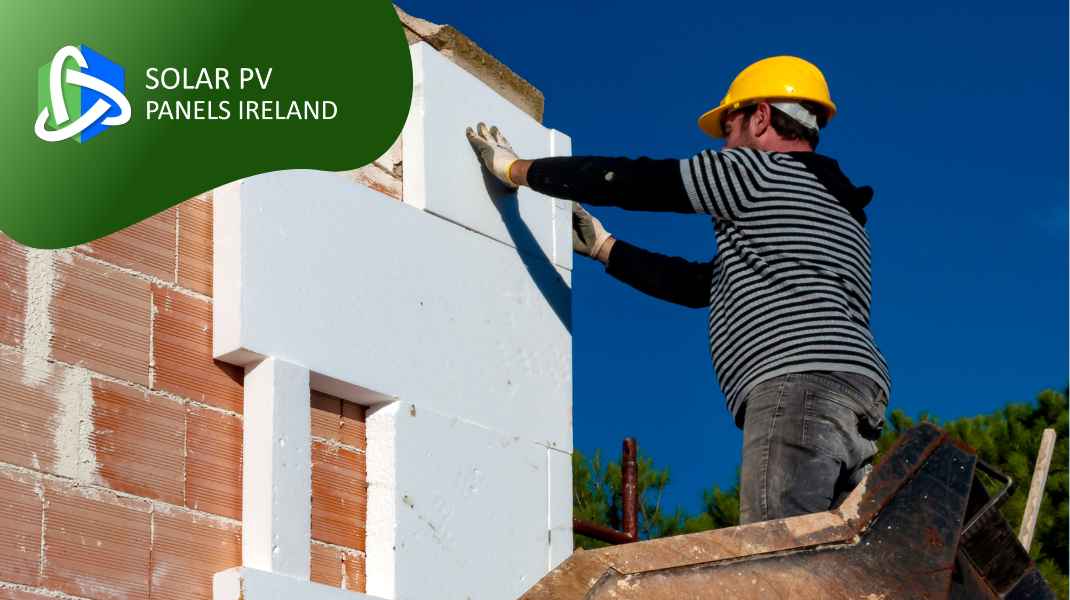
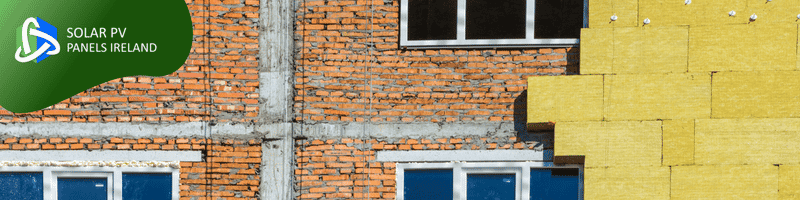
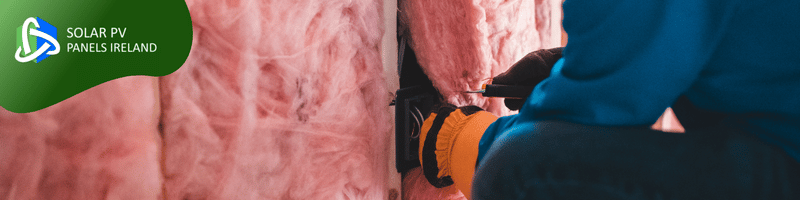
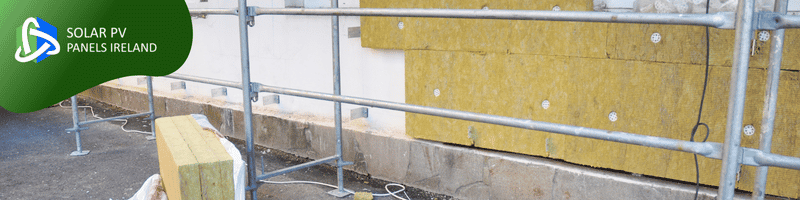
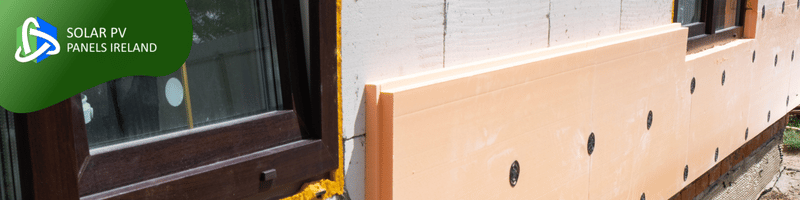
What it is: External Wall Insulation (EWI) involves bolting high-density insulation boards to the outside of your house and sealing them with weather-resistant render. Effectively wrapping your home in a protective winter coat.
The Big Benefits: It slashes heating bills by 30% to 40%, stops internal heat loss through masonry, and permanently eradicates structural drafts, cold spots, and toxic black mould.
Zero Internal Mess: Unlike dry-lining, all work happens outside. You lose absolutely zero indoor living space and don’t have to pack up your furniture or move out during installation.
The BER Turbocharger: While EWI traps the heat inside, pairing it with solar panels from Solar PV Panels Ireland generates free, clean electricity to run your home, drastically accelerating your jump to an A or B3 Building Energy Rating.
If you live in Ireland, you already know about the weather. It’s an unpredictable mix of driving Atlantic rain, biting winds, and that damp, bone-chilling winter cold that seems to seep right through the walls. If your house was built before the mid-2000s, there is an incredibly high chance that a massive chunk of the money you spend on heating is escaping directly through your exterior plaster. It is literally vanishing into thin air.
When researching ways to fix a drafty, freezing home and slash those terrifying winter energy bills, you will constantly see the term External Wall Insulation (EWI) pop up. But what does it actually mean? How does it handle the unique Irish climate, what does it cost, and is it genuinely worth the price tag?
Let’s dive into the nuts and bolts of external insulation. Let’s see how it stacks up against other methods, look at the latest SEAI grants, and explore why pairing it with smart tech like solar panels fromSolar PV Panels Ireland is the ultimate recipe for a warm home and an impressive Building Energy Rating (BER).
The Basics: What Actually is External Wall Insulation?
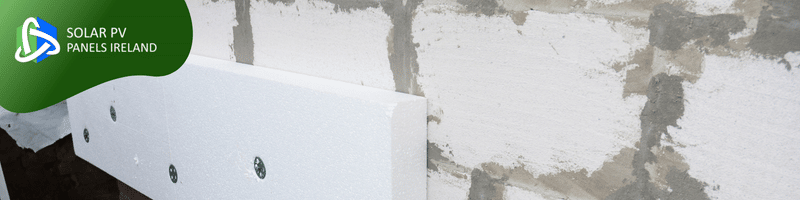
At its core, external wall insulation, often called “wrapping” a house, is exactly what it sounds like. Instead of putting insulation inside your rooms, specialist contractors fix high-grade insulation boards directly to the outside of your property. This new layer is then sealed up and covered with a highly durable, weather-resistant render.
Think of it as upgrading your home from a leaky fleece jacket to a premium, windproof winter coat.
Instead of trying to trap heat inside a room while the heavy block walls stay freezing cold, EWI keeps the actual structure of your house warm. Your masonry walls begin to act as a thermal mass. They absorb heat from your radiators, store it, and slowly radiate it back into your living spaces long after the central heating clicks off.
What Goes Into an EWI System?
A proper external setup is a multi-layered engineering system built to withstand decades of Irish weather while letting the property breathe. A standard installation involves:
Heavy-Duty Fixings & Adhesive: To lock the insulation boards permanently to your existing exterior block or plaster.
The Insulation Core: Usually made from Expanded Polystyrene (EPS) or Mineral Wool, specifically chosen for their low U-values (which just means they are exceptional at stopping heat movement).
Reinforcing Mesh & Base Coat: A flexible, cement-like layer embedded with fiberglass mesh. This gives the walls massive impact resistance against footballs or accidental bumps etc.
The Topcoat Render: The final, breathable silicone or acrylic plaster. This defines the new look of your home and keeps the driving rain out.
Why Uninsulated Irish Homes Struggle So Much
Ireland’s older housing stock has a specific, structural problem. Millions of homes built during the 1970s, 80s, and 90s were constructed using hollow concrete blocks or solid brick/stone walls with zero internal insulation.
In our damp climate, cold walls create an even nastier issue: thermal bridging. This happens when freezing external temperatures travel through the walls and meet the warm, humid air inside your home, usually in corners, near floors, or around windows. The result? Instant condensation, which quickly turns into ugly, unhealthy black mould. Because EWI wraps the entire building from the outside, it completely eliminates these cold bridges, keeping your internal walls dry, warm, and mould-free.
EWI vs. Internal vs. Cavity Insulation: The Real Differences
If you are looking to upgrade, you have three main paths. Choosing the right one depends entirely on how your house was built and what your budget looks like.
Insulation Type
How It Works
Best For
The Main Catch
Cavity Wall Pumping
Injecting polystyrene beads into the empty space between double brick/block walls.
Houses built with a clear, open cavity.
If your home is built with solid stone or hollow concrete blocks, you don’t have a cavity to fill.
Internal Dry-Lining
Fixing insulated plasterboards to the inside face of your external walls.
Historic homes or properties where you cannot alter the outside look.
It eats into your room sizes, requires ripping out skirting boards/radiators, and creates massive internal dust and disruption.
External Insulation (EWI)
Wrapping the entire outer skin of the building in insulation and fresh render.
Solid wall or hollow block homes looking for maximum efficiency.
Higher upfront cost, and it changes the external appearance of the building.
The Genuine Benefits of Wrapping Your House
Investing in external insulation is a major project, but the day-to-day transformation of your living space is immense.
1. Massive Energy Bill Reductions
Because EWI dramatically slows down how fast heat escapes, your home stays warmer for hours longer. Your boiler or heat pump doesn’t have to constantly cycle on and off to maintain a comfortable temperature, dropping your heating bills by up to 30% to 40%.
2. Goodbye to Damp and Black Mould
By moving the “dew point” (the exact zone where cold air meets warm air and creates moisture) completely outside the structural masonry, your indoor walls remain permanently dry. This eradicates the root cause of black mould, making the air inside your home significantly healthier for your family to breathe.
3. A Complete Aesthetic Facelift
If your home’s exterior plaster is cracked, stained, or simply looking dated, EWI acts like an immediate cosmetic renovation. With a massive palette of modern, coloured renders available, your house instantly gains curb appeal and a much higher resale value.
4. Zero Loss of Living Space
Unlike internal dry-lining, which can easily shrink a standard living room by several inches on every exterior wall, EWI doesn’t steal a single millimetre of your indoor square footage. Even better, because all the work happens outside, you don’t have to pack up your furniture or move out while the installers are at work.
What Does External Insulation Cost in Ireland?
Let’s talk numbers. The price of an EWI project depends heavily on the size of your home, the number of storeys, and architectural details like bay windows or extensions.
As a general benchmark for gross costs across Ireland, expect the following ranges before grants are applied:
Mid-Terrace House: €8,000 – €12,000
Semi-Detached House: €15,000 – €22,000
Detached House: €20,000 – €30,000+
While those initial figures can cause a bit of sticker shock, the net cost drops drastically once you factor in the current SEAI cash incentives.
Maximising the SEAI Grants
To help Ireland hit its carbon reduction goals, the government offers significant financial support for EWI through the SEAI. These are fixed-amount grants, meaning you get a direct chunk of cash back to offset the invoice:
Apartment (Mid-floor or built-upon): €3,000
Mid-Terrace House: €3,500
Semi-Detached / End-of-Terrace: €6,000
Detached House: €8,000
Quick tip: To get these grants, your property must have been built and occupied before 2011, and you must use an SEAI-registered contractor who installs fully approved systems.
Supercharging Your Home: The EWI + Solar PV Combination
Insulating your walls is incredibly effective at stopping heat from escaping. But if you want to truly future-proof your home and gain true energy independence, you need to think about how you generate energy, too.
Taking a holistic approach to your property’s energy needs turns a standard renovation into something incredibly powerful. While external insulation seals up the building envelope, installing a premium Solar PV System directly addresses your electricity bills.
Why Solar and Insulation Belong Together
Once your home is wrapped in insulation, your overall space heating demand plummets. If you have moved to an electric heating setup, like a modern air-to-water heat pump, or if you simply use everyday household appliances, electricity becomes your biggest ongoing running cost.
By placing solar panels on your roof, you harness free, clean electricity from the sun to run your heat pump, power your washing machine, and even charge your electric vehicle. Thanks to the Clean Export Guarantee (CEG), any excess solar energy you don’t use can be fed back into the national grid for a tax-free credit on your bill.
Boosting Your Building Energy Rating (BER)
In Ireland, a property’s BER is no longer just a piece of paper, it dictates real financial value. Ranging from an efficient ‘A1’ down to a leaky ‘G’, a valid BER certificate is legally required if you want to sell or rent your home. Crucially, Irish banks now offer significantly lower interest rates, known as Green Mortgages, to anyone buying or upgrading to a home with a BER rating of B3 or higher.
Both external insulation and solar PV systems are absolute game-changers for your BER calculation.
The EWI Impact
Upgrading solid or hollow-block walls with EWI completely transforms your home’s fabric loss score. This upgrade alone can frequently lift a drafty E or F-rated property straight up into the C or D bracket.
The Solar PV Multiplier
The official BER software (DEAP) heavily rewards homes that produce their own renewable electricity on-site. When you pair a highly insulated building envelope with an active solar array, your primary energy demand drops through the floor.
By combining External Wall Insulation (retaining the heat) with Solar PV Panels (producing free power), reaching a coveted A-rating or a solid B3 becomes an achievable reality, even for homes built forty or fifty years ago.
Why Partner With Solar PV Panels Ireland?
At Solar PV Panels Ireland, we know that a home is an interconnected system. Stopping heat loss with insulation is half the battle; powering that home with clean, self-generated solar energy is what truly breaks the cycle of relying on expensive utility companies and volatile fossil fuel prices.
Our expert team designs and installs high-performance solar PV systems tailored specifically to your roof layout and household energy habits. We work alongside your broader retrofit goals, showing you exactly how to maximise your renewable generation to unlock the highest possible BER improvements and the absolute lowest monthly running costs.
Take a look at our Solar PV Services to discover how we can help you build a warmer, greener, and far cheaper home to run.
Important Things to Watch Out For Before You Start
If you are planning to move forward with an external insulation project, keep these practical points in mind:
Check Your Roof Overhang: EWI adds significant thickness to your outside walls. Your roof eaves need to extend far enough out to cover the new insulation layer. If they don’t, your contractor will need to extend the roofline or install specialised flashing.
Moving Fixtures: Everything attached to the outside of your house, gas meters, rainwater downpipes, outdoor lights, and internet cables, will need to be carefully disconnected, extended, and refitted onto the new exterior surface.
Planning Rules: For the vast majority of Irish homes, EWI is considered an exempted development. However, if your home is a listed building or sits within an Architectural Conservation Area (ACA), you must check in with your local planning office first.
Windows and Sills: Because the walls become thicker, your existing window sills will usually need to be extended using engineered over-sills to ensure rainwater drains away properly without running down your new render.
Is External Wall Insulation Genuinely Worth It?
Without question, yes. For older Irish properties built with solid or hollow concrete blocks, external wall insulation is widely considered the single most effective retrofitting step you can take. It targets the root causes of uncomfortable living conditions: structural dampness, drafts, rapid heat loss, and tired-looking exterior plaster.
While the initial investment is higher than alternative options, the lack of internal disruption, the preservation of your valuable indoor space, the fresh new look of your property, and the immediate drop in energy costs deliver an undeniable return on investment.
By combining the structural protection of a high-quality external wrap with the clean energy generation of a tailored solar array fromSolar PV Panels Ireland, you aren’t just getting your home ready for the next winter, you are completely future-proofing your property for decades to come.
Ready to find out how much you could save by upgrading your home’s energy setup? Head over toSolar PV Panels Ireland today to book a free solar assessment and start your journey toward a warmer, cheaper, and more sustainable home.