Author: Joe Reilly

  • Can You Power an EV with Solar Panels in Ireland?

    Can You Power an EV with Solar Panels in Ireland?

    For homeowners in Ireland, the last few years have seen a “perfect storm” of rising energy costs and a surge in electric vehicle (EV) adoption. If you’re one of the thousands making the switch to an EV, you’re already saving a fortune on petrol or diesel.

    But one question is on every new and potential EV owner’s mind: “Can I power my new EV with my own solar panels?”

    The short answer is: Yes, absolutely. And it’s one of the single best financial and environmental moves you can make. It’s the dream scenario: you create your own clean electricity on your roof and use it to run your car for free. It’s the ultimate way to achieve true energy independence.

    However, you can’t just plug your car into a standard socket and hope for the best. To do it properly, you need the right technology.

    This guide will break down everything you need to know about pairing solar panels with an EV charger in Ireland, from the tech involved to the costs and incredible savings.

    Why Charge Your EV with Solar?

    Pairing solar panels with an electric car isn’t just a gimmick; it’s a perfect synergy. The two technologies solve each other’s problems.

    1. “Free” Fuel, Forever: This is the most obvious benefit. The sun’s energy is free. Once your panels are installed, every kilometre you drive on solar-generated electricity is a kilometre you didn’t pay for. With grid electricity prices remaining volatile, this protects you from future price hikes.
    2. Become Genuinely Zero-Emissions: An EV is only as clean as the electricity that powers it. If you’re charging from the grid at night (which is often powered by gas), you still have a carbon footprint. Charging directly from your own solar panels makes your EV truly zero-emissions.
    3. Maximise Your Solar Investment (ROI): The SEAI’s “Clean Export Guarantee” is a great step forward, but you are paid a much lower rate for exporting your excess solar power than the rate you pay to buy it. The most-savvy homeowners use every last kilowatt they generate. Using that surplus electricity to charge your 60kWh car battery is far more valuable than exporting it for a few cents.
    4. Energy Independence: There is no better feeling than watching your meter and knowing you’re not importing from the grid. You’re generating, storing, and using your own power for your home, your hot water, and your car.
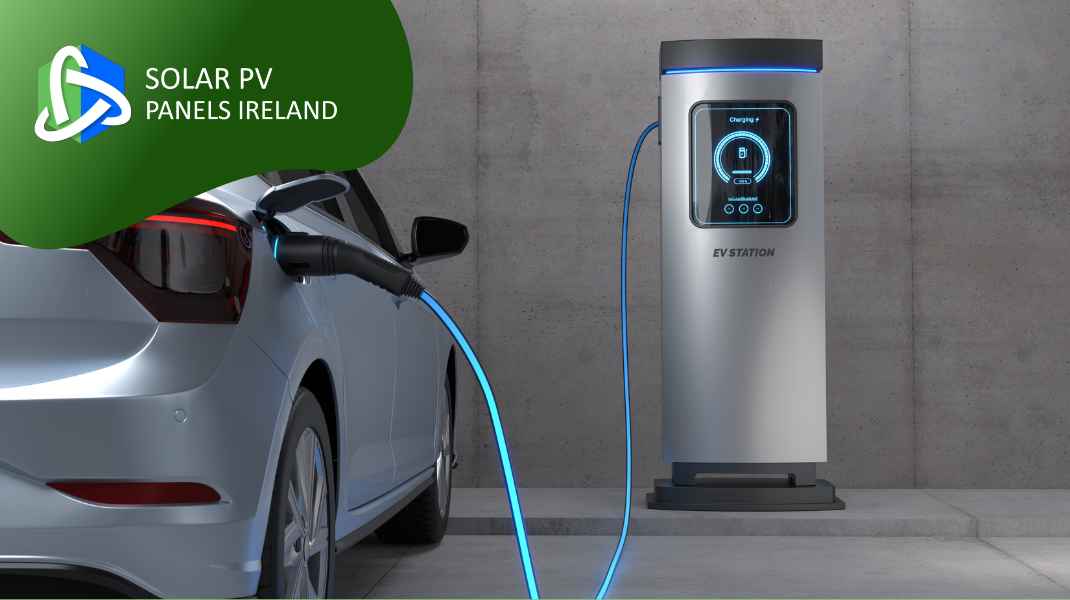
    the perfect solar ev setup

    How Does Charging an EV with Solar Actually Work?

    This is where the technology gets clever.

    When your solar panels are generating electricity, your home’s appliances (fridge, TV, etc.) will use it first. If you’re generating more power than your house needs, this “surplus” or “excess” electricity has to go somewhere.

    Without an EV, it would just be exported back to the grid.

    But you can’t just plug your car in. A standard EV charger doesn’t know where the electricity is coming from. It will just pull 7.4kW of power from whatever source is available and if your panels are only producing 2kW, the charger will pull the other 5.4kW straight from the grid, costing you money.

    This is where the single most important piece of the puzzle comes in. To charge your car only with solar, you need a Smart EV Charger.

    A Smart EV Charger (sometimes called an “eco-friendly” or “solar-aware” charger) is the “brain” of the operation. It communicates with your solar panel system and your home’s main electricity meter.

    Here’s how it works:

    1. A “CT Clamp” is Installed: A small device called a Current Transformer (CT) clamp is attached to your main electricity cable. This clamp’s job is to monitor your whole house. It can see in real-time if you are importing power from the grid or exporting surplus solar power to the grid.
    2. The Smart Charger Reads the Data: The clamp sends this information to the smart charger. The charger now knows exactly how much spare, free solar electricity is available at any given second.
    3. You Choose Your “Eco-Mode”: This is the magic. You select a “solar-only” or “eco” mode.

    The Magic of “Eco-Mode” (Solar-Only Charging)

    When you set your smart charger to its eco-mode, it will behave in one of two ways:

    • 1. “Solar-Only” Mode: This is for the purist. The charger will wait until it detects a minimum amount of surplus solar (usually 1.4kW) before it even begins to charge the car. If a big cloud covers the sun and your surplus drops, the charger will pause the charging session. When the sun returns, it resumes. Your car will only ever receive 100% free, solar-generated electricity.
    • 2. “Eco-Boost” Mode: This is a blended mode. It will use all available solar power and then “top up” from the grid to a consistent level (e.g., 3.6kW). This is useful if you need to charge but still want to maximise your free energy and charge faster than the sun alone will allow.

    Of course, all smart chargers also have a “Boost” or “Fast” mode. This setting makes it act like a normal charger, pulling the full 7.4kW (from solar and grid) to charge your car as fast as possible, regardless of cost.

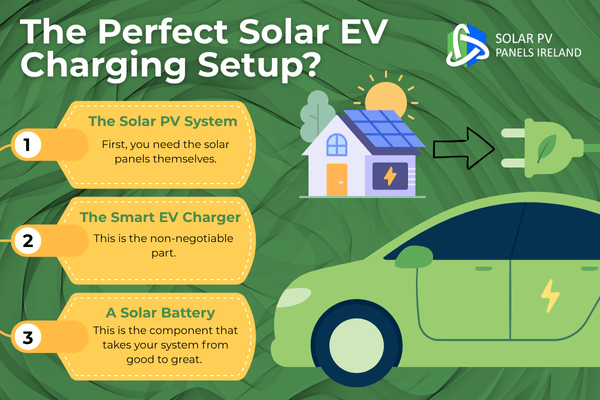
    What Do I Need for the Perfect Solar EV Charging Setup?

    To get this system up and running, you need three key components.

    1. The Solar PV System (The Engine)

    First, you need the solar panels themselves. A common question we get is, “How many panels do I need to charge my car?”

    Let’s break down the maths for a typical Irish homeowner:

    • A standard EV gets about 5-6 km per kWh of electricity.
    • The average Irish driver travels about 17,000 km per year.
    • This means the average EV needs ~2,800 – 3,400 kWh of electricity per year to run.

    Now, let’s look at a solar panel system:

    • A modest 6kWp solar system (around 14-16 high-efficiency panels) in Ireland will generate, on average, 5,100 – 5,400 kWh per year.

    As you can see, a standard-sized solar PV system generates more than enough electricity over the year to cover the entire annual mileage of your car. The challenge is simply getting that power into the car, which is where the smart charger comes in.

    2. The Smart EV Charger (The Brain)

    This is the non-negotiable part. As mentioned, this is the device that monitors your solar output and diverts the surplus to the car. Brands like Zappi are market leaders in this and are specifically designed for this “solar-aware” charging.

    3. A Solar Battery (The “Optional but Powerful” Extra)

    This is the component that takes your system from good to great. Most people are at work during the day when the sun is shining and solar generation is at its peak. They are at home in the evening and overnight, when the car needs to be charged.

    • Without a battery: You can only charge your car with solar when it’s sunny and the car is physically plugged in at home.
    • With a battery: Your panels generate free electricity all day and store it in your 5-10kWh home battery. You come home at 7 PM, plug in your EV, and your smart charger pulls that free, stored solar energy from your home battery and puts it into your car battery.

    This is the ultimate setup: you charge your car overnight, for free, using the energy you captured 8 hours earlier.

    Let’s Talk Numbers: Irish Costs, Grants & Savings

    This combination of tech is a significant investment, but the payback is faster than ever.

    The Savings

    • Petrol/Diesel: The average Irish driver (17,000 km) in a petrol car (5.5 L/100km) at €1.80/L is spending €1,683 per year on fuel.
    • Grid Electricity: That same driver in an EV (17,000 km) charging only on the grid at a 35c/kWh average rate is spending €1,071 per year on electricity. (This is still a good saving!)
    • Solar Power: That same driver charging only from their solar panels is spending €0 per year on electricity.

    Your annual saving on “fuel” is over €1,600 compared to a petrol car, and over €1,000 compared to grid-charging your EV.

    The Grants

    The Irish government actively supports this move through the SEAI.

    1. SEAI Solar PV Grant: You can receive up to €2,100 towards the cost of your solar panels and a battery (or €2,400 for panels alone, though this is changing in 2025). This makes the initial investment much lower.
    2. SEAI Home EV Charger Grant: You can claim a separate grant of €300 towards the cost and installation of your smart EV home charger.

    These two grants are separate and can be combined, knocking a significant amount off the total installation cost.

    The Solar PV Panels Ireland “All-in-One” Solution

    Here’s a common problem: you get a solar company to install your panels, and then you have to find a separate electrician or EV charger company to install the charger. The two teams might not communicate, and you’re left trying to figure out if the systems are compatible.

    This is where we come in.

    At Solar PV Panels Ireland, we are experts in the entire home energy ecosystem. We don’t just install solar panels, and we don’t just install EV chargers. We design and fully install them together.

    Our expert team will handle your entire project from start to finish:

    • Free Survey: We design the perfect solar PV system for your roof.
    • Battery Storage: We’ll size a battery (if you want one) to meet your home’s needs.
    • Smart EV Charger: We will supply and install a top-tier smart EV charger at the same time.
    • One Installation: Our team does it all in one go, ensuring your panels, inverter, battery, and charger are all communicating perfectly from day one.
    • Grant Handling: We’ll guide you through the SEAI grant applications for both your solar and your EV charger.

    You get one point of contact, one seamless installation, and the peace of mind that your system is designed to work as one.

    The Final Verdict: Is It Worth It?

    Without a doubt, yes. Charging your EV with your own solar panels is the single most powerful way to take control of your energy costs. It future-proofs your home, slashes your bills, and turns your car into a truly zero-emissions vehicle.

    You’ve already made the smart move by choosing an EV. Now, take the final step and run it on free, clean energy that you generate yourself.

  • How To Save Electricity At Home

    How To Save Electricity At Home

    Let’s be honest, nobody enjoys opening an electricity bill these days. Over the last couple of years, watching the numbers climb has become a bit of a national pastime in Ireland and not the fun kind. Between the kettle constantly on for tea and the immersion heater being the sworn enemy of every Irish parent, our homes are hungry for power.

    The good news is that saving electricity isn’t actually about sitting in the dark or shivering under three duvets. It’s more about being a bit “street smart” with how we use what we have. Most of us are wasting money without even realising it.

    If you’re looking to trim the fat off your monthly outgoings, here is a comprehensive guide to clawing back some of that hard-earned cash by making your home more energy-efficient.

    1. The Kitchen: Where the Money Goes

    The kitchen is arguably the biggest “energy hog” in the house. Think about it: you’ve got appliances designed to get things freezing cold and others designed to get things boiling hot. That’s a lot of heavy lifting for your electricity meter.

    The Kettle Conundrum We are a nation of tea drinkers. But did you know that boiling a full kettle when you only need one mug is one of the most common ways to waste electricity? It takes a massive amount of energy to bring two litres of water to a boil. Only fill it with what you need. It’s faster, and your bill will thank you.

    Cooking Smart If you’re using the oven for a single jacket potato, you’re essentially burning money. Where possible, use the microwave or an air fryer, they are significantly cheaper to run because they heat a smaller space much faster. If you are using the hob, keep the lids on your pots. It keeps the heat in, meaning you can turn the ring down sooner.

    The Fridge-Freezer Balance Your fridge and freezer are on 24/7. To keep them efficient, make sure they aren’t pushed right against the wall; they need a bit of “breathing room” for air to circulate behind them. Also, check the seals. If a cold draught is escaping, the motor has to work twice as hard to keep your milk cold.

    2. Laundry Habits That Pay Off

    We’ve all been guilty of throwing a few items into the wash because we need a specific shirt for Friday night. But those half-loads are a silent budget killer.

    Wait for a Full Load It sounds basic, but only running the washing machine or dishwasher when they are actually full makes a massive difference over a year. If you have a “half-load” or “eco” setting, use it.

    Turn Down the Temperature Modern detergents are incredibly effective. You really don’t need a 60-degree wash for your everyday clothes. Dropping to 30 degrees uses roughly 40% less electricity. Unless you’re trying to get grass stains out of rugby kit, 30 is plenty.

    The Great Tumble Dryer Debate Tumble dryers are essentially giant hair dryers that run for an hour. They are incredibly expensive to run. On a dry Irish day (rare as they may be!), get the clothes out on the line. If you have to dry indoors, use a clothes horse in a well-ventilated room rather than leaning on the dryer.

    3. The “Vampire Power” Drain

    This is the one that surprises people. “Vampire power” (or standby power) refers to the energy consumed by appliances when they are switched off but still plugged in.

    That little red light on your TV? The microwave clock? The phone charger plugged in with no phone attached? They are all sipping electricity. It might only be a few cents a day, but across 10 or 15 devices, it adds up to a decent chunk of money by the end of the year. If you aren’t using it, flick the switch at the wall.

    4. Lighting: The Low-Hanging Fruit

    If you haven’t swapped your old halogen or incandescent bulbs for LEDs yet, make that your job for this weekend. LED bulbs use about 80-90% less energy than traditional bulbs and last for years. It’s one of the few energy-saving tips that pays for itself within a matter of months.

    And, of course, the golden rule our parents shouted at us: turn the lights off when you leave the room!

    5. Mastering the Immersion and Hot Water

    The “immersion” is a legendary figure in Irish households, usually associated with the fear of leaving it on. And for good reason, it’s an expensive way to heat water.

    If you have an electric shower, try to keep your time in there to under five minutes. If everyone in a four-person household knocks two minutes off their shower time, the savings are actually quite staggering. Also, make sure your hot water cylinder has a good “jacket” or insulation. Keeping that water hot for longer means you don’t have to fire up the heater as often.

    6. Understanding Your Bill (and Your Timing)

    Are you on a “Time of Use” tariff? Many Irish providers now offer cheaper electricity at night or during specific “free” periods on weekends.

    If you have a smart meter, find out when your cheapest hours are. If electricity is half price after 11 PM, that’s the time to set the dishwasher or washing machine to run. It’s the same amount of energy, just at a much better price.

    7. Heat Preservation

    Electricity isn’t just about gadgets; it’s about the environment they sit in. If your home is draughty, you’ll likely use more electricity on plug-in heaters or keeping the lights on because the house feels “gloomy” and cold.

    Close your curtains as soon as the sun goes down to keep the heat in. Use draught excluders (the classic “sausage dog” at the bottom of the door) to stop the cold air from creeping in. The warmer your house stays naturally, the less you’ll rely on expensive electrical boosters.

    The Ultimate Way to Save: Solar PV

    While all these tips will certainly help you shave a bit off your monthly bill, there is only so much you can do by turning off lights and boiling less water. If you really want to take control of your energy costs and stop worrying about price hikes from the big suppliers, it’s time to look at Solar PV panels.

    At Solar PV Panels Ireland, we help homeowners across the country turn their roofs into their own private power stations. By installing solar panels, you can generate your own clean, free electricity directly from the sun (and yes, they work perfectly fine with Ireland’s “bright-grey” skies!).

    Solar is no longer a futuristic luxury; it’s a smart, high-return investment. Not only do you drastically reduce your reliance on the grid, but with modern battery storage, you can keep that free energy to use in the evening. Plus, with the current SEAI grants available, there has never been a more affordable time to make the switch.

    We pride ourselves on a professional, no-nonsense fitting service, ensuring your system is optimised for the Irish climate. If you’re tired of being at the mercy of rising electricity prices, get in touch with us today. Let’s see how much we can save you!

  • How to Maximise ROI from Your Solar Power Installation in Ireland?

    How to Maximise ROI from Your Solar Power Installation in Ireland?

    In today’s world of rising energy costs and growing environmental awareness, investing in a solar PV (Photovoltaic) system for your home or business in Ireland is not just a trend, it’s a smart financial decision. A well-planned and professionally installed solar power system can significantly reduce your electricity bills, provide long-term energy independence, and even generate a passive income. However, the key to unlocking these benefits lies in maximising your Return on Investment (ROI).

    At Solar PV Panels Ireland, we understand that a solar installation is a significant commitment. That’s why we’ve compiled this comprehensive guide to help you get the most out of your solar investment. From the initial planning stages to day-to-day operations and future upgrades, we’ll cover every strategy to ensure your solar PV system delivers maximum value for years to come.

    The Foundation of a Strong ROI: Smart Planning and Installation

    The journey to a great ROI begins long before the first solar panel is mounted on your roof. The decisions you make during the planning and installation phase will have the most significant impact on your system’s long-term performance and profitability.

    1. Take Advantage of All Available Grants and Incentives

    The fastest way to improve your ROI is to reduce your initial capital outlay. The Irish government and the Sustainable Energy Authority of Ireland (SEAI) offer several grants and incentives to make solar installations more affordable. The SEAI Home Energy Grant for Solar PV, for example, can provide substantial financial support for residential installations.

    Additionally, as of May 2023, the Irish government introduced a 0% VAT rate on the supply and installation of solar panels for residential properties. This immediate saving is a game-changer, making solar energy more accessible than ever before. For agricultural businesses, the TAMS 3 Solar Grant offers significant support for adopting solar technology. Solar PV Panels Ireland is an SEAI-registered company, which means we can help you navigate the application process and ensure you qualify for all the grants you are entitled to.

    2. Get the Right System Size – Don’t Oversize

    Bigger isn’t always better when it comes to solar panels. Your system should be perfectly sized to meet your specific energy needs. The goal is to match your daytime electricity usage as closely as possible with your solar generation. While it may seem tempting to install a massive system, oversizing can delay your payback period and may not be as cost-effective in the long run.

    A professional installer like Solar PV Panels Ireland will conduct a detailed site survey and analyse your current electricity usage to recommend the optimal system size. A well-sized system can reduce your electricity bills by up to 60% annually and is designed to meet 70-90% of your electricity demand, ensuring you get the best possible return on your investment.

    3. Choose Quality Components with Long Warranties

    The quality of your solar panels, inverter, and mounting system directly impacts your system’s lifespan and efficiency. Opting for cheaper, inferior components might save you money initially but could lead to higher maintenance costs and reduced performance over time. Look for components with robust warranties. High-quality solar panels often come with a performance warranty of 25 years or more, while good inverters have a warranty of at least 10 years. Investing in reliable, high-quality components ensures your system will perform optimally for its entire lifespan of 20 to 30 years, or even longer.

    Optimising Your Day-to-Day Solar Usage for Maximum Savings

    Once your solar PV system is installed and running, your focus should shift to how you use the electricity it generates. This is where you can truly accelerate your ROI and maximise your savings.

    1. Use Your Energy Wisely: Shift Your Consumption

    The golden rule of solar energy is to use the power as it’s being generated. Solar panels produce the most electricity during the sunniest hours of the day. To maximise your self-consumption, get into the habit of running high-energy appliances, such as washing machines, dishwashers, and tumble dryers, during peak daylight hours.

    You can take this a step further by using smart plugs or timers to automate this process. These devices can switch on appliances at specific times when your solar production is at its highest, ensuring you’re using your own free, clean electricity instead of drawing power from the more expensive grid.

    2. Invest in Battery Storage

    A solar battery is a powerful upgrade that can dramatically increase your ROI. Batteries allow you to store the excess energy your panels generate during the day and use it at night or on cloudy days. This means you can power your home around the clock with your own energy, further reducing your reliance on the grid and leading to even greater savings.

    For example, a family might generate more power than they need at noon on a sunny summer day. With a battery, that surplus energy is stored instead of being exported back to the grid. In the evening, when the sun has gone down, they can use the stored battery power to run their lights, TV, and other appliances. This strategy can reduce your electricity bills by even more than a standalone solar system.

    3. Consider a Hot Water Diverter

    A hot water diverter is another excellent way to maximise your self-consumption. These clever devices automatically divert surplus solar energy to heat your immersion tank. This means you can heat your water for free during the day, reducing the need to use an electric or gas boiler and providing another significant layer of savings.

    4. The Microgeneration Support Scheme (MSS)

    If you have a well-sized solar system, you may find that you still generate more electricity than you can use or store. This is where the Microgeneration Support Scheme (MSS) comes in. Under this scheme, you can sell your surplus energy back to the grid for a clean export payment. Many electricity providers in Ireland, such as Electric Ireland, offer a generous 19.5c per kilowatt hour (kWh) for exported energy. This not only turns your excess power into passive income but also helps to further shorten your payback period. To participate in the MSS, you will need a smart meter and a solar installation certified by a registered specialist.

    Long-Term Maintenance and Upgrades

    To ensure your solar PV system continues to deliver maximum ROI, it’s crucial to care for it over its long life.

    1. Regular System Monitoring

    Most modern solar PV systems come with a monitoring app or online portal. This tool is your best friend. It allows you to track your system’s performance in real time, showing you how much energy you are generating, consuming, and exporting. By regularly checking the app, you can quickly spot any drops in performance, which could indicate an issue with a panel or the inverter. Catching these problems early can prevent further issues and ensure your system is always operating at its peak.

    2. Panel Cleaning and Maintenance

    While the Irish climate’s frequent rain often helps keep panels clean, they can still accumulate dirt, dust, and bird droppings. A build-up of grime can reduce your panels’ efficiency. It’s a good practice to occasionally check your panels from the ground. If they look dirty, a simple clean with water and a soft brush can help. It’s also recommended to have a qualified installer perform professional maintenance checks every 3-5 years to inspect connections, ensure the inverter is working correctly, and confirm the system is in perfect condition.

    3. Smart EV Charging

    If you own an electric vehicle (EV) or are considering purchasing one, you can further enhance your ROI by installing a smart EV charger. These chargers can be programmed to use only the surplus solar energy generated during the day to charge your car. This means you are essentially fuelling your car for free, which adds a significant layer of savings on top of what you are already saving on your electricity bills. Combining solar energy with EV charging can be one of the most effective ways to truly maximise your solar investment.

    Your Path to Energy Independence and Financial Freedom

    Maximising the ROI from your solar power installation in Ireland is a long-term strategy that combines smart initial decisions with proactive management. By taking advantage of grants and incentives, sizing your system correctly, and choosing quality components, you lay a solid foundation. Once installed, optimising your daily energy usage, investing in smart technologies like batteries and EV chargers, and maintaining your system will ensure you reap the full financial and environmental rewards.

    At Solar PV Panels Ireland, we are more than just installers, we are your partners on the journey to energy independence. Our team of fully qualified professionals is dedicated to designing, planning, and installing a system that is perfectly tailored to your needs, ensuring you achieve the best possible return on your investment. We are here to support you every step of the way, from the initial consultation to ongoing support, so you can enjoy the full benefits of clean, renewable energy.

  • Ground Mounted Solar Panels: For Irish Homeowners and Businesses

    Ground Mounted Solar Panels: For Irish Homeowners and Businesses

    In a time of energy uncertainty and rising costs, Irish homeowners, farmers, and businesses are increasingly seeking some real energy independence. Rooftop solar panels have long been the go-to solution, but a powerful and often more efficient alternative is gaining traction: Ground Mounted Solar Panels.

    For properties with unsuitable roof space, complex shading issues, or very large energy demands, a ground-mounted system can unlock the potential of PV technology. It offers flexibility and maximum energy yield. This makes it a great investment in the long run.

    This full guide and outline will walk you through every aspect of ground mounted solar. From understanding the technology and regulatory requirements in Ireland to calculating costs, grants and your return on investment.

    What Exactly Are Ground Mounted Solar Panels?

    Ground Mounted Solar Panels

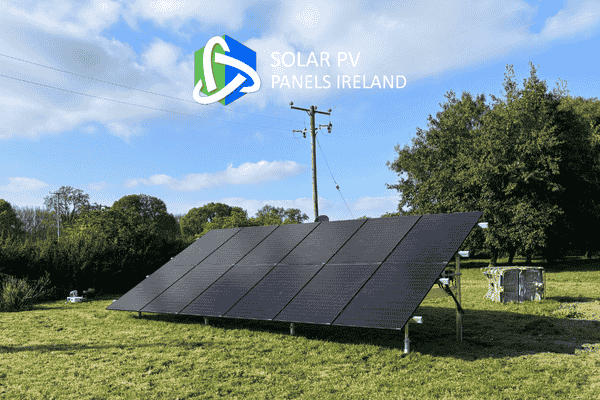
    Ground mounted solar panels, or Ground Mount PV Systems, are systems where the solar panels are installed straight onto the land. They are secured by a dedicated racking structure, rather than being fixed to a building’s roof.

    While this might make you think of vast solar farms, ground-mount systems are highly scalable and are used just as effectively for residential properties, agricultural settings, and commercial premises across Ireland.

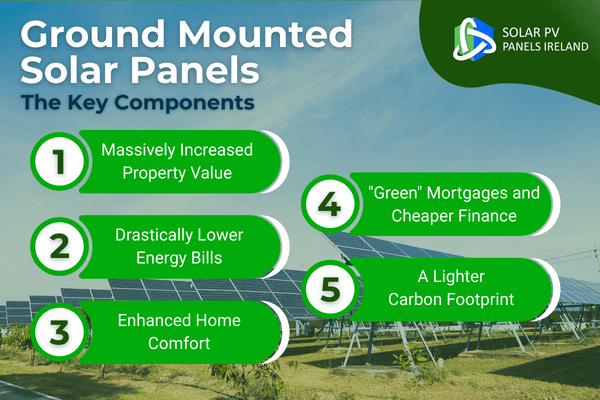
    The Key Components

    A ground-mount installation differs from a rooftop system primarily in its structural support and foundation:

    Solar Panels (PV Modules): These are the panels themselves. Ground arrays are perfectly suited for bifacial solar panels. They generate electricity from both the front side (direct sunlight) and the rear side (reflected light from the ground). This boosts efficiency by an additional 10–30%.

    Racking and Framing: This is the robust metal structure (usually aluminium or galvanised steel) that holds the panels in place. It’s designed to withstand high winds and the challenges of the Irish climate.

    Foundations: The racking must be securely anchored to the ground. Common methods include:

    1. Piles (Ground Screws or Rammed Posts): Ideal for farms and fields. They require little concrete and are quicker to install.
    2. Concrete Footings: Used where soil conditions are less stable or where maximum stability is required.

    Inverter: Converts the Direct Current (DC) electricity generated by the panels into Alternating Current (AC) usable by your home or business.

    Trenching and Wiring: Because the system is located away from the building, durable DC wiring must be routed underground via trenches. This ensures safety and protects the electrical connection from the environment.

    Harnessing Maximum Power: Tilt and Tracking Systems

    The greatest advantage of a ground-mounted solar system is the freedom it provides for the best positioning. In Ireland, solar panels achieve maximum year-round efficiency when they are:

    • Orientation: Facing directly South.
    • Tilt Angle: Set between 30° and 45° from the horizontal.

    With a roof, you are limited by the existing structure. With a ground mount, your installer can precisely set the angle and direction to capture the most sunlight throughout the year.

    Ground Mounted Solar Panels

    Ground Mounted Solar Panels vs. Roof Mounted

    Deciding between ground-mounted and roof-mounted PV panels is a big step in your solar journey. For many Irish properties, a ground array often ends up being superior in performance, flexibility, and longevity. Although it can come with a higher initial price tag.

    FeatureGround Mounted Solar PanelsRoof Mounted Solar Panels
    Efficiency & OutputHigh. Optimised tilt/orientation (30°-45° South), better cooling, compatible with bifacial panels.Limited by roof pitch/direction. Can suffer from heat degradation.
    MaintenanceExcellent accessibility. Easy and safe to inspect, clean, and repair at ground level.Requires ladders, safety gear, or scaffolding; maintenance is less frequent and more complex.
    Flexibility & ScalingUnlimited. Array size dictated only by available unshaded land and budget.Limited by roof size, shape, and structural load capacity.
    Installation RiskZero risk of roof leaks or structural damage to the building.Involves roof penetration and adds weight/stress to the existing structure.
    ShadingPro: Can be sited to completely avoid surrounding shading from chimneys or vents. Con: Requires clearing land of trees/bushes and can be susceptible to low-lying shade.Susceptible to shade from chimneys, vents, and nearby trees/buildings.
    CostHigher. Requires extra racking, groundwork, and trenching for wiring.Lower. Uses the existing roof structure as support.
    Irish PlanningFree-standing systems face specific, tighter limitations on square metres without a permit (25m² for domestic).Rooftop systems have significantly more relaxed planning exemptions.

    The Efficiency Edge

    The superior performance of a ground-mounted system in the Irish climate is often the deciding factor for high-consumption users.

    Optimal Angle: By setting the panels to the ideal 30°-45° angle, the system maximises energy harvesting throughout the year. This is really crucial during low-sun months.

    Thermal Regulation: Solar cells become less efficient as they heat up. Ground-mounted systems benefit from natural airflow above and below the panels. This keeps them much cooler than panels glued flat to a warm roof. This small difference can translate into a 2-3% increase in efficiency and output over the system’s lifetime.

    Bifacial Technology: Ground arrays allow for the use of cutting-edge bifacial panels. Installed high enough off the ground, these panels absorb light reflected off the grass, gravel, or lighter soil beneath the array. This significantly boosts your energy output.

    The Irish Regulatory Landscape: Planning and Grants

    For residential and commercial solar installations in Ireland, understanding the rules set out by local authorities and the incentives available through the Sustainable Energy Authority of Ireland (SEAI) is really important.

    Planning Permission for Ground Mounted Systems

    The rules regarding solar PV planning permissions in Ireland have thankfully been relaxed in recent years. But there are specific limitations concerning ground-mounted arrays.

    For free-standing (ground-mounted or wall-mounted) solar PV systems:

    • Residential Homes: You can install up to 25 square metres of ground-mounted panels without requiring planning permission. For context, a typical 10-panel system (around 4–5 kW) needed to power an average Irish home requires approximately 20–25 square metres. Therefore, if you need a system larger than 5–6 kW, you will likely exceed the 25m² threshold and require permission.
    • Agricultural, Industrial, and Commercial Premises: These sites benefit from a higher exemption limit of 75 square metres of ground-mounted solar PV without planning permission. This is often ideal for powering farm sheds, small industrial units, or workshops.

    Critical Note on Site Location: If your property is located within an Architectural Conservation Area (ACA) or a solar safeguarding zone near an airport, stricter limits will apply. You must always consult your local authority or an accredited installer before proceeding.

    SEAI Grants and Financial Incentives

    The Irish government, through the SEAI, offers significant incentives to make ground-mounted solar power more accessible.

    1. SEAI Solar PV Grant: Homeowners installing ground-mounted PV systems are typically eligible for the SEAI’s grant scheme. While the exact structure varies, grants can cover systems up to 4kWp/5kWp and generally provide up to €2,100 or sometimes more, depending on the number of panels installed. It is important to confirm the current grant structure with your installer, as rates can fluctuate.
    2. Microgeneration and the CEG: The Clean Export Guarantee (CEG) scheme allows Irish consumers to sell any excess electricity generated by their system back to the national grid. This provides a crucial revenue stream. You can monetise any power you don’t use and speed up your system’s payback time. Energy companies in Ireland currently offer competitive rates (e.g., 20c per kWh) for exported solar energy.

    Investment and Payback: Ground Mounted Solar in Ireland

    The initial price for a ground-mounted solar PV system is generally higher than for an equivalent rooftop system. However, this premium is very quickly offset by the system’s superior efficiency and the resulting energy savings.

    Key Factors Influencing Cost

    The final price of your ground-mount system will depend on several variables:

    • System Size (kWp): The largest factor. A typical residential system might be 4kWp to 6kWp. A commercial or farm system could be 10kWp or much larger.
    • Racking Type: Fixed-tilt systems are the most economical. Pole mounts or tracking systems really increase the hardware and installation costs.
    • Distance to Property: The further the distance between the solar array and the main distribution board in the house. The more expensive the trenching and wiring will be.
    • Ground Conditions: Rocky or difficult terrain may require more specialised groundwork or heavier machinery for installing the foundations.
    • Panel Choice: Using premium, high-efficiency, or bifacial panels will increase the component cost. But it will also boost long-term yield.

    Typical Cost Ranges

    While exact figures require a site-specific quote, a standard, fully installed residential ground-mounted PV system in Ireland typically ranges from €8,000 to €18,000 (pre-grant). This will depend heavily on the scale and complexity. Systems for agricultural or commercial use, being larger and often requiring three-phase inverters, will cost significantly more.

    Return on Investment (ROI)

    Due to the generous SEAI grants and the revenue generated from the Clean Export Guarantee (CEG), the financial incentive for solar in Ireland is extremely strong. The average ground-mounted solar system pays for itself through reduced energy bills and CEG payments within 5 to 7 years. Given that modern, high-quality solar panels come with performance warranties of 25 years and a design life of 30+ years, this represents decades of free, clean electricity generation. This makes ground-mounted solar a top-tier investment.

    Installation, Space, and Siting Requirements

    Successful installation begins with meticulous planning to ensure your  site meets the requirements for maximum sun exposure and regulatory compliance.

    How Much Space is Needed?

    Space is the primary constraint for ground-mounted solar. The amount of land required depends on the panel size, spacing, and the final tilt angle (which dictates shadowing).

    As a general rule:

    • A standard 1 kWp system requires approximately 20-25 square metres of unshaded land.
    • A typical Irish household needing a 5 kWp system should budget for an area of around 100–125 square metres (approx. 10m x 12.5m) to ensure panels are properly spaced and avoid self-shading.

    Your designated area must be free of significant shading sources. These could be large trees or tall buildings. A professional site assessment will map the sun’s path throughout the seasons to confirm the optimal, shade-free location.

    The Installation Process

    Once the site assessment is complete, the installation follows a clear procedure:

    1. Permitting: Secure any necessary planning permission (if exceeding 25m²).
    2. Groundwork: The area is prepared, and the chosen foundation (piles or concrete) is set to support the racking.
    3. Racking Assembly: The metal frames are bolted into the foundations and fixed to the optimal angle (30°-45°).
    4. Panel Mounting: The PV modules are securely attached to the racking.
    5. Trenching and Wiring: Trenches are dug, and the DC power cables are routed safely underground from the array to the inverter, typically located near your meter or battery storage system.
    6. Inverter and Grid Connection: The inverter is installed, and the AC electricity is connected to your property’s electrical system and, finally, to the national grid (ESB Networks).
    7. Commissioning and Testing: The system is powered up, tested, and a comprehensive handover is conducted by your installer.

    Maintenance, Reliability, and Longevity

    The robust nature and easy access of a ground-mounted PV system mean it is often simpler and safer to maintain than a rooftop array.

    Easier Maintenance = Higher Yield

    • Cleaning: The panels should be cleaned regularly to remove built-up dirt, pollen, and debris. This can reduce efficiency. Because the panels are at ground level, this task is simple and doesn’t require specialised equipment.
    • Inspection: Regular visual inspections are straightforward, allowing you to easily spot and clear any shading issues (e.g., weeds or tall grass) or potential damage early on.

    Ground-mounted racks are highly durable. They often are constructed using industrial-grade materials built for decades of exposure. With minimal maintenance and high-quality Irish installation standards, your ground-mounted solar array will generate clean energy for 25 to 30 years and beyond.

    Your Path to Energy Independence

    Ground Mounted Solar Panels

    Ground mounted solar panels represent the best solution for maximising energy output on Irish properties. While the initial investment is higher than rooftop equivalents, the system’s superior efficiency, flexibility in placement, ease of maintenance, and compatibility with advanced technologies, provide a really good case for choosing the ground-mount option.

    Coupled with generous SEAI grants and the revenue potential of the Clean Export Guarantee (CEG), a ground-mounted solar array is more than an energy solution. It’s a powerful financial decision designed to secure your long-term energy independence in Ireland.

    Ready to harness the sun’s full potential? Start saving thousands on your energy bills. Contact Solar PV Panels Ireland today.

  • Guide to Smart Meters and Solar in Ireland

    Guide to Smart Meters and Solar in Ireland

    If you’ve been looking into installing Solar PV Panels in Ireland, you’ve probably spent time researching grants, panel efficiency, and inverter technology. But there’s one essential component that is often overlooked, the humble electricity meter.

    It might sound dull, but trust us: the meter on the side of your house is the unsung hero of your solar system. It is the crucial piece of kit that determines how much you save and, more importantly, how much you get paid for the excess electricity you generate.

    This is your simple guide to understanding the world of Smart Meters in Ireland, covering everything from the nationwide Smart Meter rollout to the Clean Export Guarantee (CEG) and how you can maximise your savings.

    From Analogue Dials to Digital Data: The Two-Way Meter

    Before solar panels became commonplace, the traditional electricity meter was a simple, one-way device. Its sole job was to measure the electricity you imported from the national grid into your home. Think of it like a car odometer, it only ever went up.

    Now, with microgeneration technologies like Solar PV, things are two-way. Your home doesn’t just pull power from the grid; it also pushes surplus power back out.

    This is where a dedicated smart meter, comes in.

    The Problem with Old Meters

    The Problem with Old Meters

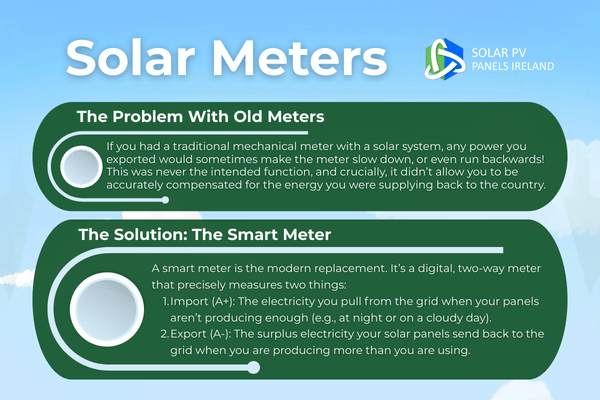
    If you had a traditional mechanical meter with a solar system, any power you exported would sometimes make the meter slow down, or even run backwards! This was never the intended function, and crucially, it didn’t allow you to be accurately compensated for the energy you were supplying back to the country. It was an inefficient system that undervalued your solar investment.

    The Solution: The Smart Meter

    A smart meter is the modern replacement. It’s a digital, two-way meter that precisely measures two things:

    1. Import (A+): The electricity you pull from the grid when your panels aren’t producing enough (e.g., at night).
    2. Export (A-): The surplus electricity your solar panels send back to the grid when you are producing more than you are using.

    This two-way measurement is absolutely essential for the entire Microgeneration Support Scheme to work, and it is the key to unlocking true financial rewards from your solar system.

    The Smart Meter Rollout: Connecting Your Solar to the Grid

    The great news for Irish solar homeowners is that ESB Networks is currently running a massive, nationwide Smart Meter rollout programme. The goal is to replace millions of older meters with new, high-tech smart meters. Over four out of five homes already have one.

    If you don’t have a smart meter yet, don’t worry. Your decision to install Solar PV is a fantastic prompt to get one installed quickly.

    The Solar Connection Process

    The path from solar panel installation to a fully functional, paid-for-export system usually follows these key steps:

    1. Installation: Your SEAI-registered installer (like Solar PV Panels Ireland) fits your panels, inverter, and all the necessary electrical components.
    2. The Paperwork (NC6 Form): Your installer will then submit a technical connection notification form, known as the NC6 (or NC7 for larger systems), to ESB Networks on your behalf. This officially registers your solar system on the national grid. This is a crucial step that you shouldn’t have to worry about, a professional installer handles it all.
    3. Smart Meter Installation: Once ESB Networks processes your NC6 form, if you don’t already have one, they will prioritise the installation of a smart meter in your home, usually within four months. This installation is generally free of charge.
    4. CEG Activation: The smart meter begins automatically measuring your export data and sharing it securely with your chosen electricity supplier.

    Crucially, if you are eligible for a smart meter and refuse the upgrade, you will not be able to participate in the full, accurate payment scheme for your exported power. The smart meter is the technological bridge between your home generation and the national grid’s payment structure.

    Getting Paid for Your Sunshine: The Clean Export Guarantee (CEG)

    The biggest advantage of having a smart meter paired with your Solar PV system is accessing the Clean Export Guarantee (CEG).

    The CEG is the government-backed tariff that ensures every eligible domestic and business microgenerator in Ireland is compensated for the surplus renewable electricity they exporting power back to the grid.

    In simple terms, you are selling your extra sunshine, and your meter is counting every single unit.

    Metered Export vs. Deemed Export

    This is where the smart meter truly makes a difference:

    FeatureSmart Meter (Metered Export)Traditional Meter (Deemed Export)
    AccuracyHigh. Measures exact energy exported every 30 minutes.Low. Uses an estimation formula based on the size of your system.
    PaymentBased on the actual Kilowatt-hours (kWh) you send back.Based on a calculated volume (a ‘deemed’ amount).
    EligibilityRequired to claim metered CEG payment.Only available if you are not yet eligible for a smart meter or are awaiting installation. If you refuse a smart meter, you are ineligible.

    For most solar homeowners, aiming for the metered export payment via a smart meter is the best way to maximise returns, as it ensures you get credit for every last unit you produce and export.

    Choosing Your CEG Supplier

    Unlike the old Feed-in Tariff (FiT) models in some countries, the CEG is competitive. While all electricity suppliers in Ireland are required to offer a CEG tariff, they are free to set their own rate (€/kWh).

    This means that your choice of electricity supplier is no longer just about the unit rate for importing power; it’s also about securing the best Feed-in Tariff for your exports. Suppliers across the market currently offer varied rates, sometimes in excess of 20c per kWh.

    When you switch supplier, you need to ensure they offer an attractive CEG rate to make the most of your investment. Payments usually appear as a credit on your regular electricity bill, essentially helping to offset the cost of the electricity you still need to import.

    Smart Meter Readings: Understanding Your Data

    The physical smart meter itself may look a little more complex than the old spinning dial, but reading your data is straightforward, especially if you know the codes.

    When you press the button on the front of your new smart meter, it cycles through different registers (readings). Here are the two most important ones for solar owners:

    • A+: This is your Import Reading. It represents the total energy you have taken from the grid. Your bill is calculated primarily on this number.
    • A-: This is your Export Reading. This is the cumulative total of the energy you have sent back to the grid. This is the figure your supplier uses to calculate your CEG payment credit.

    Time-of-Use Tariffs

    One major benefit of the smart meter is the ability to use Time-of-Use (ToU) Tariffs. Your import reading (A+) is often broken down into three different time periods:

    • Peak: Usually 5 pm to 7 pm (most expensive).
    • Day: 8 am to 11 pm (excluding peak).
    • Night: 11 pm to 8 am (cheapest).

    With this data, you can adjust your household habits to maximise savings, for instance, running the washing machine during the day when your solar panels are powering it for free, or overnight on the cheap night rate.

    Empowering Your Solar Investment

    The meter is no longer just a boring box on the wall; it’s the intelligence hub of your solar system. For homes and businesses across Ireland, the ESB Networks smart meter rollout and the accompanying Clean Export Guarantee have entirely transformed the financial case for installing Solar PV.

    A properly registered system with a smart meter ensures you benefit from three key savings streams:

    1. Consumption Saving: Using your own free solar power instead of importing expensive grid power.
    2. Time-of-Use Saving: Shifting grid usage to the cheaper night rate.
    3. CEG Payment: Getting paid for every surplus unit you feed back into the national grid.

    If you’re ready to stop guessing and start accurately measuring and earning from your clean energy, the first step is a seamless installation.

    Contact the experts at Solar PV Panels Ireland today. We handle the entire process, from your SEAI grant application and panel installation right through to the official NC6 registration with ESB Networks, ensuring your new smart meter is working optimally to deliver maximum returns from your guide to solar meters investment.

  • What Direction Should Solar Panels Face in Ireland?

    What Direction Should Solar Panels Face in Ireland?

    If you’re thinking about making the switch to solar energy, you’ve probably spent a fair bit of time staring up at your roof. You’re wondering: Is it right for solar? Will the Irish weather actually produce enough power? And, most importantly, which way does my roof need to face to make this investment worth it?

    It’s a common misconception that you need a perfectly south-facing roof and 365 days of blistering sunshine to make solar PV work in Ireland. Modern technology is incredibly efficient, even under cloudy conditions

    In this guide, we’ll break down exactly what direction solar panels should face in Ireland, why “South is best” isn’t the only answer, and how you can maximise your savings regardless of which way your house points.

    Does the Direction Really Matter?

    In short: yes, but it isn’t the “be-all and end-all.”

    Because Ireland is in the Northern Hemisphere, the sun is always in the southern half of the sky. Therefore, panels facing south will generally see the sun for the longest period and at the most direct angle.

    However, “optimum” and “only” are two very different things. While a south-facing roof is the gold standard, East/West setups are becoming increasingly popular for reasons we’ll dive into shortly.

    The Gold Standard: South-Facing Solar Panels

    If you have a roof that faces due South, you have the “ideal” setup for solar energy.

    Why South is King

    South-facing panels receive the highest intensity of sunlight during the middle of the day (usually between 11 am and 3 pm). This results in the highest “peak” of energy production. If your goal is to generate the absolute maximum number of kilowatt-hours (kWh) over the course of a year, South is the winner.

    The Catch

    The only downside to a purely South-facing system is that it produces a massive spike of energy at midday. If you are out at work from 9 to 5, you might generate way more electricity than you can use at noon. To make this work, many owners invest in a battery storage system or a hot water diverter to soak up that midday surplus.

    The Rising Star: East-West Orientations

    What happens if your roof faces East and West? For many Irish homeowners, this is actually a blessing. An East-West split involves putting panels on both sides of your roof.

    The Benefits

    While a South-facing system gives you one big “mountain” of energy at midday, an East-West system gives you two smaller hills:

    1. The East panels catch the morning sun, providing power as you’re waking up and getting the house moving.
    2. The West panels catch the afternoon and evening sun, providing power when you get home and start cooking dinner.

    Because this “double hump” aligns better with when most families actually use electricity, you might use more of your “free” solar power directly. This can lead to better savings on your bill, even if the total amount generated is slightly lower than a South-facing roof.

    What About South-East and South-West?

    If your roof is skewed slightly, say, South-East or South-West, don’t sweat it. These are fantastic orientations. In the Irish climate, the difference in total yield between Due South and South-West is often as little as 5%. It’s a negligible difference that won’t significantly impact your return on investment.

    Can You Put Solar Panels on a North-Facing Roof?

    Generally speaking, we don’t recommend installing panels on a North-facing slope in Ireland. Because the sun stays in the South, North-facing panels only receive “diffuse” light (light bouncing off clouds).

    A North-facing panel will likely produce about 40-50% less energy than a South-facing one. In most cases, the cost doesn’t justify the low return unless the roof pitch is extremely shallow (nearly flat).

    The Role of Roof Tilt (Pitch)

    Direction is only half the story; the angle of your roof matters too. In Ireland, the ideal tilt is generally between 30 and 40 degrees.

    • Too steep: They catch the low winter sun well but miss out on the high summer sun.
    • Too flat: They catch the summer sun but might struggle to “self-clean” via rainfall.

    If you have a flat roof, we use mounting frames to “prop” the panels up to the perfect angle and face them in the best possible direction.

    Shading: The Silent Performance Killer

    You could have the most perfect South-facing roof, but if a giant tree or a chimney casts a shadow over your panels, your production will drop.

    At Solar PV Panels Ireland, we use modern technology like optimisers or micro-inverters to solve this. These allow each panel to work independently. If one panel is in the shade, the others keep pumping out power at 100%. When we conduct a survey, we do a full shading analysis t

    Why the Irish Weather is “Solar Friendly”

    It’s a myth that solar panels need blistering heat to work. They work on light intensity, not heat. In fact, panels perform better when they are cool. On a boiling hot day, panels can actually lose efficiency. Our temperate, breezy Irish climate keeps the panels at a great operating temperature. Even on an overcast day in Dublin or Galway, your panels are still generating electricity from the light filtering through the clouds.

    Maximising Your Investment

    The goal of solar is self-consumption. The more of your own energy you use, the less you buy from the grid at high prices. Here is how to maximise your specific orientation:

    • Smart Appliances: Set your dishwasher to run during your peak production hours (midday for South, morning/evening for East-West).
    • Hot Water: Use a diverter to turn excess solar energy into a tank full of hot water.
    • Battery Storage: Store the “surplus” energy generated during the day to use at night.

    Ready to Find Out What’s Possible?

    Every roof is unique. You might have a hip roof with multiple angles or a garage that’s actually better suited for panels than your main house.

    That’s where we come in. Solar PV Panels Ireland can install solar panels for you, taking all the guesswork out of the process. We use advanced design software to map your roof and give you an honest estimate of how much electricity you’ll generate and how much money you’ll save.

    Why Choose Us?

    • Expert Surveys: We find the “sweet spot” for your orientation and tilt.
    • Top-Tier Tech: High-efficiency panels and the latest inverters.
    • SEAI Grant Assistance: We help you navigate the paperwork to claim your grant.

    Contact Solar PV Panels Ireland today for a free consultation. Let’s take a look at your roof and show you exactly what solar can do for your home.

  • Understanding Solar Panel Efficiency: A Comprehensive Guide for Irish Homeowners

    Understanding Solar Panel Efficiency: A Comprehensive Guide for Irish Homeowners

    As Ireland transitions toward a greener future, more homeowners from Longford to Dublin and beyond are looking upward at their rooftops and wondering about the potential of the sun. While the Irish weather is famously unpredictable, the technology behind photovoltaic systems has advanced to a point where capturing daylight is more viable than ever. However, one term dominates the conversation more than any other: efficiency. Understanding what solar panel efficiency truly means and why it matters specifically in the context of the Irish climate is essential for anyone considering moving to renewable energy.

    Defining Solar Panel Efficiency

    At its most fundamental level, solar panel efficiency is a measurement of a solar cell’s ability to convert sunlight into usable electricity. If a solar panel has an efficiency rating of 20%, it means that it is capable of converting 20% of the solar energy hitting its surface into electrical power. The remaining percentage is primarily lost as heat or reflected light. In the early days of residential solar, efficiency ratings often hovered in the low teens. Today, thanks to massive leaps in material science, most high-quality domestic panels sit between 20% and 24%.

    It is a common misconception that a panel with 20% efficiency is wasting the rest of its potential. In reality, the laws of physics dictate a theoretical ceiling on how much energy a single junction of silicon can capture. Sunlight consists of various wavelengths, and current technology targets specific parts of that spectrum. Homeowners shouldn’t look for a 100% efficient panel, but rather the most optimised panel for their specific roof space and budget.

    The Science of Photovoltaic Conversion

    To grasp why some panels perform better than others, we have to look at the molecular level. Most modern solar panels are made from silicon, a semiconductor. When photons from sunlight strike the silicon cells, they knock electrons loose, creating a flow of electricity. The efficiency of this process is dictated by the purity of the silicon and the architecture of the cell. For example, monocrystalline panels are sliced from a single, pure crystal of silicon. This allows electrons more room to move, resulting in higher efficiency and a sleeker, black appearance.

    In contrast, polycrystalline panels are made from multiple silicon fragments melted together. While these are often more affordable, the internal boundaries between the crystals act as hurdles for the electrons, slightly lowering the overall efficiency. There are also emerging technologies like PERC (Passivated Emitter and Rear Cell) which add reflective layers to the back of the cell. This gives the light a second chance to be absorbed, significantly boosting the output of the panel without increasing its physical size.

    Why Efficiency Matters for the Irish Landscape

    In Ireland, efficiency takes on a specific importance due to our geographic location and light levels. We do not experience the consistent, high-intensity direct sunlight found in southern Europe. Instead, Irish solar arrays rely heavily on diffuse light. This is the light that filters through our frequent cloud cover. High-efficiency panels are generally better at capturing this low-intensity light, ensuring that your system continues to generate power even on a grey afternoon in Galway. Learn more here.

    Furthermore, Irish homes often have limited roof space or complex roof shapes with chimneys and dormers. When space is at a premium, efficiency becomes your best friend. A more efficient panel produces more Watts per square meter. This means that a homeowner with a small roof can achieve the same power output with twelve high-efficiency panels as they would with sixteen standard panels. This not only saves space but can also reduce the cost of mounting hardware and labor during the installation process. 

    Environmental Factors Affecting Performance in Ireland

    It might seem counterintuitive, but solar panels actually perform better in cooler temperatures. While they need light to generate electricity, excessive heat can actually decrease their efficiency. This gives Ireland a distinct advantage. Our temperate climate prevents panels from overheating, which can happen in desert climates where efficiency drops as temperatures soar. A solar panel in Laois on a crisp, clear 10-degree Celsius day may actually outperform the same panel in a 40-degree heatwave elsewhere.

    However, we must also consider the angle of the sun. Because Ireland is situated further north, the sun sits lower in the sky for much of the year. To maximise efficiency, the tilt and orientation of the panels are crucial. Ideally, panels in Ireland should face south at an angle of roughly 35 degrees. If your roof faces east or west, you can still generate a significant amount of energy, but you may need slightly more efficient panels to compensate for the fact that they aren’t receiving peak solar intensity.

    Professional Installation and System Synergy

    The efficiency of the panel itself is only one part of the equation. A high-efficiency panel connected to a poor-quality inverter or thin wiring will result in a sub-optimal system. The inverter is the brain of the system, converting the DC electricity from your roof into the AC electricity used in your home. If the inverter is inefficient, you are essentially leaking the hard-earned energy your panels have collected.

    This is where the expertise of a dedicated provider becomes invaluable. At Solar PV Panels Ireland, we focus on the holistic efficiency of the entire installation. By contacting us, homeowners can get professional guidance on how to match high-efficiency panels with the right battery storage and inverter technology. Our team understands the specific nuances of the Irish grid and local weather patterns, ensuring that every component of your system is tuned for maximum yield.

    The Economic Argument for High Efficiency

    Many people ask if the higher price tag of premium, high-efficiency panels is worth it. To answer this, one must look at the Levelised Cost of Energy. While the upfront cost is higher, a more efficient system generates more kilowatt-hours over its lifespan. In Ireland, where electricity prices have seen significant volatility, every extra watt generated is a watt you don’t have to buy from the grid.

    Additionally, the Irish government, through the SEAI, provides grants to help offset the cost of solar installations. These grants make the transition to high-efficiency systems much more accessible. When you factor in the grant, the VAT savings, and the Clean Export Guarantee, the payback period for a high-efficiency system is often shorter than that of a cheaper, less efficient one. You are essentially pre-purchasing 25 years of electricity at a fixed, low rate.

    Maintenance and Future Trends

    While solar PV systems are remarkably low-maintenance, they are not “set and forget” if you want to maintain peak efficiency. In Ireland, the main enemy of efficiency is often biological or environmental buildup. Dust, bird droppings, or moss can shade small portions of the cells. Because many panels are wired in strings, shading on just a small part of one panel can sometimes impact the performance of the entire row.

    The world of solar efficiency is moving fast, with new bifacial panels capturing light on both sides. However, the current generation of silicon PV technology is at a goldilocks zone of efficiency and price. For the average Irish household, the technology available today through Solar PV Panels Ireland is more than capable of meeting the energy demands of a modern home, from powering heat pumps to charging electric vehicles. Understanding the efficiency of your system is the first step toward true energy independence. Get a quote with Solar PV Panels Ireland Today.

  • Are Solar Panels Worth It in Ireland?

    Are Solar Panels Worth It in Ireland?

    Sky-high electricity bills, climate change concerns, and a desire for energy independence, these are the top reasons Irish homeowners are looking to the sky for a solution. The answer, increasingly, is solar PV. But in a country famous for its unpredictable weather, the number one question we hear at Solar PV Panels Ireland is: “Are solar panels really worth it in Ireland?”

    The short answer is a resounding yes.

    Thanks to massive improvements in technology, significant government grants, and persistently high energy prices, a home solar PV system is no longer a “nice-to-have.” For most Irish homeowners, it’s one of the best financial investments you can make, with average payback periods shrinking to just 5 to 7 years.

    After that payback period? You’re generating free, green electricity for decades to come.

    This article will break down the real costs, the tangible savings, and, most importantly, show you how to calculate your own payback period to see if solar is the right move for your home.

    The Biggest Myth: “It’s Not Sunny Enough in Ireland!”

    Let’s clear this up immediately. Solar Photovoltaic (PV) panels don’t need direct, blazing sunshine to work; they need daylight.

    Modern panels are incredibly efficient and generate significant amounts of electricity even on the cloudy, overcast days we’re all too familiar with. While a clear July day will produce more power than a dark December afternoon, the system generates electricity all year round.

    Ireland’s long summer days and cool temperatures are actually ideal. Unlike in very hot climates, where high heat can reduce panel efficiency, our mild weather allows the panels to operate at or near their peak performance.

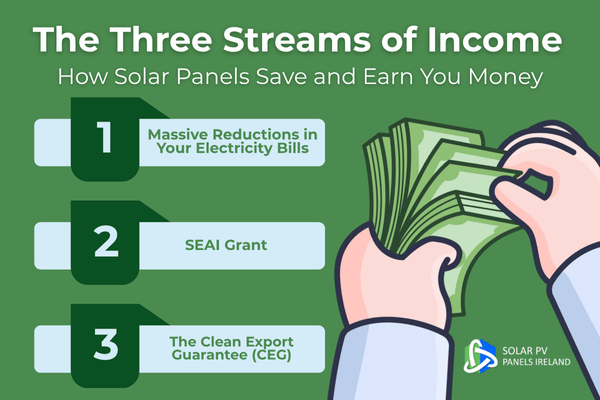
    The Three Streams of Income: How Solar Panels Save and Earn You Money

    Investing in solar PV isn’t just a cost; it’s a financial asset that provides a return in three distinct ways.

    1. Massive Reductions in Your Electricity Bills

    This is the most significant benefit. Every kilowatt-hour (kWh) of electricity your panels produce is a kWh you don’t have to buy from the grid. This is called “self-consumption.”

    With average Irish electricity prices hovering around 36c per kWh in 2025, every unit you self-consume is a direct, 36-cent saving. By shifting energy-heavy tasks, like the washing machine, dishwasher, or immersion, to the middle of the day, you can maximise these savings.

    2. The SEAI Grant: A Government-Funded Price Cut

    The Sustainable Energy Authority of Ireland (SEAI) provides a generous grant to make the initial investment much more affordable. As of 2025, homeowners can receive:

    • €700 per kWp for the first 2kWp
    • €200 per kWp for the next 2kWp
    • A maximum grant of €1,800 (for systems of 4kWp or larger)

    To be eligible, your home must have been built and occupied before the 31st of December, 2020. At Solar PV Panels Ireland, we are fully-registered SEAI installers and handle all the grant paperwork for you, ensuring a seamless process.

    3. The Clean Export Guarantee (CEG): Selling Your Surplus Power

    Your panels will often produce more electricity than you can use, especially in the middle of summer. Thanks to the Clean Export Guarantee (CEG) scheme, this surplus power is not wasted.

    Your smart meter automatically tracks how much electricity you export to the grid, and your electricity supplier must pay you for it. Rates vary by supplier but typically range from 18c to 25c per kWh. This creates a new, passive income stream that appears as a credit on your electricity bill, further accelerating your payback period.

    The Initial Investment: What Do Solar Panels Cost in Ireland in 2025?

    This is the “how long is a piece of string” question, as the final cost depends on system size, panel quality, roof complexity, and whether you include a battery.

    However, we can provide a very clear ballpark. Following the government’s smart decision to reduce the VAT on solar panel installations to 0%, prices have become more stable and affordable than ever.

    For a typical 3-bed semi-detached home, after the €1,800 SEAI grant is deducted, you can expect a fully installed, high-quality solar PV system to cost between €6,000 and €8,000.

    System Size (Typical)Average Cost (Before Grant)SEAI GrantAverage Net Cost (After Grant)
    8 Panels (~3.5 kWp)€7,600 – €8,600€1,700€5,900 – €6,900
    10 Panels (~4.4 kWp)€8,000 – €9,500€1,800€6,200 – €7,700
    12 Panels (~5.3 kWp)€8,800 – €10,300€1,800€7,000 – €8,500

    These are 2025 estimates. For a precise, fixed quote for your home, you will need a technical survey.

    How to Calculate Your Solar Panel Payback Period: A Step-by-Step Example

    Now, let’s get to the most important calculation. The payback period is the time it takes for your annual savings to cover your initial investment.

    Payback Period (in Years) = Net System Cost / Total Annual Savings

    Let’s use a real-world example: The Forde Family in their 3-bed semi-detached home.

    • Their Home: Built in 1998.
    • Annual Electricity Bill: €2,200 per year (using ~6,100 kWh @ €0.36/kWh).
    • The System: They choose a 10-panel (4.4 kWp) system.
    • Installer: Solar PV Panels Ireland.

    Step 1: Calculate the Net Initial Cost

    This is the total price minus the government grant.

    • Total System Cost: €8,000
    • SEAI Grant (4.4 kWp): – €1,800 (the maximum)
    • Net Initial Cost: €6,200

    Step 2: Calculate Total Annual Savings

    This is a combination of Bill Savings (self-consumption) and Export Payments (CEG).

    1. Bill Savings (Self-Consumption):

    A well-designed 4.4 kWp system in Ireland will generate around 3,700 – 4,000 kWh per year. Let’s be conservative and say 3,800 kWh.

    A typical household with no battery will use about 50% of this power directly (this is “self-consumption”). A home with a battery can use 70-80%+.

    • Annual Generation: 3,800 kWh
    • Self-Consumption (50%): 1,900 kWh
    • Value of this power (1,900 kWh x €0.36/kWh): €684 saved on bills
    1. B. Export Payments (CEG):

    The other 50% of the power (1,900 kWh) is exported to the grid. We’ll use a conservative export rate of €0.20/kWh.

    • Annual Export: 1,900 kWh
    • Export Payment (1,900 kWh x €0.20/kWh): €380 earned from exports
    1. Total Annual Savings:
    • Bill Savings (€684) + Export Earnings (€380) = €1,064 per year

    Step 3: Calculate the Payback Period

    Now we divide the net cost by the total annual savings.

    • Net Initial Cost: €6,200
    • Total Annual Savings: €1,064
    • Payback Period: €6,200 / €1,064 = 5.8 years

    In just under 6 years, the Fordes’ system has completely paid for itself.

    The Secret Weapon: The Solar Battery

    In the example above, the payback was 5.8 years without a battery. But what if they added one?

    solar battery (or hybrid system) stores your surplus solar energy during the day instead of exporting it all. It then releases that free, stored electricity in the evening when your panels aren’t producing, and your home’s usage is high (lights, TV, cooking).

    • Benefit: This pushes your “self-consumption” rate from 50% up to 80% or more.
    • Cost: A battery will add €3,000 – €4,000 to the initial cost.
    • Impact: While it increases the initial cost, it dramatically increases your annual savings by allowing you to use your own 36c/kWh electricity instead of exporting it for 20c/kWh.

    For many households, especially those who are out at work during the day, a battery is a financial “no-brainer” that can secure your investment against future energy price hikes.

    Beyond the Payback: The Long-Term Benefits

    The payback period is only the beginning of the story. A high-quality solar panel system has a performance warranty of 25-30 years.

    After 5.8 years, the Fordes in our example will be getting €1,064+ per year (tax-free) for the next 20+ years. As electricity prices rise, those savings will only get bigger.

    The other long-term benefits are just as compelling:

    1. Improves Your BER Rating: Installing solar panels is one of the most effective ways to improve your home’s Building Energy Rating (BER). A better BER is crucial for grant eligibility for other upgrades (like heat pumps) and massively increases your property’s value.
    2. Increases Property Value: A home with a high BER and, crucially, rock-bottom electricity bills is far more attractive to buyers. It’s a proven selling point that adds tangible value to your property.
    3. Protects Against Inflation: You are future-proofing your home against the volatile energy market. When the news reports another 20% price hike, your savings simply get 20% bigger. You are no longer just a consumer; you are a producer.
    4. Reduces Your Carbon Footprint: Finally, you will be doing your part. A typical domestic system will save over 1.5 tonnes of CO2 from entering the atmosphere every single year.

    So, Are Solar Panels Worth It in Ireland?

    For almost every Irish homeowner with a suitable roof, the answer is an undeniable yes.

    The investment is no longer a leap of faith. It is a straightforward financial calculation. With a 0% VAT rate, a maximum grant of €1,800, and a payback period as low as 5-7 years, the question is shifting from “Are solar panels worth it?” to “Can I afford to not install them?”

    Ready to Calculate Your Exact Payback Period?

    The examples above are a fantastic guide, but every home is unique. The only way to get a precise, fixed-price quote and an accurate savings projection is to have a specialist assess your specific roof, orientation, and energy usage.

    At Solar PV Panels Ireland, we make this process simple. Our team of experts provides a free, no-obligation home survey. We’ll design the perfect system for your budget and energy needs, show you exactly what it will cost, and give you a calculation of your personal payback period.

  • Solar Panel Cost Calculator Ireland

    Solar Panel Cost Calculator Ireland

    The conversation around energy in Ireland has changed a lot. With a decent amount of volatility in the price of electricity and a national commitment to tackling climate change, Irish homeowners are finding themselves looking for a solution. One that offers financial stability and security as well environmental responsibility. The answer is Solar PV.

    For a lot of people, the idea of installing solar panels is exciting but can be a bit daunting. You’re asking the right questions. How much will I really save? What size system do I need for my house? What is the actual upfront cost?

    Here at Solar PV Panels Ireland, we believe the first step towards energy independence should be the easiest. That’s why we’ve developed our dedicated Solar Panel Calculator for Ireland. We see it as a powerful, user-friendly tool designed to give you instant, personalised estimates based on your Irish home and your lifestyle.

    Stop wondering and start calculating. Your journey to lower bills and a greener future begins right here.

    Solar PV Panels Ireland Logo
    Solar PV Savings Calculator

    Estimate your potential system size and savings based on your current electricity usage and roof conditions.

    *All calculations are estimates. Final system design requires a site survey.

    Your Estimated Potential

    Enter your details to see your estimated savings.

    Why Solar PV in Ireland is the Smart Choice

    The old cliché about the Irish weather being too wet or cloudy is perhaps the biggest myths in the renewable energy world. The reality is that solar PV panels generate electricity based on light. Not just direct sunlight. Modern photovoltaic technology is highly efficient at converting diffused light into usable power. And we get plenty of diffused light.

    The Financial Power of Irish Solar

    The benefits are compelling and stack up fast:

    1. Reduce/Eliminate Your Electricity Bill: The purpose of solar is to generate your own power. This offsets the expensive electricity you currently buy from the grid.
    2. The Clean Export Guarantee (CEG): Ireland now has a formal microgeneration support scheme. This means you get paid for every excess unit of electricity you export back to the national grid. Your roof has become a revenue generator.
    3. SEAI Grants: Generous government-backed SEAI Solar PV Grants reduce the initial Estimated Investment Cost. This makes the return on investment faster than ever before.
    4. Increase Your Home’s Value: Homes with installed, modern solar PV systems are much more desirable to buyers. They have a higher price on the property market.

    In short, installing solar PV in Ireland is no longer a niche, it is a smart investment in your future.

    Introducing the Solar Panel Calculator: Your Personalised Estimate

    Our Solar Panel Calculator takes the complexity out of the initial planning phase. Instead of generic averages, it uses a handful of key data points about your specific circumstances to provide a good projection.

    Let’s look at the fields that drive your personalised solar estimate:

    Input 1: Average Monthly Electricity Bill (€): The Savings Driver

    This is the single most important piece of data. Your monthly bill tells us exactly how much energy you consume. A higher bill indicates a greater potential to save. The calculator uses this figure to model a system size that will efficiently cover your annual consumption. It aims for maximum offset without overproduction. This calculation is the basis for your future Estimated Annual Savings.

    Input 2: House Size / Type: Sizing the System Right

    Whether you live in a terrace house, a semi-detached property, or a large detached home, your house type dictates two things: your energy requirements and the available roof space. A large detached home usually requires a larger, more powerful system (higher kWp) to meet its demands than a smaller terrace house. Our tool factors in the typical consumption profile for different Irish house types.

    Input 3: Your Roof Suitability: Maximising Efficiency

    Not all roofs are created equal. The calculator considers:

    • Orientation (Aspect): South-facing roofs are ideal. But East and West-facing roofs can also be highly efficient. Especially for maximising morning and evening generation, aligning better with typical household use.
    • Pitch: The angle of your roof affects how much light it captures throughout the year.
    • Shading: Nearby trees, chimneys, or neighbouring buildings can impact output.

    This input ensures the resulting Recommended System Size is not just based on your needs. It’s based on the real-world capacity of your home.

    Output 1: Estimated Annual Savings: The Bottom Line

    This is the figure everyone wants to see. It is a projection, based on your bill and the recommended system size, of how much money you can expect to save each year through self-generated electricity and the CEG payments. This figure is key to determining your solar system’s payback period.

    Output 2: Recommended System Size (kWp): The Technical Requirement

    Measured in kilowatts peak (kWp), this output tells you the capacity of the solar PV system that is best for your home. This size is a careful balance between your energy demand and the available space on your roof. Common sizes range from 3kWp to 6kWp for typical Irish homes. Getting the size right is crucial for best investment return.

    Output 3: Estimated Investment Cost (€): Budgeting Your Project

    This gives you a clear, honest projection of the total upfront cost before grants. The Estimated Investment Cost covers the high-quality panels, the inverter, mounting system, wiring and professional installation by the SEAI-approved experts at Solar PV Panels Ireland. It gives you the necessary figure to begin your financial planning This allows you to easily subtract the available SEAI grant amount to find your net investment.

    Solar Panel Cost Calculator Ireland

    Factoring in Financial Incentives: SEAI Grants & Microgeneration

    One of the most compelling reasons to use a solar calculator in Ireland today is the impact of government supports. These incentives drastically improve the economics of your investment.

    The SEAI Solar PV Grant Scheme

    The Sustainable Energy Authority of Ireland (SEAI) offers substantial grants to help homeowners transition to renewable energy. Currently, the grant is based on the system’s size. For instance, a typical 4kWp system, which is a popular choice for many Irish families, can qualify for a significant reduction in the final price.

    Why this matters for the calculator: The Estimated Investment Cost provided by our tool should always be viewed with the knowledge that a big percentage of this cost will be covered by the non-repayable SEAI grant. This speeds up the point at which your system becomes profitable.

    The Clean Export Guarantee (CEG)

    Ireland’s commitment to microgeneration means your system doesn’t just reduce your bills, it generates revenue. When your solar panels produce more electricity than your home is consuming, the surplus energy is automatically fed back into the national grid. For example, on a sunny afternoon while you are out. Your electricity supplier then pays you a rate per kWh for that exported energy. This is a critical factor in the Estimated Annual Savings calculation and makes sure that every ray of Irish sunshine is making you money.

    Beyond the Calculator: Taking the Next Step

    Using the Solar Panel Calculator  for Ireland is the perfect starting point. It provides clarity, helps you set a budget, and gives you a concrete idea of your potential savings. However, a calculator can only take you so far.

    To move from an estimate to an accurate quote and guaranteed installation, you need a detailed, professional assessment.

    What happens next?

    1. Use the Calculator: Get your instant initial estimates for savings, size, and cost.
    2. Request a Free Survey: The next step is a personalised, on-site consultation with a certified professional from Solar PV Panels Ireland. We will physically inspect your roof, check for hidden shading issues, assess your home’s existing electrical setup, and finalise the exact system design.
    3. Final Quote & Installation: You will receive a definitive, fixed-price quote (inclusive of the grant amount) and a clear installation timeline.

    Stop paying escalating prices to your energy company. Start investing in your own clean, sustainable, and free source of power. Contact Us Today!